Austria and Bavaria: Vienna, Salzburg, and the F1 GP
Hallstatt and the Lake District
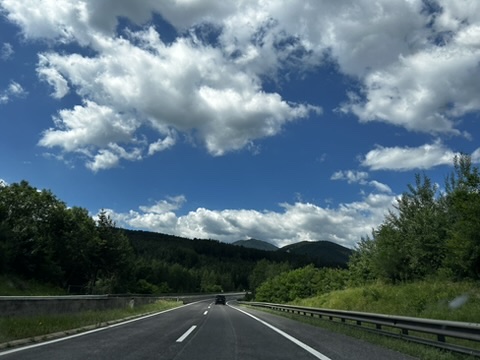
The drive from Graz to Hallstatt takes about three hours through the Alps, and the landscape shifts completely once you hit the Salzkammergut region. We stopped at Lake Attersee first, the largest lake in Austria. The water is absurdly clear and the shoreline is mostly undeveloped compared to anything in Italy or Switzerland.
Hallstatt itself is smaller than it looks in photos. The entire village takes about 20 minutes to walk end to end. We stayed at the Arabella Jagdhof Resort at nearby Fuschlsee (37,000 Marriott points per night), which put us between Hallstatt and Salzburg and turned out to be the best hotel decision of the trip. The resort sits directly on its own lake and the morning views from the breakfast room were ridiculous.
The Hallstatt Salt Mine is worth doing if you have any interest in history. It is the oldest salt mine in the world (3,000+ years of continuous operation), and the tour includes wooden slides that miners used to descend between levels. The Skywalk viewing platform (Welterbeblick) at the top gives you the postcard view of the village and lake. If you do both, budget half a day.
What We Actually Ate
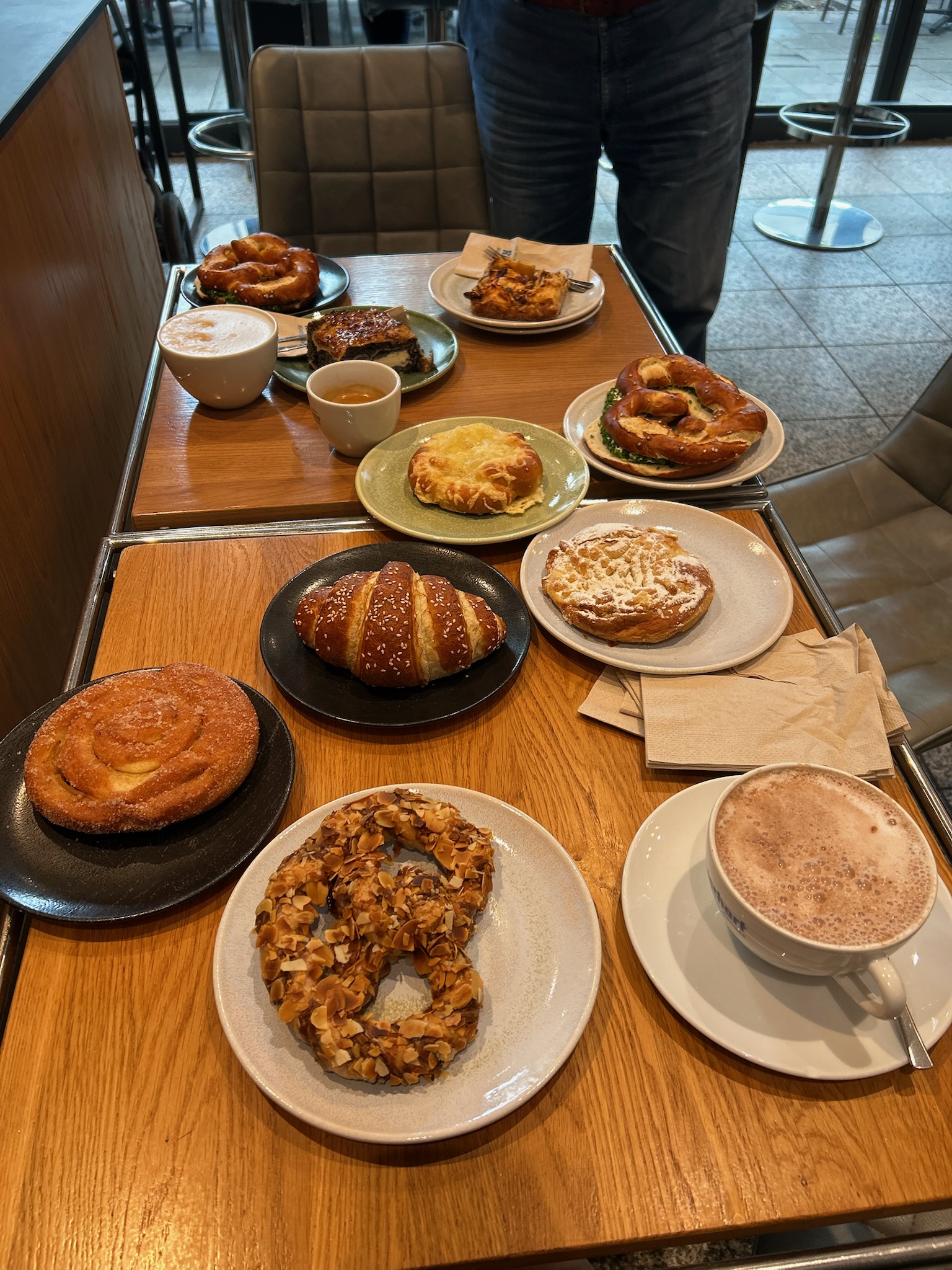
Austrian food is heavier than you expect and better than its reputation. In Vienna, the obvious move is Wiener Schnitzel — a properly pounded and breaded veal cutlet that covers the entire plate. We also tried Tafelspitz (boiled beef with horseradish, apparently Emperor Franz Joseph’s favorite meal) and Kaiserschmarrn (a torn-up pancake with fruit compote that is technically a dessert but works as lunch).
Salzburg has its own specialty: Salzburger Nockerl, a sweet souffle shaped like three mountain peaks. It is absurd looking and genuinely delicious. The Kasnocken (cheesy dumplings with caramelized onions) at a small restaurant near the fortress were the best simple meal of the trip.
In Innsbruck, the Tyrolean food is mountain food: Kaspressknodel (fried cheese dumplings), Tiroler Grostl (a hash of potatoes and leftover meat), and Schlutzkrapfen (half-moon ravioli with potato filling). All of it is built for hiking energy, not Instagram, but it is deeply satisfying after a day of walking.
Munich beer gardens served the expected Schweinshaxe (roasted pork knuckle with crackling skin), Weisswurst (white sausage that you peel before eating — do not eat the skin), and Obazda (a soft cheese spread with pretzels). We hit Augustiner-Keller instead of Hofbrauhaus, on a local recommendation, and the difference in crowd quality alone was worth the 15-minute walk from the center.
Where We Stayed (Marriott Points Trip)
We booked this entire trip on Marriott Bonvoy points except for one cash night in Graz. Here is the breakdown:
- Vienna: Courtyard by Marriott Prater/Messe — 66,000 points/night, 3 nights. Solid location near the Prater park. Not glamorous but clean and well-connected by U-Bahn.
- Graz: Hotel Sud — $237 cash (no good Marriott options here). One night was enough for the Clock Tower and old town.
- Fuschlsee: Arabella Jagdhof Resort (Tribute Portfolio) — 37,000 points/night. The surprise winner. Lake views, spa, and perfectly positioned between Hallstatt and Salzburg.
- Salzburg: Sheraton Grand Salzburg — 55,000 points/night. Walking distance to everything. The breakfast spread included fresh bread, local cheeses, and Salzburger Nockerl.
- Innsbruck: AC Hotel Innsbruck — 27,000 points/night. The cheapest hotel in points and the room had a direct view of the Nordkette mountains.
- Munich: Moxy Munich Ostbahnhof — 42,500 points/night, 2 nights. Classic Moxy: functional, young crowd, decent bar.
Total for 10 nights: ~370,000 Marriott points plus $237 cash. That is roughly $2,500-3,000 in hotel value redeemed through points we earned from the Chase Sapphire Reserve and Marriott Bonvoy Boundless cards.
What Austria + Bavaria Cost (Two People, 8 Days)
Here is what we actually spent (or what you should budget), based on our trip:
| Category | Cost | Notes |
|---|---|---|
| Flights (NYC-Vienna RT) | $600-900 | Direct on Austrian Airlines |
| F1 tickets (2 x 3-day GA) | $300-500 | Buy early, prices double by race week |
| Hotels (8 nights) | $150-250/night | Vienna cheaper, Salzburg pricier |
| Trains | $100-150 total | OBB Sparschiene tickets booked ahead |
| Food | $60-90/day | Schnitzel, strudel, beer gardens |
| Activities | $80-120 | Schonbrunn, Salzburg fortress, brewery tours |
| Total | $3,000-4,500 | Per couple, 8 days including F1. Train travel saves vs car. |
Prices are approximate and based on 2024-2025 travel. Book flights 2-3 months ahead for the best rates.
Graz: Austria’s Second City
On the way south from Vienna, Graz makes an excellent stop. It is about two and a half hours by car, and the old town is a UNESCO World Heritage site that feels much less touristy than Vienna. The Schlossberg (castle hill) in the center has a famous clock tower and views across the entire city. You can hike up or take the funicular.
The Kunsthaus is the modern art museum, and even if contemporary art is not your thing, the building itself — a massive blue blob nicknamed the “Friendly Alien” — is worth seeing. Graz has a strong university culture, which means good restaurants and bars at reasonable prices compared to Vienna.
The Austrian Lake District: Attersee, Mondsee, and Hallstatt
Driving west from Vienna toward Salzburg, you pass through the Salzkammergut — Austria’s lake district and one of the most beautiful landscapes in Europe. We stopped at Lake Attersee (the largest lake in Austria, impossibly blue) and Lake Mondsee, where we had a picnic on the shore and watched people paddleboarding.
Hallstatt is the famous one — the tiny lakeside village that has become an Instagram sensation. It is stunning, with pastel buildings reflected in the glassy lake and mountains rising directly behind. The salt mines above the village have been operating for over 3,000 years and are worth a visit. Go early in the morning before the day-trip crowds arrive from Salzburg. By 10 AM the narrow streets are packed.
Salzburg: Mozart, Fortresses, and The Sound of Music
Salzburg sits between Vienna and the Red Bull Ring and makes the ideal base for a night or two. The old town is compact and walkable, with the massive Hohensalzburg Fortress dominating the skyline from its hilltop perch. The fortress is one of the best-preserved medieval castles in Europe — take the funicular up and spend an hour exploring the ramparts, the Golden Hall, and the views over the city and surrounding Alps.
Nonnberg Abbey, made famous by The Sound of Music, is a short walk downhill from the fortress. The Salzburg Cathedral (the Dom) anchors the old town, and a combination ticket gets you into several connected historical sites including St. Peter’s Church.
For food, Salzburg’s Altstadt has excellent Austrian restaurants. Kasnocken (cheese dumplings), Wiener schnitzel, and apple strudel are the local staples. The beer gardens along the Salzach River are perfect for warm summer evenings.
The Austrian Grand Prix at the Red Bull Ring
The Red Bull Ring in Spielberg is about 90 minutes from Salzburg, set in a natural amphitheater in the Styrian Alps. The circuit is compact — you can see most of the track from any grandstand — and the mountain scenery in every direction makes it one of the most photogenic venues on the F1 calendar.
Our seats were up near Turn 3, on the hillside, which is one of the great views in Formula 1. You look down across most of the lap, the Styrian hills behind the cars, and the whole place turns orange for the Verstappen fans.
2025 could not have gone much better for my drivers. Lando Norris won, but all three of my favorites finished in the top four: Oscar Piastri second, Charles Leclerc third, and Lewis Hamilton fourth. Sitting on that hill watching the three of them run at the front at once is about as good as a race day gets for me.
Which Grandstand to Pick at the Red Bull Ring
The Red Bull Ring is compact enough that you can see most of the track from any stand, but the terrain creates dramatically different experiences depending on where you sit.
T3 Grandstand is the consensus top pick. Located at the top of the steep uphill climb into Turn 3, with panoramic views of roughly 70% of the circuit. Turn 3 is the biggest overtaking point. In 2024, this is where Norris and Verstappen collided wheel-to-wheel. Bring binoculars for the screen.
Red Bull Grandstand is the largest stand, spanning from the T1 exit uphill toward T3. You can also see cars through Turns 6 and 7 due to the undulating terrain. Different sections within this grandstand give quite different views, so check seat maps before booking.
Steiermark Grandstand gives a front-on view of the climb into Turn 1 and the best view of the pit exit. Good for lap 1 incidents.
General admission is restricted to the green zone between T3 and T4. The grassy hill overlooking this area actually offers excellent views of the primary overtaking zone, with the Styrian mountains as backdrop. Genuinely good value from around 80-100 euros per day. Downside: no access to the iconic Red Bull bull statue (that is in the Yellow Zone). Sells out faster than you would expect.
Spielberg is rural Styria. Drive from Salzburg (90 minutes) or Graz (60 minutes). Free parking is available 10-15 minutes walk from the circuit. Train to Knittelfeld with free shuttle buses every 20 minutes. Camping is strongly recommended for the social atmosphere, which many fans consider the best of any F1 race.
The atmosphere has a festival quality. The Dutch fans (Verstappen’s orange army) bring incredible energy, and the general vibe is more relaxed than some of the larger European races. The surrounding area has food stalls, merchandise vendors, and live music throughout the weekend.
Drive from Salzburg or Graz (both about 90 minutes). Parking is available near the circuit but fills up early on race day. Some fans camp at the circuit — there are official campgrounds that create a mini festival atmosphere.
The grandstands along the hill between turns 1 and 3 give you a view of most of the circuit. The start/finish grandstand is good for the opening lap chaos. GA tickets give you access to the hillside viewing areas, which are excellent because of the natural amphitheater layout.
The mountains mean weather can change quickly. Pack rain gear even if the forecast looks clear. Sunscreen is essential — the altitude means you burn faster than expected.
Munich: Beer Gardens and Bavarian Culture
From the Red Bull Ring, Munich is about three hours northwest and makes a natural endpoint for the trip. We spent two days exploring the Bavarian capital.
The English Garden is one of the largest urban parks in the world and the heart of Munich’s outdoor life in summer. The beer gardens here — especially the Chinese Tower beer garden — are the quintessential Munich experience. Order a Mass (one-liter beer), grab a pretzel, and settle in. The surfers on the Eisbach wave in the park are a quirky bonus.
Marienplatz is the central square, with the Glockenspiel show at the New Town Hall drawing crowds daily. The Viktualienmarkt nearby is Munich’s premier food market — similar to Vienna’s Naschmarkt but with a more Bavarian flavor. For beer history, the Hofbrauhaus is touristy but worth one visit for the sheer scale and atmosphere.
Day trips from Munich include Neuschwanstein Castle (the fairy-tale castle that inspired Disney, about 90 minutes south) and Dachau Memorial (a sobering but important visit, 30 minutes north).
What It Cost
- Round trip to Vienna, returning from Munich — booked with miles, about 60,000 per person
- About 50-70 euros per day for 10 days
- 100-180 euros per night across Austria and Munich
- GA from about 150 euros, grandstands 250-500 euros for race weekend
- 40-60 euros per day for two people
- Schonbrunn Palace 22 euros, Hallstatt salt mines 38 euros, Hohensalzburg Fortress 16 euros
Planning Tips
- Book F1 tickets early — the Austrian GP sells out months in advance
- Hallstatt: arrive before 9 AM or after 4 PM to avoid peak crowds
- Vienna and Munich both have excellent public transport if you want to skip the car for city days
- Early July weather is warm (mid-70s to low-80s) but mountain areas can be cooler, especially at elevation
- The open-jaw flight (into Vienna, out of Munich) avoids backtracking and is usually a similar price to round-trip
Book on GetYourGuide:
Tours: Barcelona tours on Viator
Activities: Thailand on Klook
Travel Insurance: We use SafetyWing for travel insurance on every international trip. It covers medical emergencies, trip interruptions, and lost luggage starting at $45/month with no fixed end date — perfect for multi-country itineraries.
Related Reading
- Belgian Grand Prix at Spa and a Germany Road Trip
- Barcelona, Costa Brava, and the F1 Spanish Grand Prix
- Our Trip to the F1 Italian Grand Prix at Monza
- Central Europe by Train: Berlin, Prague, Vienna, Munich
Gear and Guides We Recommend
Planning a similar trip? Here are some items we found useful:
These are affiliate links. If you purchase through them, we may earn a small commission at no extra cost to you, which helps support this site.
Book Tours and Activities
Find Flights to Vienna
Cheapest Flights to Vienna
| Departure at | Return at | Stops | Airline | Find tickets |
|---|---|---|---|---|
| Flexible | Flexible | Direct |  |
Check current fares |
Compare flights on Skyscanner — and grab an Airalo eSIM before you land so you have data the moment you arrive.
Rental Cars: Compare rental car prices across all major agencies with RentCars — we use them to find the cheapest rates for road trips.
Book hotels: Search Booking.com hotels
Get Travel Tips That Actually Help
Real costs, honest reviews, and what I’d do differently — delivered to your inbox.
No spam. Unsubscribe anytime.
Related Reading
- Where to Stay for European F1 Races
- Where to Stay for European F1 Races — Monza, Barcelona, Spa, and Austria
Plan your own trip: guides I actually use
More from this region:
- Austrian Lakes Beyond Hallstatt — 6 Towns the Tour Buses Skip
- F1 Mexican Grand Prix: Mexico City, the Race, and a Cozumel Side Trip
- What I’d Do Differently: Austria and Germany Edition
- What I’d Do Differently: Prague, Budapest, and Vienna Edition
- What to Pack for an F1 Race Weekend (From Someone Who Has Been to 7)
- Prague vs Vienna vs Budapest: Which Central European Capital Deserves More of Your Time
- Which European F1 Grand Prix Should You Attend? Spa, Monza, Austria, and Barcelona Compared
- Every F1 Race I’ve Attended, Ranked by a Fan: 8 Grands Prix From Worst to Best
- What I’d Do Differently: F1 Travel Edition
- Where to Stay for F1 in the Americas — Interlagos, Mexico City, and Miami
Cards, lounges & insurance:
- Best Airport Lounges I Have Actually Used — From Changi to Istanbul
- Is Priority Pass Worth It in 2026 — My Honest Review After 15 Airports
- Best Travel Credit Cards for 2026: The Cards I Actually Use and Why
- Best Travel Insurance for 2026: What I Actually Recommend After 15 International Trips
Finding cheap flights:
- When to Book Flights by Region — The Booking Windows That Actually Save Money
- How to Find Error Fares and Flight Deals — The Services I Actually Use
- Google Flights vs Skyscanner vs Momondo — Which Actually Finds the Cheapest Flights
Travel gear I actually use:
- Best Portable Chargers for Travel in 2026: Which Size You Actually Need
- My Exact Travel Tech Setup After 15 International Trips
- Best Noise-Canceling Headphones for Travel in 2026: Tested on 40+ Flights
- Best Travel Backpacks for 2026: The 5 I Have Actually Used
Staying connected abroad:
- Best VPN for Travel 2026 — NordVPN vs Surfshark and Why You Need One
- Best eSIM for Travel 2026 — Holafly vs Airalo vs Nomad
Written by Jenna Fattah
I have visited 25+ countries across 6 continents, attended 7 Formula 1 races, and spent 4 years writing about what actually works and what I would do differently. Every recommendation on this site comes from trips I planned and paid for myself. Read more about me