
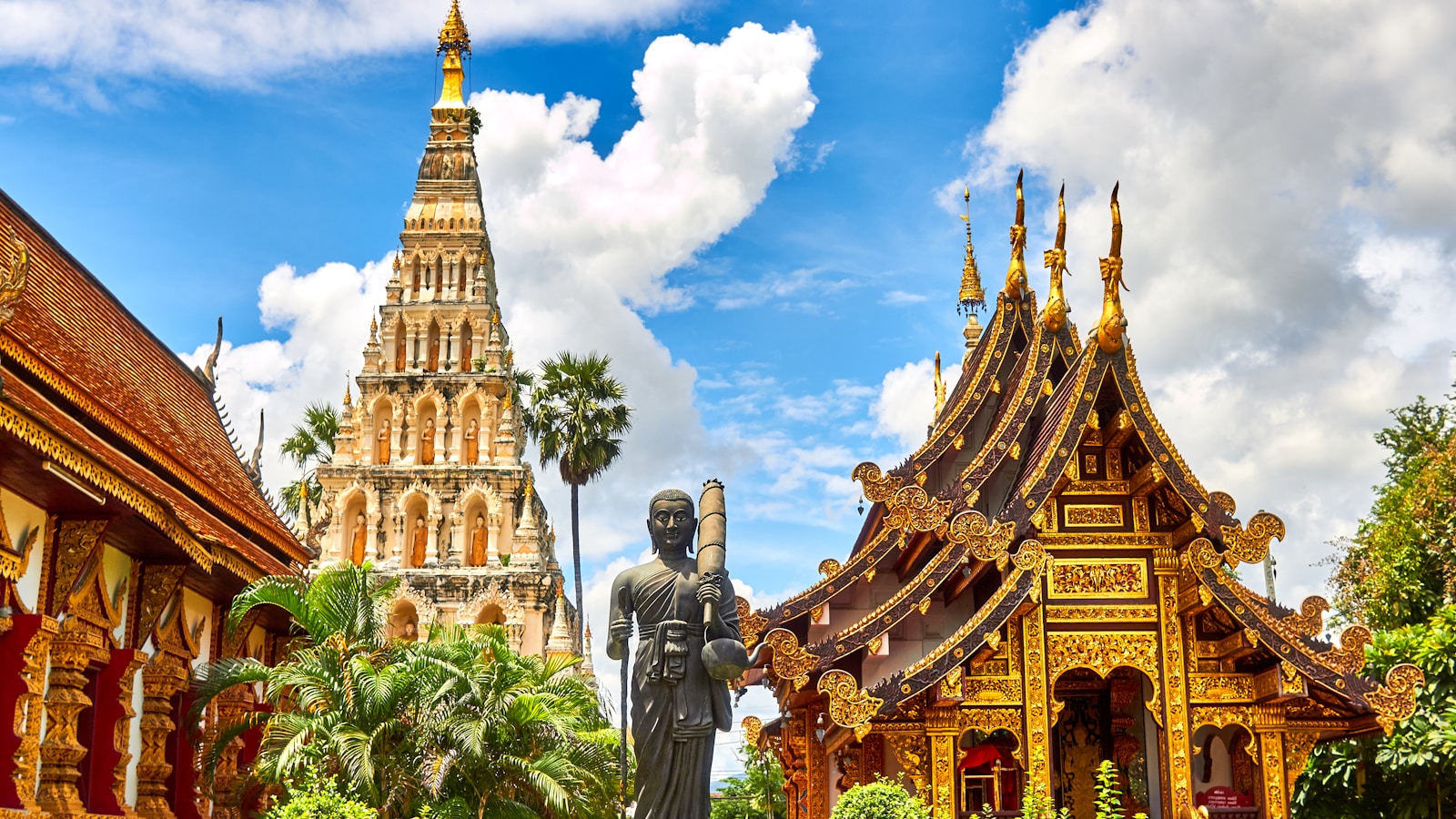
Thailand Workation Guide — Bangkok, Chiang Mai, or the Islands?
Updated April 2026 | 4 min read
Thailand’s new DTV (Destination Thailand Visa) has made the country one of the easiest places in the world for remote workers. 180 days, extendable to 360, with proof of employment or freelance income. The old game of doing visa runs every 30-60 days is over for anyone who qualifies.
The question is not whether to work from Thailand — it is where in Thailand.
Bangkok — The Serious Work Option
Why: Bangkok has the best internet, the most coworking options, and the infrastructure of a major global city. If your work requires reliable video calls, fast uploads, or access to professional services, Bangkok is the answer.
Where to base:
- Ari/Phahonyothin: Residential, walkable, local food, young Thai creative scene. BTS accessible. The neighborhood most Thai professionals would choose.
- Sukhumvit (Asoke to Thong Lor): International, well-connected, good restaurants. More expensive but everything you need is within walking distance of a BTS station.
- Silom/Sathorn: Business district. Quieter at night than Sukhumvit. Good coworking density. Walking distance to Lumpini Park for morning runs.
Coworking highlights:
- True Digital Park — massive tech hub with coworking, events, and 100+ Mbps WiFi. On Phra Khanong BTS. Monthly from THB 3,500 ($100).
- The Hive (multiple locations) — reliable mid-range option. Monthly from THB 4,500 ($130).
- Launchpad — smaller, community-focused. Monthly from THB 3,000 ($87).
Monthly budget: $1,000-1,600. Condo: $400-700. Food: $200-350 (the Bangkok food guide shows how to eat well for $12/day). Transport (BTS + occasional Grab): $50-100. Coworking: $87-130.
The catch: Bangkok is hot, loud, and congested. The BTS/MRT system is excellent but stations are not everywhere. You will sweat walking between the air-conditioned islands of your life. If you romanticize working from a beachside cafe, Bangkok is not that.
Chiang Mai — The Community Option
Why: Chiang Mai has been the digital nomad capital of Southeast Asia for a decade. The infrastructure is proven: coworking spaces, nomad meetups, affordable coliving, and a social scene built around remote work.
Where to base:
- Nimman: The nomad neighborhood. Cafes on every corner, coworking spaces, bars, restaurants. Walkable and flat. Can feel like a digital nomad bubble.
- Old City: Temples, markets, cheaper food. More authentic Thai atmosphere. Slightly less convenient for coworking but only a 10-minute songthaew ride to Nimman.
- Santitham: Between Nimman and the Old City. Local feel with easy access to both areas. The value play.
Coworking highlights:
- Punspace (multiple locations) — the original Chiang Mai coworking. Reliable WiFi, good community. Monthly from THB 3,000 ($87).
- CAMP at Maya Mall — technically a free coworking space on the top floor of Maya Mall. Buy a drink and work all day. WiFi is 30-50 Mbps. Crowded but free.
- Heartspace — newer, well-designed. Monthly from THB 3,500 ($100).
Monthly budget: $700-1,200. The cheapest viable option in Thailand. Apartment: $250-500. Food: $150-250. Scooter: $50. Coworking: $87-100.
The catch: Burning season. From February through April, agricultural burning creates hazardous air quality. AQI readings above 200 are common. Many nomads leave during this period. If your timeline includes March or April, skip Chiang Mai and go to Bangkok or the coast.
Also, Chiang Mai’s nomad scene can feel insular. If you have been to three nomad cities, the conversations start repeating — crypto, dropshipping, Bali vs Thailand, passive income. If you want to engage with Thai culture rather than expat culture, you will need to make the effort.
Islands — The Lifestyle Option
Viable islands for work: Koh Lanta, Koh Phangan, Koh Samui. Do not try to work from Koh Phi Phi, Koh Lipe, or the Similan area — the internet cannot support it.
Koh Lanta: The quietest island option. Laid-back, affordable, decent WiFi in the main town. Monthly from $600-1,000. Coworking at KoHub (THB 6,000/month, $174). Best for people who want beach life without the party scene.
Koh Phangan: The wellness/yoga/party island. Has a surprisingly strong nomad community centered around Srithanu and Haad Salad. Beachub coworking has reliable internet. Monthly from $800-1,400. The full moon party crowd and the wellness crowd coexist uneasily.
Koh Samui: The most developed island. Hotels, malls, hospitals, consistent internet. More expensive (monthly from $1,200-2,000) but the infrastructure approaches mainland quality. Best for people who want island life with city convenience.
The catch with islands: Internet outages happen. Power cuts happen. When the undersea cable goes down, you are offline until it is fixed. Always have an Airalo eSIM with a data plan as backup — 4G on the islands is often more reliable than fixed WiFi.
How to Choose
- Reliable video calls daily: Bangkok
- Budget under $800/month: Chiang Mai
- Strong community and social life: Chiang Mai (Nimman) or Bangkok (Sukhumvit)
- Beach and surf lifestyle: Koh Lanta or Koh Phangan
- First time in Thailand: Bangkok for 2 weeks, then Chiang Mai for a month, then decide
- Staying 3+ months: Mix it up. Bangkok first, Chiang Mai second, island for the last month
Essential Gear for Thailand
- Noise-canceling headphones — Thai cafes play music, traffic is loud, construction is constant
- Power bank — cafe outlets are scarce outside of coworking spaces
- Mosquito repellent — dengue is real in Thailand, especially during and after rainy season (June-October). DEET-based repellent beats natural options.
For the complete Bangkok food breakdown, read the Bangkok street food vs restaurants guide. For visa details and the best eSIM comparison, those guides have the latest 2026 info.
Frequently Asked Questions
Do I need a visa to work remotely from Thailand?
The DTV (Destination Thailand Visa) allows 180 days, extendable to 360. You need proof of employment or freelance income. Standard tourist visas do not permit work.
Which city in Thailand is best for remote work?
Bangkok for reliability and fast internet, Chiang Mai for community and low cost, and Koh Lanta or Koh Phangan for beach vibes with decent WiFi.
How much does it cost to live and work in Thailand?
Bangkok runs $1,000-1,600/month, Chiang Mai $800-1,200, and island living $1,000-1,800 depending on accommodation standard.
Affiliate disclosure: This post contains affiliate links. I earn a small commission if you book through them, at no extra cost to you. Links: SafetyWing travel insurance (10% off), Skyscanner for flights, Airalo eSIM for data, Klook for activities, 12Go Asia for transport, Booking.com for hotels, Viator for tours.
Real costs, honest reviews, and what I’d do differently — straight to your inbox.
Plan your own trip: guides I actually use
Related guides:
Written by Jenna Fattah
I have visited 25+ countries across 6 continents, attended 7 Formula 1 races, and spent 4 years writing about what actually works and what I would do differently. Every recommendation on this site comes from trips I planned and paid for myself. Read more about me