Interlagos Travel Guide: Brazilian Grand Prix, Sao Paulo, and Bonaire Side Trip
Updated April 2026 | 10 min read
- Why Interlagos Belongs on Your Bucket List
- Getting There From the US
- Where to Stay in Sao Paulo
- The Circuit: Where to Watch
- Safety and Logistics
- What to Do Beyond F1
- Combining With Bonaire: The Diving Side Trip
- Cost Breakdown (Per Person, 2024 Prices)
- What I’d Do Differently
- Gear I Brought (and Would Bring Again)
- Book Tours and Activities
- Find Flights to Sao Paulo
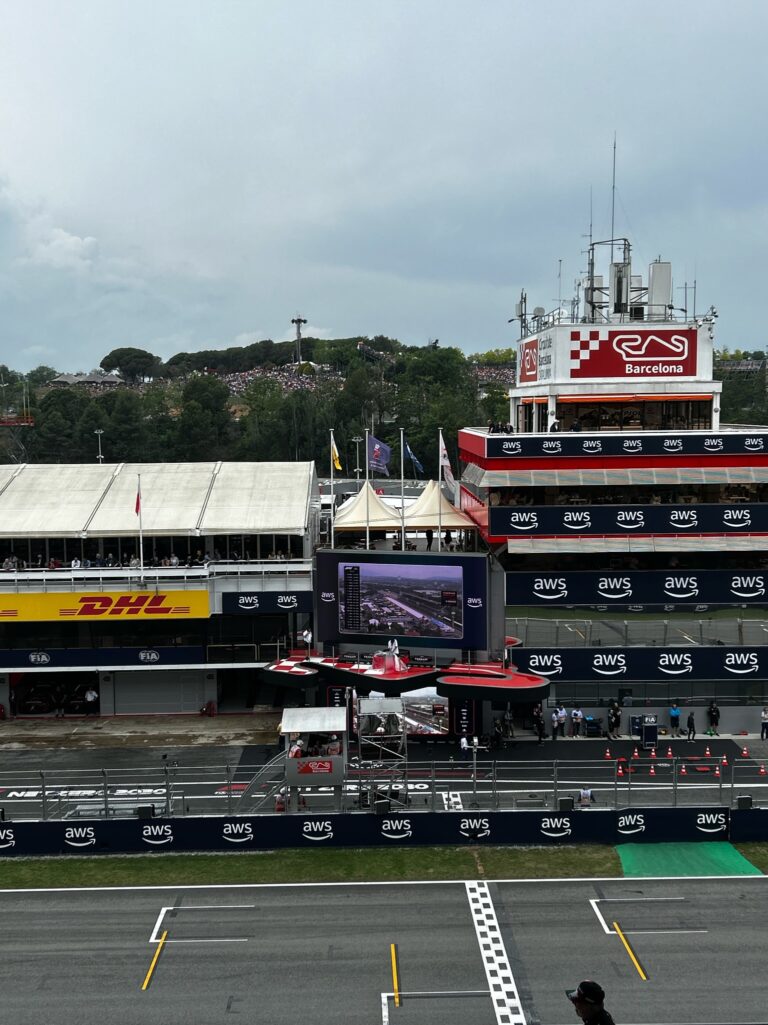
Interlagos is the F1 race that makes you feel something. Not in a polished, corporate-hospitality way. In a chaotic, passionate, the-entire-country-is-losing-its-mind way. I went to the 2024 Brazilian Grand Prix and came back with a voice that took three days to recover, a sunburn in places I didn’t know could burn, and the conviction that every F1 fan needs to experience this race at least once.
Here’s everything I learned — the stuff the official F1 website won’t tell you.
Why Interlagos Belongs on Your Bucket List
The Autodromo Jose Carlos Pace sits in the Interlagos neighborhood of Sao Paulo, and the circuit has hosted Grands Prix since 1973. This is where Ayrton Senna became a god. Where rain appears from nowhere and reshuffles the entire grid. Where the elevation changes make the cars look faster than anywhere else on the calendar.
But the real reason Interlagos hits different is the crowd. Brazilian F1 fans do not sit quietly and watch. They chant. They sing. They set off fireworks in the grandstands. When a Brazilian driver does well — or when anyone overtakes at the Senna S — the roar is physical. You feel it in your ribs.
The circuit itself is a counter-clockwise layout, one of only a few on the calendar. It’s compact enough that you can see multiple corners from certain vantage points, which makes general admission surprisingly viable here. More on that below.
What Race Day Actually Felt Like (and My Drivers)
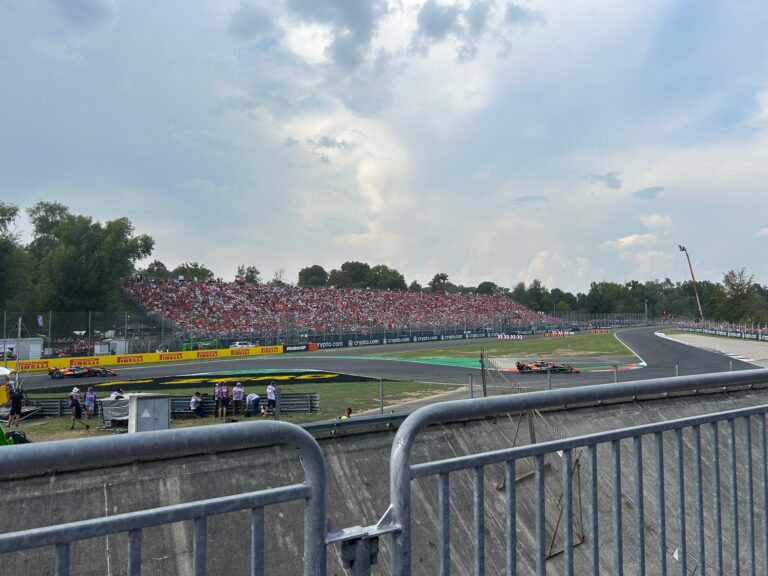
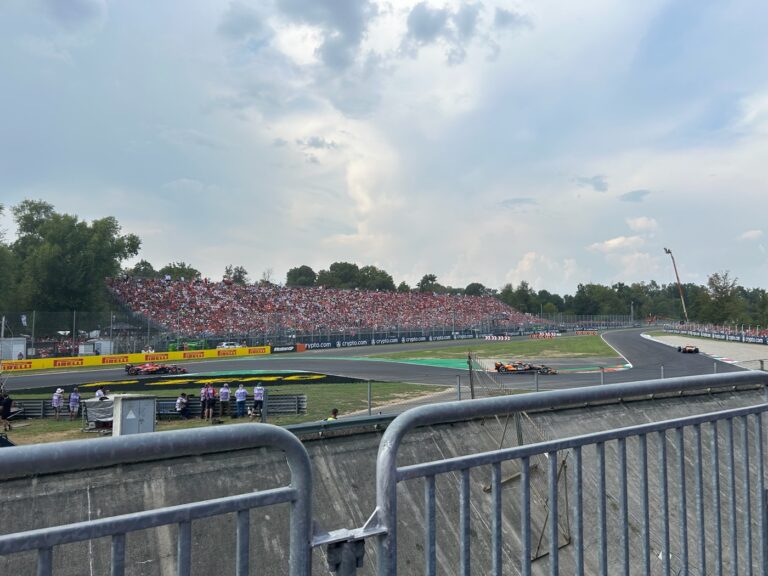
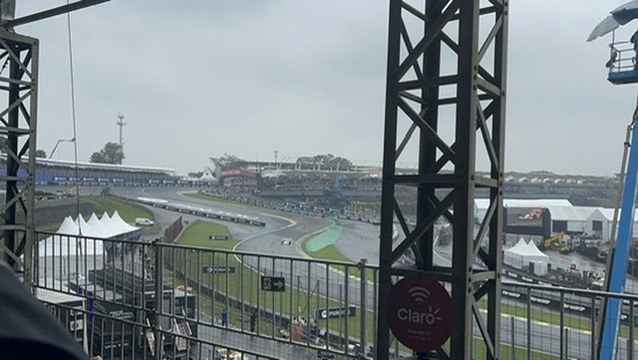
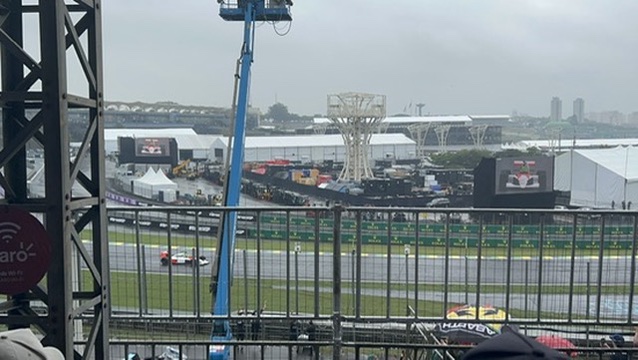
We had covered seats in Grandstand H, which sits over the exit of the Senna’s S and the start of the back straight, with the pit-lane exit just off to one side. It is one of the best vantage points on the circuit. You watch the cars get squeezed through the esses directly below you, then light up as they hit the back straight. There is catch fencing in front of you, which you stop noticing about ten seconds into the first lap.
I was there for the 2024 race, and it turned into one of the wildest Grands Prix I have watched in person. Rain battered Interlagos, the start was delayed, and Max Verstappen carved from 17th on the grid to the win in conditions that bordered on undriveable. Charles Leclerc, one of my favorite drivers, salvaged fifth for Ferrari out of the chaos. It was not the afternoon I wanted for Lewis Hamilton, but watching cars thread the Senna’s S in standing water, from directly above, is something no TV feed can hand you.
Getting There From the US
Direct flights from Miami to Sao Paulo (GRU — Guarulhos International) run about 8.5 hours on LATAM or American. From New York JFK, you’re looking at roughly 10 hours direct. Prices for race weekend spike, so book the moment the F1 calendar is confirmed — I’m talking January or February for a November race.
I flew through Bonaire on the way down, which I’ll get into later, but the routing worked: Miami to Bonaire (about 3.5 hours), a few days of diving, then Bonaire to Sao Paulo via Bogota on Avianca. Not the most direct path, but it let me turn one trip into two destinations without burning extra PTO.
GRU airport is about 25 km from central Sao Paulo. Grab an Uber from the arrivals level — it’ll run R$80-120 (roughly $16-24 USD) to Jardins or Vila Olimpia. Don’t bother with taxis. The airport taxi mafia will quote you triple.
Where to Stay in Sao Paulo
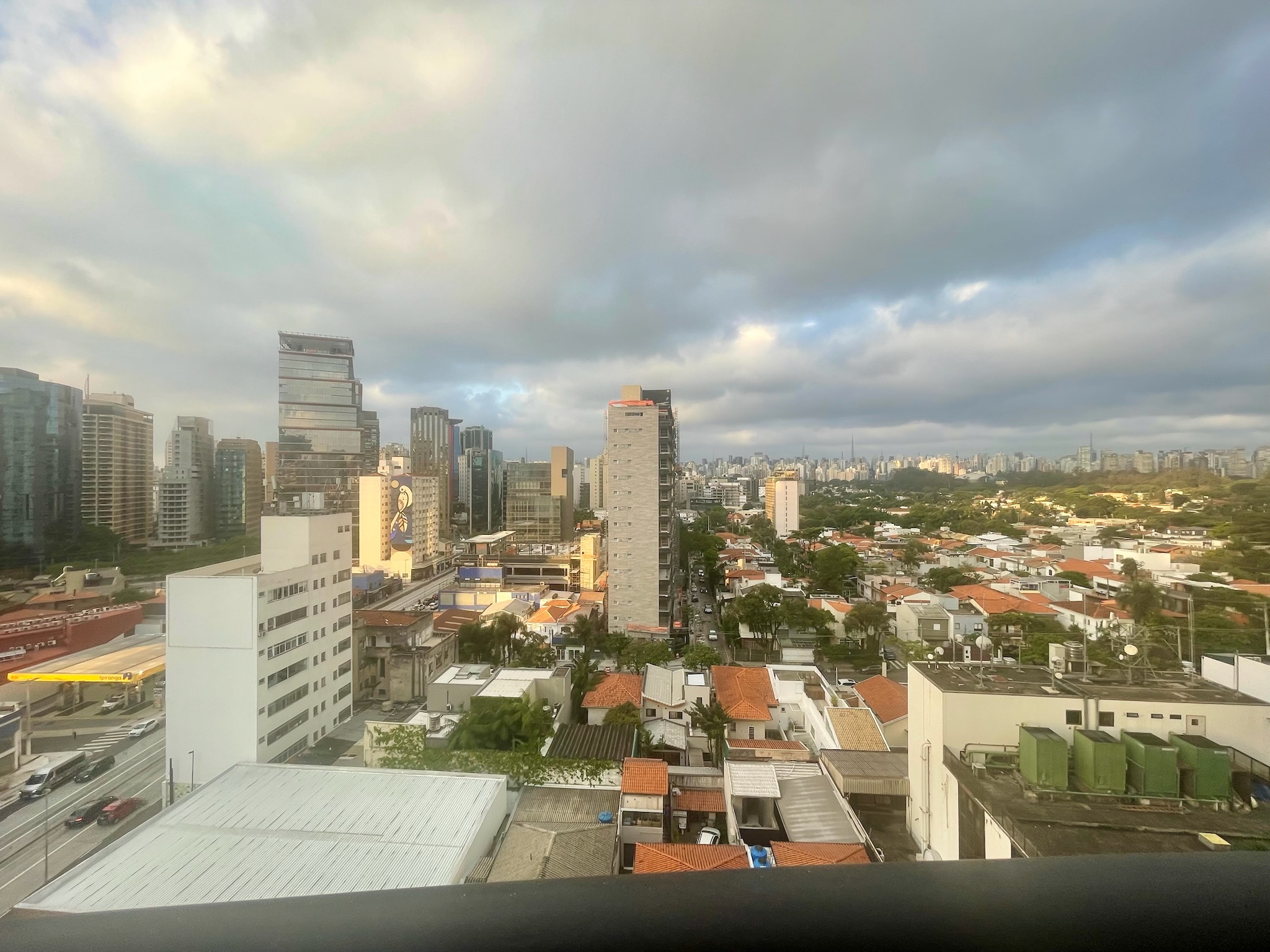
The circuit is in a residential neighborhood in the southern part of the city. Staying right next to it is possible but not ideal — the area around Interlagos is not where you want to be walking around at night. Here’s how I’d break down the options:
Jardins (My Pick)
This is the upscale neighborhood with the best restaurants, walkable streets, and a genuine neighborhood feel. Rua Oscar Freire is the main shopping strip. Hotels here put you 30-40 minutes from the circuit by Uber on a normal day, but expect 60-90 minutes on race day due to traffic. I stayed in Jardins and don’t regret it. Being able to walk to dinner after a full day at the track matters more than saving 15 minutes on the commute.
Vila Olimpia / Itaim Bibi
The business district. More modern hotels, slightly cheaper than Jardins, and marginally closer to the circuit. Good nightlife on weekends. If you’re traveling with a group that wants to go out after the race, this is your spot.
Near the Circuit
A few Airbnbs pop up in Interlagos and Santo Amaro. The upside is a 10-minute ride to the gate. The downside is everything else — limited restaurant options, safety concerns after dark, and nothing to do when you’re not at the track. I’d only recommend this if you’re purely there for the racing and plan to Uber everywhere regardless.
Budget roughly $150-250/night for a decent hotel in Jardins. Booking.com and Hotels.com both had better rates than booking direct when I checked. Race weekend prices are 2-3x normal Sao Paulo hotel rates, so again, book early.
The Circuit: Where to Watch
General Admission
Interlagos has some of the best general admission access of any F1 circuit. The hillside along the back straight (between turns 4 and 6) gives you a panoramic view of multiple sections of track. You can see cars coming through the Senna S, blasting down the straight, and braking into the Descida do Lago. Bring a blanket or cheap camping chair — you’ll be sitting on grass and concrete.
GA tickets were around $80-100 USD for race day in 2024. For the full weekend (Friday practice through Sunday race), expect $150-200. This is a fraction of what European GPs charge for equivalent access.
Grandstands
Grandstand A, at the main straight and start/finish line, is the premium option. You’ll see the starts, the pit stops, and the podium ceremony. Prices start around $400-500 for race day.
Grandstand G, near the Senna S, is where I’d put my money if I did it again. The Senna S (turns 1 and 2) is the signature overtaking spot, and watching cars thread through that left-right sequence at 180+ mph from above is genuinely thrilling. Tickets run $250-350.
Whichever you choose, bring sun protection. There is almost no shade at Interlagos. The November sun in Sao Paulo is brutal, and the race starts in the afternoon when UV is at its peak.
Ear Protection
The current hybrid-era F1 cars are quieter than the old V10s, but they’re still loud enough to cause discomfort over a full day. Support races (F2, Porsche Cup) can be even louder. I brought high-fidelity earplugs that reduce volume without killing the sound quality — worth every penny.
Loop Experience Earplugs — these are what I used. They cut the peak decibels while still letting you hear engines, commentary, and conversation. About $30 and reusable.
Safety and Logistics
I’ll be direct: Sao Paulo requires more situational awareness than most cities I’ve traveled to. That said, with basic precautions, I felt safe the entire trip.
Transportation
Uber is your best friend. It’s cheap (most rides in the city are R$15-40, or $3-8 USD), widely available, and eliminates the need to navigate public transit or walk through unfamiliar neighborhoods. On race day, the surge pricing kicks in after the race ends — expect 2-3x normal rates for the first hour post-race. If you can wait it out at a nearby bar for 45 minutes, prices drop significantly.
The Sao Paulo Metro is clean and efficient if you want to use it during non-race days. Line 9 gets you to Autódromo station, which is a 15-minute walk from the circuit gates. Useful for practice days when the crowds are lighter.
Cash vs. Card
Brazil is more card-friendly than you’d expect. I used my credit card (no foreign transaction fee — critical) for almost everything in Jardins and at restaurants. At the circuit, the food vendors are hit or miss — some take card, some are cash only. I’d recommend carrying R$200-300 in cash for circuit day. ATMs at Bradesco and Itau banks have the best exchange rates. Avoid the airport exchange counters.
Safety Tips
- Don’t walk around the circuit neighborhood after dark. Uber door to door.
- Leave your nice jewelry at the hotel. I wore my Apple Watch and nothing else.
- Keep your phone in a front pocket or crossbody bag at the circuit. Pickpockets work the crowds, same as any major sporting event.
- Download offline maps of Sao Paulo before you go. Cell signal at the circuit is terrible when 100,000 people are all trying to post Instagram stories simultaneously.
What to Do Beyond F1
Don’t fly to Sao Paulo and spend the entire time at the track. The city deserves at least two extra days.
Jardins and Paulista Avenue
Avenida Paulista is the cultural spine of the city. Walk it on a Sunday when the road is closed to cars and the entire avenue becomes a pedestrian zone with street performers, food vendors, and art installations. The Sao Paulo Museum of Art (MASP) sits right on Paulista — the building alone is worth seeing, elevated on massive red pillars with an open plaza underneath.
Ibirapuera Park
This is Sao Paulo’s Central Park, and it’s gorgeous. Go in the morning before the heat sets in. There’s a free museum inside (MAM — Museum of Modern Art) and running/cycling paths if you need to shake off the jet lag.
The Food
Sao Paulo’s food scene is legitimately world-class. A few essentials:
- Feijoada — black bean and pork stew, traditionally eaten on Saturdays. Every restaurant in the city serves a version. Go to a traditional boteco (neighborhood bar) for the most authentic plate. It’s heavy, it’s rich, and it’s perfect after a long day at the track.
- Coxinha — fried chicken croquettes shaped like a drumstick. They’re at every bakery and snack counter. You will eat dozens of these. They cost about R$5-8 each ($1-1.50 USD).
- Acai — served thick and frozen in a bowl, nothing like the watered-down smoothie versions in the US. Get it from a juice bar in Jardins.
- Padaria — Brazilian bakeries. Go to one for breakfast. Strong coffee, pao de queijo (cheese bread), and fresh-squeezed juice. Budget R$25-40 ($5-8) for a full breakfast.
A Sao Paulo food tour is genuinely worth booking if you want to hit the highlights efficiently. Viator has several options that cover Vila Madalena and Jardins markets — look for the ones with small group sizes.
For a broader city overview, a Sao Paulo city walking tour will orient you quickly, especially if it’s your first time in Brazil.
Combining With Bonaire: The Diving Side Trip
I added Bonaire to the front end of this trip, and it turned a great vacation into an unforgettable one. Bonaire is a tiny Dutch Caribbean island about 50 miles off the coast of Venezuela, and it’s one of the best shore-diving destinations in the world.
The entire coastline is a marine park. You literally drive to a dive site, park your truck, walk into the water with your gear, and you’re on a reef within 30 seconds. No boat needed. No dive shop scheduling. Just you and the reef on your own timeline.
I did 8 dives over 3 days. Visibility was 80-100 feet every single dive. The coral is healthy, the fish are everywhere, and the night dives are surreal — tarpon hunting in your flashlight beam, octopus crawling across the sand.
Getting there: Bonaire (BON) has direct flights from Miami on American, about 3.5 hours. Then to get to Sao Paulo, I connected through Bogota on Avianca. Not the most efficient routing, but it worked. If you don’t want the hassle of the connection, you can do Bonaire as a separate trip entirely and fly direct to Sao Paulo from the US.
Budget 3-4 days minimum for Bonaire. Rent a pickup truck (you need one to haul tanks), rent tanks and weights from a dive shop, and hit 3-4 sites per day. Total diving cost for 3 days was about $250 including truck rental, gear, and tanks.
If you’re certified and you love diving, Bonaire is a no-brainer addition to any Caribbean-adjacent itinerary. I brought a GoPro and the underwater footage was the highlight of the whole trip.
GoPro Hero 13 Black — waterproof to 33 feet without a housing, which covers most reef diving. The stabilization underwater is dramatically better than older models. Essential for dive footage.
Cost Breakdown (Per Person, 2024 Prices)
| Expense | Cost (USD) |
|---|---|
| Flights (Miami – Bonaire – Sao Paulo – Miami) | $850-1,100 |
| Hotel Sao Paulo (4 nights, Jardins) | $600-1,000 |
| Hotel Bonaire (3 nights) | $350-500 |
| F1 Tickets (3-day GA or single-day grandstand) | $100-400 |
| Food & Drinks (7 days total) | $300-500 |
| Uber/Transport (both cities) | $80-120 |
| Diving Bonaire (truck, tanks, gear, 3 days) | $200-300 |
| Total | $2,480-3,920 |
Brazil is remarkably affordable once you’re there. The exchange rate (roughly 5 BRL to 1 USD in 2024) means your dollar goes far on food, transport, and entertainment. Hotels and flights are where the real money goes.
What I’d Do Differently
- Book Grandstand G instead of GA. The hillside GA view was great, but the Senna S grandstand would have been worth the extra $150-200 for the race day experience. Save money on practice/qualifying days with GA, splurge on Sunday.
- Arrive a day earlier. Jet lag plus race day is a rough combination. I wish I’d had a full buffer day in Sao Paulo before the track opened on Friday.
- Carry more cash at the circuit. I ran out of reais at the track and had to leave to find an ATM. Bring R$400+ for a full race day (food, drinks, merch).
- Pre-book an Uber pickup point. Post-race Uber chaos is real. Next time I’d set a pickup point 10-15 minutes walk from the circuit to avoid the surge zone and the crowd bottleneck at the main gates.
- Bring a lightweight rain jacket. November in Sao Paulo means afternoon thunderstorms are always possible. I got lucky, but the race two years prior was a monsoon. Don’t risk it.
Gear I Brought (and Would Bring Again)
Loop Experience Earplugs — High-fidelity ear protection that reduces volume without muffling the engine sound. Worn all three days at the track. $30.
GoPro Hero 13 Black — Used this for both dive footage in Bonaire and track-side video at Interlagos. Waterproof, compact, and the stabilization handles handheld shooting at the circuit surprisingly well. $350.
Anker PowerCore 20000mAh Portable Charger — Your phone will die at the circuit. Between GPS navigation, Uber, F1 live timing app, and photos, you’ll burn through a full charge by mid-afternoon. This battery bank gave me two full recharges. $40.
Osprey Daylite Sling — Crossbody bag that keeps your phone, wallet, and battery pack secure and accessible. Way better than a backpack for crowded grandstands, and harder for pickpockets to access than a regular pocket. $36.
Interlagos isn’t the most comfortable F1 race. It’s not the most glamorous. The traffic is bad, the sun is brutal, and you’ll probably get rained on. But the energy is unlike anything else on the calendar. When 80,000 people are chanting and the cars are threading through the Senna S, you stop thinking about the logistics and just feel it. Go.
Have questions about planning an Interlagos trip? Drop a comment below or DM me on Instagram — I’m happy to help with specifics.
Book Tours and Activities
Find Flights to Sao Paulo
Cheapest Flights to Sao Paulo
| Departure at | Return at | Stops | Airline | Find tickets |
|---|---|---|---|---|
| Flexible | Flexible | Direct |  |
Check current fares |
Book Tours: GetYourGuide Sao Paulo city tours and Interlagos circuit visits | GetYourGuide Bonaire diving and snorkeling tours
Frequently Asked Questions
Is Interlagos safe for F1 fans?
The circuit area is fine during race weekend with heavy security. Use Uber for transport instead of walking. Downtown Sao Paulo requires normal big-city awareness.
Where should I stay for the Brazilian GP?
Vila Madalena or Pinheiros neighborhoods. Both have good restaurants, nightlife, and Uber access to Interlagos. Avoid staying near the track.
How much does a Brazilian GP weekend cost?
Budget $1,000-1,500 including GA ticket ($100-150), hotel ($80-120/night), food, and flights from US East Coast ($400-600).
Affiliate disclosure: This post contains affiliate links. I earn a small commission if you book through them, at no extra cost to you. Links: SafetyWing travel insurance (10% off), Skyscanner for flights, Airalo eSIM for data, GetYourGuide for tours, Airalo eSIM for data, Booking.com for hotels, Viator for tours.
Real costs, honest reviews, and what I’d do differently — straight to your inbox.
Plan your own trip: guides I actually use
More from this region:
- Where to Stay for F1 in the Americas — Interlagos, Mexico City, and Miami
- Winter Sun Itineraries Worth the Long Flight: Morocco, Caribbean, India, and South Africa
- Cheapest F1 Races for Americans: Ranked by Total Trip Cost
- Monza Grand Prix: The Complete Travel Guide for First-Timers
- Spa-Francorchamps Rain Gear Guide: What to Pack
- Monza Grand Prix Packing Guide: What Actually Works
- The Real Grand Prix Kit: What to Pack for F1
Cards, lounges & insurance:
- Best Airport Lounges I Have Actually Used — From Changi to Istanbul
- Is Priority Pass Worth It in 2026 — My Honest Review After 15 Airports
- Best Travel Credit Cards for 2026: The Cards I Actually Use and Why
- Best Travel Insurance for 2026: What I Actually Recommend After 15 International Trips
Finding cheap flights:
- When to Book Flights by Region — The Booking Windows That Actually Save Money
- How to Find Error Fares and Flight Deals — The Services I Actually Use
- Google Flights vs Skyscanner vs Momondo — Which Actually Finds the Cheapest Flights
Staying connected abroad:
- Best VPN for Travel 2026 — NordVPN vs Surfshark and Why You Need One
- Best eSIM for Travel 2026 — Holafly vs Airalo vs Nomad
Travel gear I actually use:
- Best Portable Chargers for Travel in 2026: Which Size You Actually Need
- My Exact Travel Tech Setup After 15 International Trips
- Best Noise-Canceling Headphones for Travel in 2026: Tested on 40+ Flights
- Best Travel Backpacks for 2026: The 5 I Have Actually Used
- Phone Photography Tips for Travel: How to Take Great Photos With Just Your iPhone
Written by Jenna Fattah
I have visited 25+ countries across 6 continents, attended 7 Formula 1 races, and spent 4 years writing about what actually works and what I would do differently. Every recommendation on this site comes from trips I planned and paid for myself. Read more about me