Portugal by Train: The 10-Day Porto-Lisbon-Algarve Route I’d Book
Frequently Asked Questions
What is the best time to visit Portugal?
May-June and September-October are ideal. Summer (July-August) is hot in the Algarve and Lisbon but perfect for the coast. Shoulder season has warm weather, fewer crowds, and lower prices.
Can you do Portugal by train?
Yes for Porto, Lisbon, and the main cities. CP trains run between Porto and Lisbon in about 3 hours. For the Algarve, trains run along the coast but a car gives more flexibility for beach-hopping and cliff walks.
How many days do you need in Portugal?
Seven to ten days for Porto, Lisbon, and the Algarve. Spend 2-3 days in each city and 2-3 days exploring the Algarve coast. Add a day for Sintra palace day trip from Lisbon.
Need a rental car? Compare prices on RentCars for the best deals in Portugal.
Book activities: Browse activities on Klook
Tours: Find tours on GetYourGuide
Ten Days Down the Portuguese Coast
Portugal has incredible food, affordable prices, and a laid-back culture — Porto to the Algarve by train covers everything in 10 days.
In This Post
Portugal has become one of the most popular destinations in Europe, and for good reason: incredible food, affordable prices, beautiful coastline, and a laid-back culture that makes you want to slow down. This trip runs from Porto in the north to the Algarve beaches in the south, connected by Portugal’s efficient and affordable train network.
Porto: Port Wine and the Douro
We would fly into Porto and spend three days exploring the city and the Douro Valley. Porto’s historic center is a UNESCO World Heritage Site, and the density of stunning architecture is remarkable.
The Sao Bento Railway Station is worth visiting even if you are not catching a train — the entrance hall is covered in over 20,000 hand-painted azulejo tiles depicting Portuguese history. The Clerigos Tower offers panoramic views over the red rooftops to the Douro River. The Lello Bookshop is famous as an inspiration for Harry Potter (whether or not that is actually true), and its neo-Gothic interior with a crimson staircase is beautiful. Buy a ticket to get in — the line can be long, but the ticket cost is credited toward any book purchase.
Cross the Dom Luis I Bridge to Vila Nova de Gaia for port wine tastings. The historic lodges (Taylor’s, Graham’s, Sandeman) line the riverfront and offer tours and tastings from about 15-20 EUR. The Gaia cable car gives you aerial views of the river and both sides of the city.
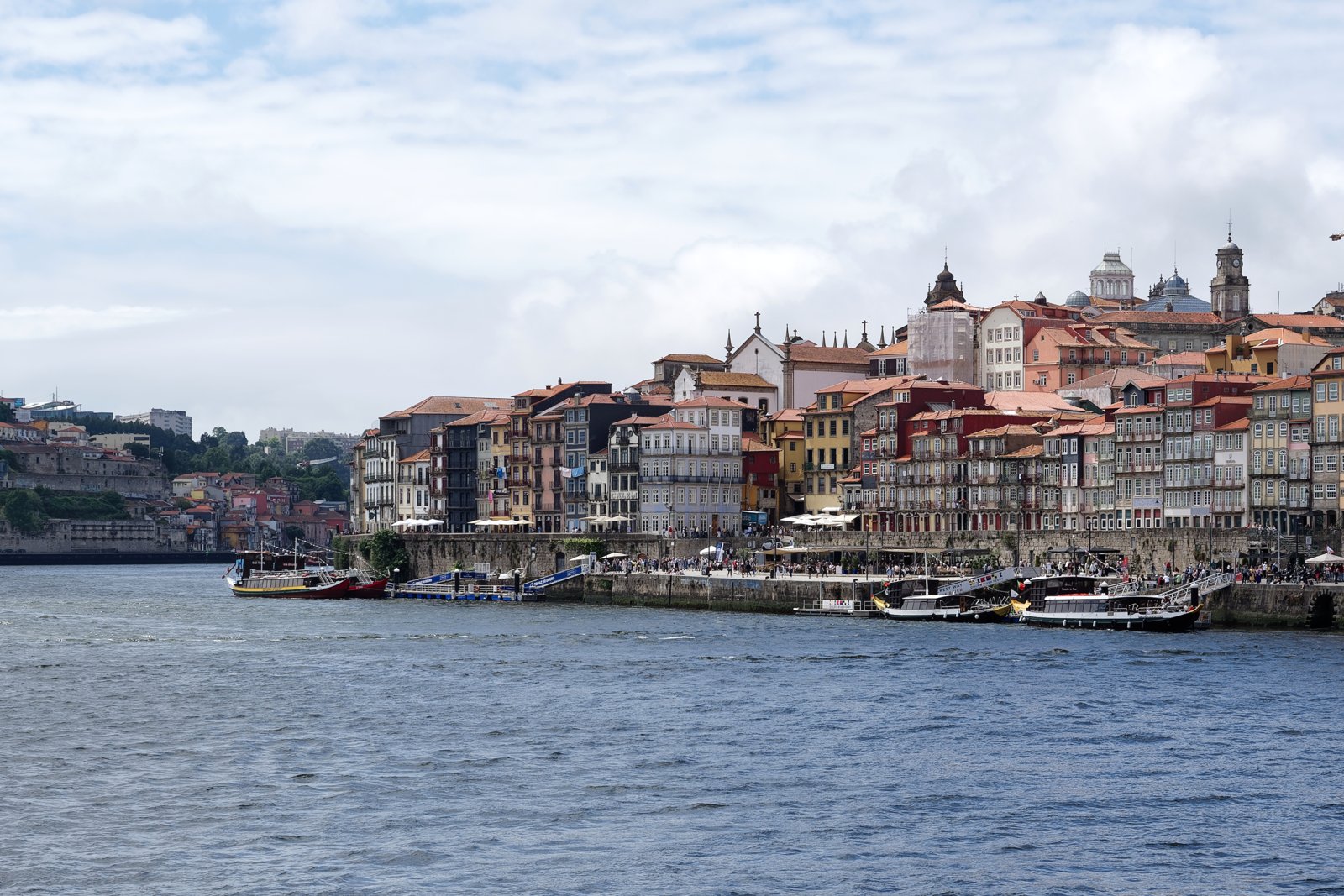
The Ribeira district along the Porto side of the river is the most atmospheric neighborhood — colorful buildings stacked on the hillside, waterfront restaurants, and the constant sound of fado music drifting from open doors.
Day Trip: The Douro Valley
The Douro Valley, about 90 minutes east of Porto, is one of the oldest wine regions in the world. The terraced vineyards climbing the steep hillsides above the river are UNESCO-listed and absolutely stunning. We would take a guided day trip that includes a boat cruise on the Douro, lunch at a traditional quinta (wine estate), and tastings of both port and Douro table wines. Day trips run about 80-120 EUR per person and are worth the cost for the scenery alone.
Lisbon: Seven Hills and Endless Charm
The train from Porto to Lisbon takes about three hours on the Alfa Pendular (Portugal’s high-speed service, about 25-35 EUR booked in advance). Lisbon is one of Europe’s most charismatic cities — hilly, colorful, slightly rough around the edges, and completely addictive.
The Alfama district is the oldest neighborhood: a maze of narrow streets, tiled facades, and tiny fado bars. The Sao Jorge Castle at the top of the hill has the best views in the city. Belem, on the western edge along the river, has the Jeronimos Monastery (spectacular Manueline architecture), the Tower of Belem, and the legendary Pasteis de Belem — the original custard tart bakery, and yes, the line is always long, and yes, it is worth it.
The LX Factory in a converted industrial complex has become Lisbon’s creative hub — bookshops, restaurants, galleries, and weekend markets. The Time Out Market at Cais do Sodre brings together the city’s best chefs under one roof — it is a food hall done right.
Lisbon’s tram system is part of the experience. Tram 28 winds through the historic neighborhoods and is a scenic ride, though it is also notoriously crowded and popular with pickpockets. Ride it early morning or skip it for the equally scenic but less crowded Tram 12.
Day Trip: Sintra
Sintra is 40 minutes from Lisbon by train and feels like stepping into a fairy tale. The Pena Palace is a wildly colorful Romanticist castle perched on a hilltop surrounded by forest. The Moorish Castle ruins nearby offer views across the Atlantic. The town itself is charming with pastry shops (try the travesseiros at Piriquita) and shaded gardens. Go early — Sintra gets extremely crowded by midday, especially in summer.
The Algarve: Cliffs, Caves, and Golden Beaches
From Lisbon, the train to the Algarve takes about three hours to Faro. The Algarve coast is Portugal’s beach paradise — dramatic limestone cliffs, hidden coves, sea caves, and some of the warmest water in mainland Europe.
Lagos is one of the best base towns. The old town is walkable and lively, and Praia do Camilo (reached by a wooden staircase cut into the cliffs) is one of the most beautiful small beaches in Europe. The Ponta da Piedade headland has dramatic rock formations and sea caves accessible by boat tour (about 20 EUR per person, 90 minutes).
Benagil Cave is the Algarve’s most famous natural landmark — a massive sea cave with a hole in the ceiling that lets sunlight pour onto the beach inside. Access is by kayak, SUP, or boat tour from nearby beaches. Go in the morning for the best light.
For a quieter experience, the western Algarve around Sagres and Cabo de Sao Vicente (the southwestern tip of continental Europe) is more rugged and less developed. The sunsets from the cape are legendary.
What to Eat
Portuguese food is one of Europe’s best-kept secrets:
- Salt cod prepared in hundreds of different ways. The Portuguese say there is a different recipe for every day of the year
- Porto’s signature sandwich — layers of meat, cheese, and a spicy tomato-beer sauce. Absurdly indulgent
- Custard tarts. You will eat dozens. Accept this
- Especially in summer, when sardine season peaks. Simple, fresh, and perfect with a cold beer
- An Algarve specialty — seafood stew cooked in a copper clam-shaped pot
Budget Estimate
Portugal is one of the best values in Western Europe:
- Round trip to Porto (return from Faro) — 45,000-60,000 miles or 500-800 USD
- Porto-Lisbon ~30 EUR, Lisbon-Faro ~25 EUR. Total intercity travel under 60 EUR
- 70-130 EUR per night for good mid-range options. Porto and Lisbon are pricier than the Algarve
- 30-50 EUR per day for two eating well, including wine
- A glass of excellent Portuguese wine costs 3-5 EUR at most restaurants
- Douro Valley day trip 80-120 EUR, Benagil boat tour 20 EUR, Sintra palaces 14-20 EUR each
Portugal Tips
- Book Alfa Pendular trains in advance for the best prices — they sell out on popular routes
- September is the sweet spot: summer crowds thin out, prices drop, but the weather is still warm and sunny
- Get a Viva Viagem card for Lisbon public transport — it works on metro, buses, trams, and the ferry
- Sintra: arrive before 9:30 AM to avoid the worst crowds at Pena Palace
- Portuguese wine is exceptional and absurdly underpriced compared to France or Italy
- Tipping is appreciated but not expected. Round up or leave 5-10% for good service
Related Reading
- Italy by Train: Rome to Milan via Naples and Florence
- Central Europe by Train: Berlin, Prague, Vienna, Munich
- Switzerland by Train: Zurich, Lucerne, the Alps, and Geneva
- Barcelona and the Spanish GP
Gear and Guides We Recommend
Planning a trip like this? Gear worth having along:
- Portugal travel guide
- Rick Steves’ Europe Through the Back Door
- packing cubes
- universal travel adapter
- RFID-blocking neck wallet
These are affiliate links. If you purchase through them, we may earn a small commission at no extra cost to you, which helps support this site.
Book Tours and Activities
- Lisbon Tours & Activities
- Day Trips from Lisbon
- Europe transport: Search trains/buses/flights on Omio
Find Flights to Lisbon
Cheapest Flights to Lisbon
| Departure at | Return at | Stops | Airline | Find tickets |
|---|---|---|---|---|
| Flexible | Flexible | Direct |  |
Check current fares |
Compare flights on Skyscanner — and grab an Airalo eSIM before you land so you have data the moment you arrive.
Book on GetYourGuide:
Tours: Switzerland tours on Viator
Travel Insurance: We use SafetyWing for travel insurance on every international trip. It covers medical emergencies, trip interruptions, and lost luggage starting at $45/month with no fixed end date — perfect for multi-country itineraries.
Book hotels: Search Booking.com hotels
Get Travel Tips That Actually Help
Real costs, honest reviews, and what I’d do differently — delivered to your inbox.
No spam. Unsubscribe anytime.
Plan your own trip: guides I actually use
Related guides:
Written by Jenna Fattah
I have visited 25+ countries across 6 continents, attended 7 Formula 1 races, and spent 4 years writing about what actually works and what I would do differently. Every recommendation on this site comes from trips I planned and paid for myself. Read more about me