South Africa Road Trip: The 14-Day Kruger-to-Cape-Town Route I’d Book
Frequently Asked Questions
What is the best time for a South Africa road trip?
Keep Reading
June through September (South African winter) is ideal for safari. October-November is great for Garden Route with spring wildflowers. December-February is peak summer, good for beaches but crowded and expensive.
How many days do you need for South Africa?
Two weeks minimum for Kruger, Garden Route, and Cape Town. Kruger needs 3-4 days, the Garden Route drive takes 4-5 days, and Cape Town deserves 3-4 days. A rushed 10 days is possible but tight.
Is it safe to drive in South Africa?
Yes, with standard precautions. Drive on the left, avoid driving at night in rural areas, and keep valuables out of sight. The N2 highway along the Garden Route is well-maintained and the scenery is spectacular.
Need a rental car? Compare prices on RentCars for the best deals in South Africa.
Book activities: Browse activities on Klook
Two Weeks From Kruger National Park to the Cape of Good Hope
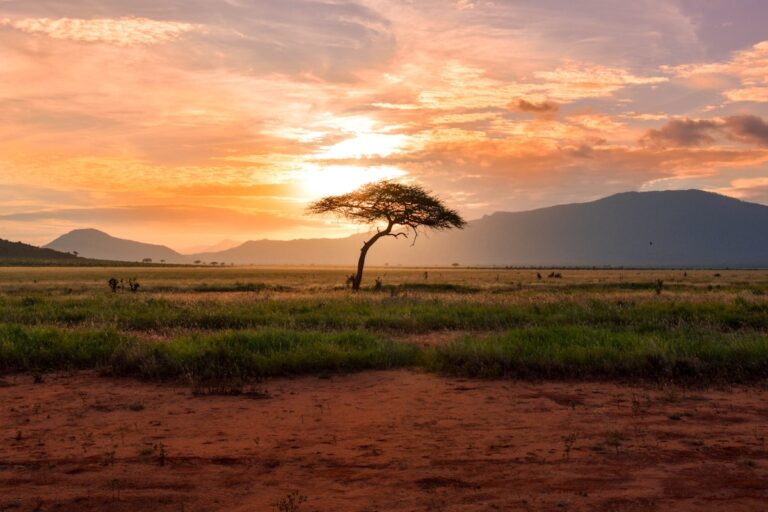
January is summer in South Africa, and this trip starts with a Big Five safari in Kruger and ends at the Cape of Good Hope.
In This Post
January is summer in South Africa — long days, warm weather, and the country at its most lively. This trip starts with a safari in Kruger National Park, follows the Panoramic Route through the Blyde River Canyon, then road trips the famous Garden Route along the coast before ending in Cape Town. It is one of the great driving trips in the world.
Kruger National Park: Big Five Safari
We would fly nonstop from JFK to Johannesburg (United runs the route, about 15 hours), then transfer directly to Kruger — the park is about a 5-hour drive east, or you can fly to Hoedspruit or Nelspruit to cut the drive in half. There is no reason to linger in Johannesburg.
Kruger is one of Africa’s largest and most accessible game reserves. The Big Five (lion, leopard, elephant, rhino, buffalo) are all here, along with hundreds of other species. Three to four days gives you enough time for multiple game drives and a real chance of seeing everything. Self-drive safaris are possible (Kruger has excellent paved roads and rest camps), or you can book guided drives for a better chance at spotting elusive species like leopard.
January is peak summer and the bush is lush and green. Wildlife is more spread out than during the dry winter months, but the birdlife is exceptional and newborn animals are everywhere.
The Panoramic Route: Blyde River Canyon
Leaving Kruger, the drive west through Mpumalanga province follows the Panoramic Route — one of the most scenic drives in Africa. The Blyde River Canyon is the third-largest canyon in the world and is dramatically green compared to its American counterpart. Key stops:
- A viewpoint perched on the escarpment edge with views stretching to the lowveld below
- Bizarre cylindrical rock formations carved by centuries of whirlpools
- Three massive rock pillars overlooking the canyon — the most photographed spot on the route
The drive takes a full day if you stop at all the viewpoints, which you should.
The Garden Route: Coast, Forests, and Adventure
From Johannesburg (or fly from Jo’burg to George or Port Elizabeth to save driving time), the Garden Route runs along the southern coast between Mossel Bay and Storms River. This is South Africa’s adventure playground.
A lagoon town surrounded by indigenous forest. The Knysna Heads (two massive sandstone cliffs guarding the lagoon entrance) are dramatic. The oysters here are famous — order them fresh at one of the waterfront restaurants.
Beautiful beaches and the Robberg Nature Reserve, a peninsula hike with views of seals, dolphins, and (in season) whales. The hike is about 9 kilometers and takes 3-4 hours.
Dense forest meets rocky coastline. The suspension bridge over Storms River Mouth is the iconic photo spot. Hiking, kayaking, and bungee jumping from the Bloukrans Bridge (the world’s highest commercial bungee at 216 meters) are all here.
A detour inland takes you over the Outeniqua Pass to Oudtshoorn, the ostrich capital of the world. The Cango Caves are a massive underground cave system with impressive stalactites.
Cape Town: The Grand Finale
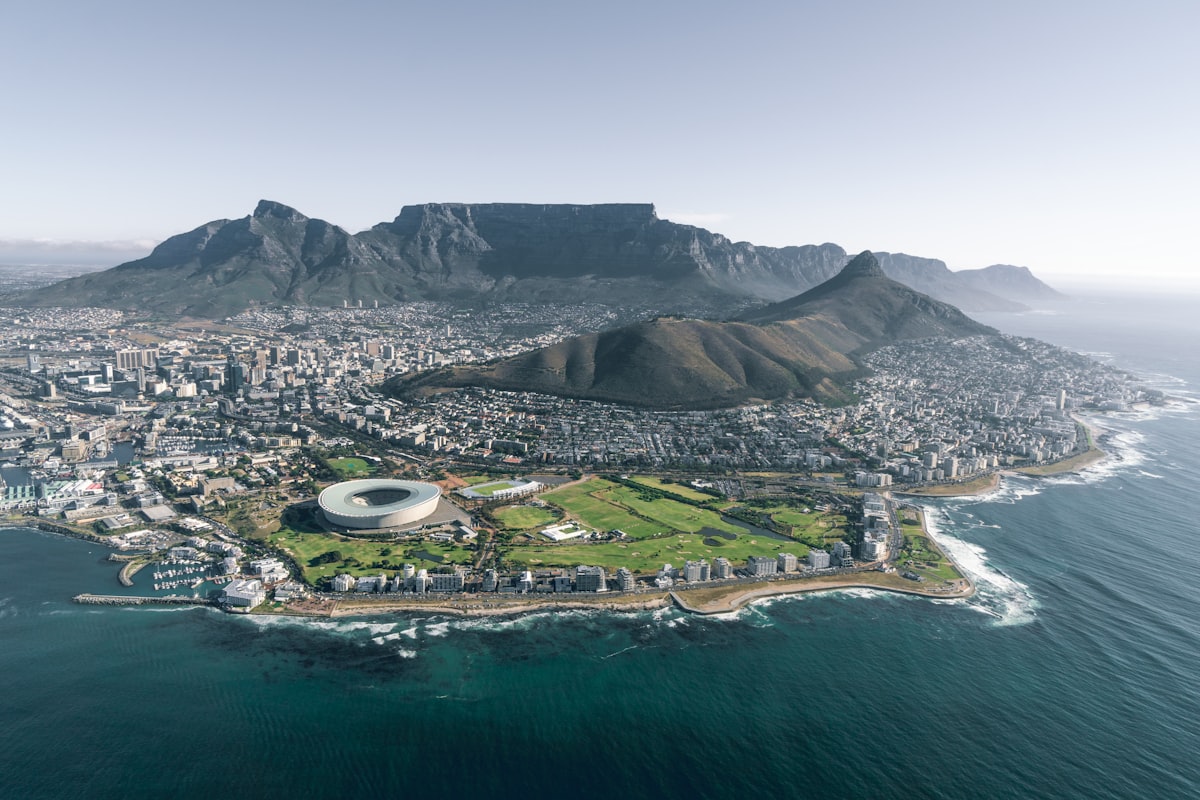
Cape Town is consistently ranked among the most beautiful cities in the world, and the setting — between Table Mountain and the Atlantic Ocean — justifies the claim completely.
Take the cable car up (or hike if you are fit — the Platteklip Gorge route takes about 2 hours). The flat summit offers 360-degree views of the city, the ocean, and Robben Island. Go early morning or late afternoon for the best light and shortest queues.
A day trip down the Cape Peninsula is essential. Chapman’s Peak Drive is one of the most spectacular coastal roads anywhere. The Cape of Good Hope is not technically the southernmost point of Africa (that is Cape Agulhas), but the dramatic cliffs and crashing waves make it feel like the edge of the world.
Cape Town’s harbor development has excellent restaurants, the Zeitz Museum of Contemporary Art Africa (housed in a converted grain silo — the architecture alone is worth visiting), and the departure point for Robben Island ferries.
Stellenbosch and Franschhoek are 45 minutes from Cape Town and produce world-class wines (especially Pinotage, Chenin Blanc, and Cabernet blends). Wine tasting in the Cape is affordable and the estates are beautiful — many have excellent restaurants attached.
Budget Estimate
South Africa offers exceptional value compared to East African safaris:
- JFK to Johannesburg, Cape Town to JFK — 80,000-90,000 United miles per person, or 900-1,200 USD cash
- About 30-40 USD per day for an automatic. Budget 300-400 USD total for two weeks
- 50-120 USD per night for good mid-range options. South Africa is very affordable
- Self-drive with rest camp accommodation from 50-80 USD per night. Guided lodges 200-500 USD per night
- 25-40 USD per day for two. Cape Town restaurants are excellent and affordable
- 5-15 USD per tasting at most estates
Tips
- January is peak season — book Kruger camps and Garden Route accommodation well in advance
- Drive on the left side of the road. Most rental cars are manual transmission; request automatic early
- The Garden Route is safe and well-maintained. Cape Town and Johannesburg require normal city safety awareness
- Kruger self-drive is straightforward — stick to speed limits (animals have right of way) and return to camp before gate closing time
- The open-jaw flight (in to Jo’burg, out of Cape Town) avoids backtracking and is often a similar price
Related Reading
- Kenya, Tanzania, Zanzibar: Safari and Beach in August
- Provence Road Trip in Lavender Season, Then Paris
- Balkans Road Trip: Budapest to Sofia via the Adriatic Coast
- Greece Road Trip in October: Athens to Delphi
- January: Peak Safari ‘ Winter Diving
Tours Worth Booking
If you’re planning a similar trip, these are tours I’d recommend looking into:
- Table Mountain, Penguins & Cape Point Group Tour
- Full-Day Cape Peninsula Tour
- 4-Day Classic Kruger Safari
- 3-Day Garden Route with Game Safari
Gear and Guides We Recommend
Planning a trip like this? Gear worth having along:
- South Africa travel guide
- compact binoculars
- safari sun hat
- travel camera with zoom
- Africa safari guidebook
These are affiliate links. If you purchase through them, we may earn a small commission at no extra cost to you, which helps support this site.
Find Flights to Cape Town
Cheapest Flights to Cape Town
| Departure at | Return at | Stops | Airline | Find tickets |
|---|---|---|---|---|
| Flexible | Flexible | Direct |  |
Tickets from 1 068 |
Compare flights on Skyscanner — and grab an Airalo eSIM before you land so you have data the moment you arrive.
Book Activities: South Africa safari and tours on GetYourGuide
Travel Insurance: We use SafetyWing for travel insurance on every international trip. It covers medical emergencies, trip interruptions, and lost luggage starting at $45/month with no fixed end date — perfect for multi-country itineraries.
Rental Cars: Compare rental car prices across all major agencies with RentCars — we use them to find the cheapest rates for road trips.
Book hotels: Search Booking.com hotels
Get Travel Tips That Actually Help
Real costs, honest reviews, and what I’d do differently — delivered to your inbox.
No spam. Unsubscribe anytime.
Written by Jenna Fattah
I have visited 25+ countries across 6 continents, attended 7 Formula 1 races, and spent 4 years writing about what actually works and what I would do differently. Every recommendation on this site comes from trips I planned and paid for myself. Read more about me