
Frequently Asked Questions
What is the best time to visit Scandinavia?
June through August for the midnight sun, long days, and mild temperatures. This is peak season with higher prices but the endless daylight is worth it. May and September are cheaper but colder.
Is Scandinavia expensive?
Yes, consistently. Copenhagen is slightly cheaper than Stockholm and Oslo. Budget $200-300 per day for two including hotels, meals, and sightseeing. Street food and grocery stores help control food costs.
How do you travel between Scandinavian cities?
Fly budget airlines (Norwegian, SAS) or take trains. Copenhagen to Stockholm is 5 hours by train through gorgeous countryside. The Norway in a Nutshell route from Bergen to Oslo is a top scenic rail journey.
Two Weeks in the Nordics During the Best Time to Visit
August in Scandinavia means 16+ hours of daylight, comfortable temperatures, and fjords at their absolute best.
In This Post
- Two Weeks in the Nordics During the Best Time to Visit
- Copenhagen: Design, Food, and Bicycles
- Norway: Bergen and the Fjords
- Stockholm: Islands, History, and Archipelago Life
- Budget Estimate
- Tips for Scandinavia in August
- Book Tours and Activities
- Find Flights to Copenhagen
- Frequently Asked Questions
August is the sweet spot for Scandinavia. The days are long (16+ hours of daylight), temperatures are comfortable (mid-60s to low-70s Fahrenheit), and the fjords, islands, and coastal cities are at their most accessible. We are planning a two-week route through Copenhagen, the Norwegian fjords, and Stockholm — three very different takes on Nordic life.
Copenhagen: Design, Food, and Bicycles
Copenhagen is one of the most livable cities in the world, and you feel it immediately. The city runs on bicycles (there are more bikes than people), the architecture mixes colorful historic buildings with striking modern design, and the food scene punches way above its weight.
Nyhavn is the famous canal-side strip of colorful townhouses — touristy but pretty, especially in the evening light. Tivoli Gardens, the 19th-century amusement park in the city center, is more charming than it sounds and worth an evening visit when it is lit up. The National Museum and the Design Museum are both excellent for understanding Danish culture and aesthetics.
Christiania, the self-proclaimed autonomous neighborhood, is one of the most unique places in any European city — an alternative community with art installations, handmade houses, and a relaxed atmosphere. The food halls at Torvehallerne are the best place for a casual lunch: open-faced sandwiches (smorrebrod), fresh seafood, and Danish pastries that put any American bakery to shame.
For a day trip, take the train 40 minutes north to Louisiana Museum of Modern Art, set on the coast with sculpture gardens overlooking the sea. It is one of the best art museums in Europe in one of the most beautiful settings.
Norway: Bergen and the Fjords
From Copenhagen, a short flight to Bergen (about 90 minutes) drops you into fjord country. Bergen’s colorful wooden houses at Bryggen (a UNESCO World Heritage site) are the iconic image, and the fish market on the harbor is excellent for fresh seafood.
Take the Floibanen funicular to the top of Mount Floyen for panoramic views of the city, the harbor, and the surrounding mountains. Bergen gets a lot of rain (it is one of the wettest cities in Europe), but August is the driest month — pack a rain jacket anyway.
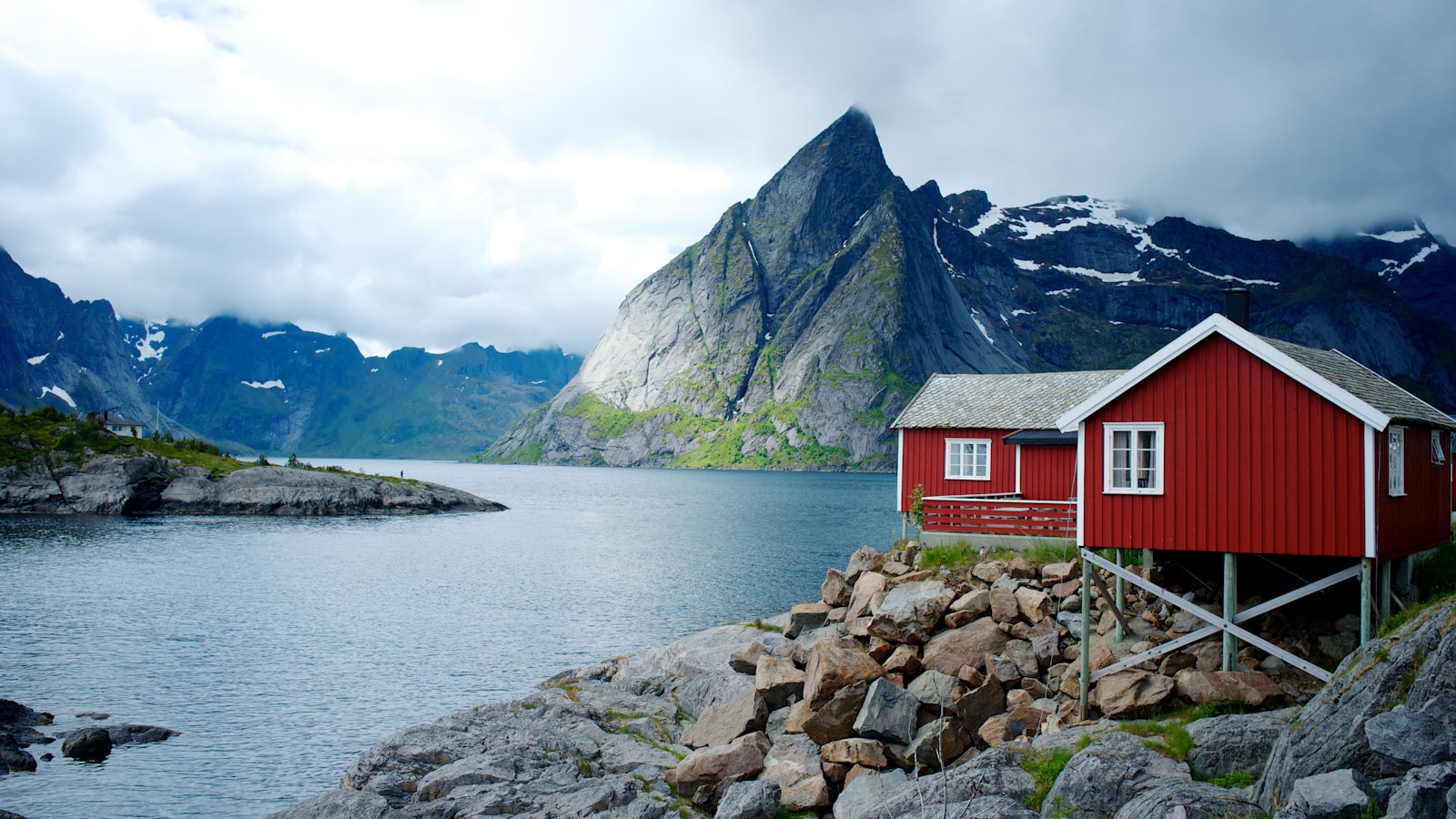
The Norway in a Nutshell route from Bergen is one of the most scenic train journeys in the world. It combines a train ride, a boat trip through the Naeroyfjord (a narrow, dramatic fjord surrounded by cliffs and waterfalls), and the Flam Railway — a steep mountain railway that drops 866 meters in 20 kilometers. You can do it as a day trip from Bergen or take your time and stay overnight in Flam or one of the fjordside villages.
For a deeper fjord experience, Geirangerfjord further north is equally spectacular — waterfalls cascading directly into the fjord from clifftops, tiny farms perched on impossible ledges, and water so calm it mirrors the mountains perfectly.
Stockholm: Islands, History, and Archipelago Life
The flight from Bergen to Stockholm (about 90 minutes) takes you to Sweden’s capital, which is built across 14 islands connected by bridges. The water is everywhere, and in August the whole city feels oriented around it.
Gamla Stan (Old Town) is the medieval core — narrow cobblestone streets, the Royal Palace, and Stortorget, one of the most photographed squares in Scandinavia. The Vasa Museum houses a 17th-century warship that sank on its maiden voyage and was recovered almost perfectly intact 333 years later — it is one of the most impressive museum exhibits anywhere.
Sodermalm is the trendier southern island with vintage shops, coffee roasters, and Fotografiska (the photography museum housed in a former customs building with a rooftop restaurant). Djurgarden island has the Vasa Museum, ABBA Museum, and Skansen (the world’s oldest open-air museum) all in one walkable area.
The Stockholm Archipelago is the real highlight in August. Over 30,000 islands stretch east into the Baltic Sea, and the public ferry system connects many of them. Take a day trip to Sandhamn or Vaxholm for swimming, kayaking, and lunch at a waterfront restaurant. The ferries themselves are part of the experience — scenic, unhurried, and very Swedish.
Budget Estimate
Scandinavia is expensive, but August offers good value compared to the holiday seasons:
- Round trip to Copenhagen (return from Stockholm) — 50,000-70,000 miles or 500-800 USD
- Copenhagen-Bergen and Bergen-Stockholm, 80-150 EUR each on SAS or Norwegian
- 130-200 EUR per night across all three cities. Hostels and Airbnbs can bring this down
- 60-80 EUR per day for two. Eating out is expensive; supplement with supermarket picnics
- About 150-200 EUR per person for the full route
- Day passes for the archipelago ferries around 20-30 EUR
Tips for Scandinavia in August
- Cash is nearly obsolete. Card and mobile payments work everywhere, even at street vendors
- Book the Norway in a Nutshell route in advance — summer is peak season and trains fill up
- Pack layers. August days are warm but evenings can drop to the 50s, especially near the fjords
- The Copenhagen Card covers public transport and 80+ museums — worth it for a 3-day stay
- Stockholm’s public transport (SL card) covers buses, metro, and ferries including archipelago routes
- Tipping is not expected in Scandinavia. Service charges are included in prices
- English is spoken fluently everywhere — you will not need any local language skills
Related Reading
- European Christmas Markets: Vienna, Amsterdam, Paris
- Central Europe by Train: Berlin, Prague, Vienna, Munich
- Provence Road Trip in Lavender Season, Then Paris
- London in 3 Days: What to See, Eat, and Skip
- Curated Vintage: London and Paris Edition
- Paris in 4 Days: Art, Food, and What to Skip
- Greek Islands on the List: Santorini, Mykonos, and the Quieter Ones
Gear and Guides We Recommend
Planning a similar trip? Here are some items we found useful:
- Scandinavia travel guide
- Rick Steves’ Europe Through the Back Door
- packing cubes
- universal travel adapter
- RFID-blocking neck wallet
These are affiliate links. If you purchase through them, we may earn a small commission at no extra cost to you, which helps support this site.
Book Tours and Activities
Find Flights to Copenhagen
Cheapest Flights to Copenhagen
| Departure at | Return at | Stops | Airline | Find tickets |
|---|---|---|---|---|
| 3 April 2026 | 10 April 2026 | Direct |  |
Tickets from 583 |
Compare flights on Skyscanner — and grab an Airalo eSIM before you land so you have data the moment you arrive.
Book on GetYourGuide:
Tours: Amsterdam tours on Viator
Travel Insurance: We use SafetyWing for travel insurance on every international trip. It covers medical emergencies, trip interruptions, and lost luggage starting at $45/month with no fixed end date — perfect for multi-country itineraries.
Book hotels: Search Booking.com hotels
Get Travel Tips That Actually Help
Real costs, honest reviews, and what I’d do differently — delivered to your inbox.
No spam. Unsubscribe anytime.
Written by Jenna Fattah
I have visited 25+ countries across 6 continents, attended 7 Formula 1 races, and spent 4 years writing about what actually works and what I would do differently. Every recommendation on this site comes from trips I planned and paid for myself. Read more about me