From the Rhine Valley to Spa-Francorchamps to Eastern Germany
Spa-Francorchamps is buried in a forest in the Belgian Ardennes, and watching F1 cars tear through Eau Rouge in person is nothing like TV.
In This Post
- From the Rhine Valley to Spa-Francorchamps to Eastern Germany
- The Rhine Valley: Trier, Cologne, and Bonn
- The Belgian Grand Prix at Spa-Francorchamps
- Heading East: Heidelberg
- Berlin: History, Art, and Nightlife
- Dresden: The Baroque Jewel
- What It Cost
- Route Summary
- Book Tours and Activities
- Find Flights to Brussels
The Belgian Grand Prix at Spa-Francorchamps falls in late July, and the timing creates a perfect excuse for a broader trip through western and eastern Germany. We built a ten-day route that started along the Rhine, swung into Belgium for the race, then continued east through some of Germany’s most interesting and undervisited cities.
The Rhine Valley: Trier, Cologne, and Bonn
We flew into Frankfurt and picked up a rental car. The drive south to Trier (about two hours) passes through wine country along the Moselle River. Trier claims to be Germany’s oldest city, and walking through town you believe it — the Porta Nigra (a massive Roman gate from the 2nd century), Roman baths, and the Basilica of Constantine are all within walking distance of each other. It is a small city but packs in an impressive amount of ancient history.
From Trier, we drove northeast to Cologne along the Rhine. The Cologne Cathedral dominates the skyline and is impressive in person — construction started in 1248 and was not finished until 1880. The neighborhood around the cathedral has good restaurants and the famous Kolsch beer halls, where waiters circulate with trays of small glasses and keep refilling until you put your coaster on top.
The Chocolate Museum on the Rhine waterfront is more interesting than it sounds — a thorough walkthrough of cocoa production history with tasting sessions. Museum Ludwig nearby houses an excellent modern art collection including Picasso, Warhol, and Lichtenstein.
Bonn, just 30 minutes south of Cologne, is worth a half-day stop. The former West German capital has an excellent history museum (Haus der Geschichte) that covers Germany from World War II through reunification. The drive along the Rhine from Bonn through Koblenz is one of the most scenic stretches of road in Germany — castles on hilltops, vineyards, and river barges.
The Belgian Grand Prix at Spa-Francorchamps
From Cologne, the drive to Spa-Francorchamps takes about 90 minutes through the Belgian Ardennes. The circuit is set in a forested valley, and the scale of it is hard to appreciate until you are there in person. At over 7 kilometers, Spa is one of the longest tracks on the F1 calendar, and the elevation changes — especially through Eau Rouge and Raidillon — are dramatic.
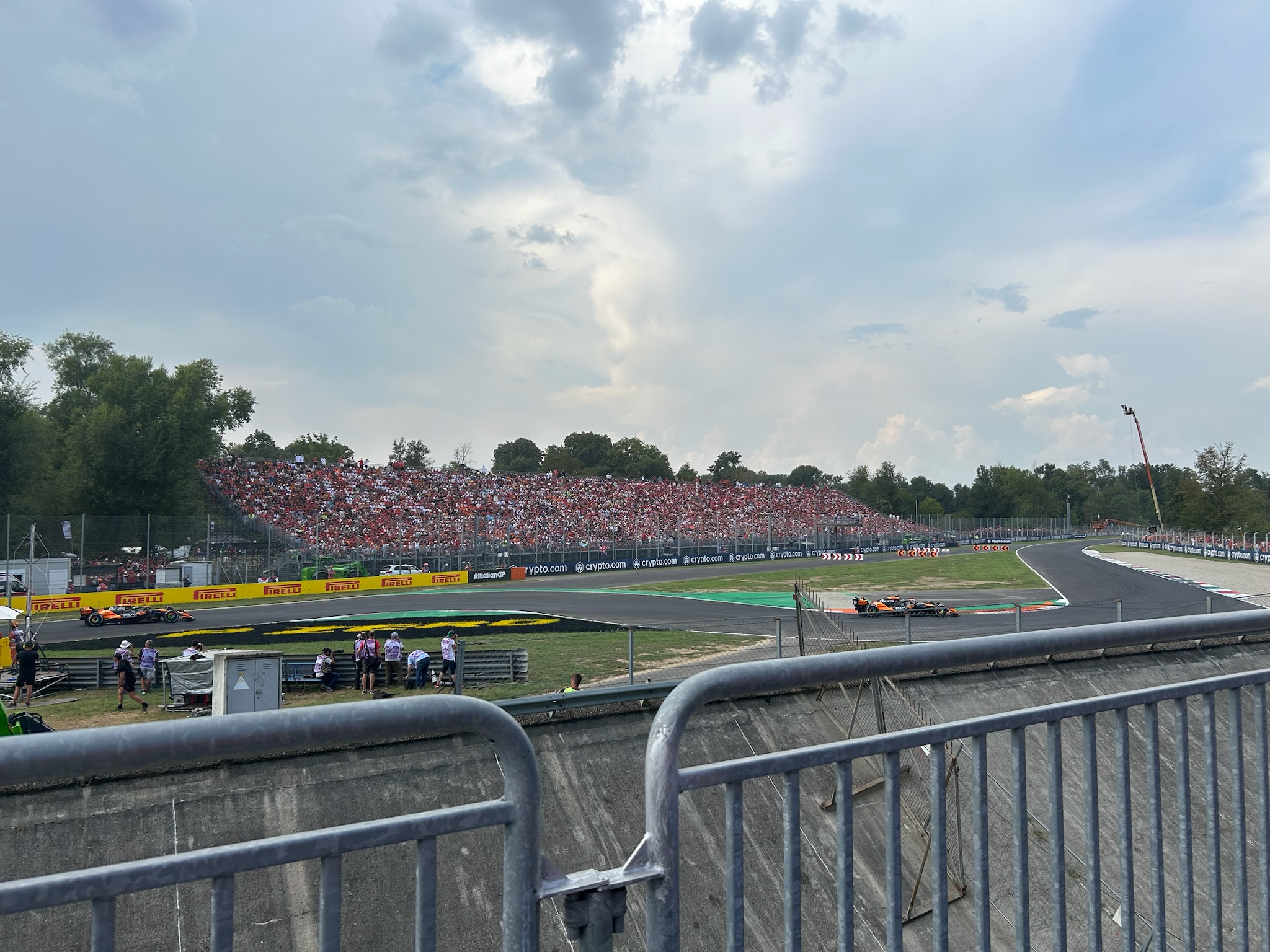
We had Gold 7 grandstand seats at the Kemmel straight, which gave us a great view of the cars cresting Raidillon at full speed and braking into Les Combes. The sound echoing through the forest valley is something TV cannot capture.
Race weekend tips:
- Qualifying on Saturday is arguably more exciting than the race at Spa — the one-lap format on this long circuit creates real drama
- The weather at Spa is famously unpredictable. It can rain on one part of the circuit while the other end is dry. Bring rain gear regardless of the forecast
- A car is essential — the circuit is in a rural area with limited public transport. Shuttle services run from Liege and Brussels on race days
- Arrive early on race day. The walk from parking to the grandstands takes longer than you expect through the forest paths
- Bring your own food and drinks. Prices inside are high and selection is limited
- The GA areas on the hillsides offer surprisingly good views thanks to the natural terrain
We stayed in a nearby town in the Ardennes rather than Spa itself — the area is charming with small hotels and guesthouses. Liege (45 minutes) and Brussels (90 minutes) are alternatives with more hotel options.
Heading East: Heidelberg
After the race, we drove back into Germany and headed southeast to Heidelberg. This was a highlight of the trip. The city sits on the Neckar River with a massive ruined castle perched on the hillside above the old town. The castle is partly destroyed (French troops in the 17th century) and partly restored, and the combination of ruin and grandeur is more atmospheric than any fully preserved castle we visited.
Heidelberg is home to Germany’s oldest university (founded 1386), and the student population keeps the city feeling young and lively. The Altstadt (old town) is walkable and lined with restaurants and bars. The Old Bridge across the Neckar is one of the most photographed spots in Germany for good reason.
Berlin: History, Art, and Nightlife
From Heidelberg, we drove north to Berlin (about five hours on the autobahn, which is an experience in itself with the unrestricted speed sections). Berlin is a city that demands at least three days.
The obvious starting points are the Brandenburg Gate, the Berlin Wall Memorial at Bernauer Strasse, and Checkpoint Charlie. The Topography of Terror (free, outdoor exhibition on the former Gestapo headquarters) is one of the most powerful history museums we have visited anywhere. The Holocaust Memorial near the Brandenburg Gate is equally moving.
Beyond the heavy history, Berlin is one of Europe’s most creative and lively cities. The East Side Gallery (the longest remaining stretch of the Berlin Wall, now covered in murals) is a must. Kreuzberg and Neukolln neighborhoods have excellent street food, bars, and a multicultural energy. The Tiergarten park is Berlin’s Central Park equivalent — perfect for a morning run or afternoon walk.
Berlin’s food scene is diverse and affordable. Currywurst from a street stand, Turkish doner kebab in Kreuzberg, Vietnamese food in Prenzlauer Berg — you can eat incredibly well for very little.
Dresden: The Baroque Jewel
Dresden is just two hours southeast of Berlin and was the biggest surprise of the trip. The old town was almost completely destroyed in World War II but has been painstakingly rebuilt. The Frauenkirche (Church of Our Lady) was reconstructed from the rubble over decades and reopened in 2005 — the story of its destruction and resurrection is deeply moving.
The Zwinger Palace complex houses several museums, including an outstanding Old Masters gallery with works by Raphael and Vermeer. The Bruehl’s Terrace along the Elbe River is called the “Balcony of Europe” and offers beautiful views across the river to the Neustadt (new town) district, which ironically is the more bohemian, bar-filled neighborhood.
We spent one full day in Dresden and wished we had two. The combination of Baroque architecture, excellent museums, and a growing food and drink scene makes it one of Germany’s most underrated cities.
What It Cost
- Round trip to Frankfurt — booked with miles, about 55,000 per person
- About 50-60 euros per day for 10 days, including autobahn driving
- 80-150 euros per night (Germany and Belgium are generally good value)
- Gold grandstand seats at Spa about 350-500 euros for race weekend
- 35-55 euros per day for two people — Germany is very affordable for eating out
- Budget 150-200 euros total for the full route
Route Summary
- Day 1-2: Frankfurt → Trier → Cologne (Rhine Valley)
- Day 3: Cologne → Bonn → Rhine drive
- Day 4-5: Drive to Spa-Francorchamps, qualifying and race day
- Day 6: Spa → Heidelberg
- Day 7-8: Heidelberg → Berlin
- Day 9-10: Berlin → Dresden → fly home from Berlin or Dresden
Book on GetYourGuide:
Related Reading
- Austria and Bavaria: Vienna, Salzburg, and the F1 GP
- Amsterdam, Brussels, and the Dutch Grand Prix by Train
- Barcelona, Costa Brava, and the F1 Spanish Grand Prix
- Our Trip to the F1 Italian Grand Prix at Monza
Gear and Guides We Recommend
Planning a similar trip? Here are some items we found useful:
These are affiliate links. If you purchase through them, we may earn a small commission at no extra cost to you, which helps support this site.
Book Tours and Activities
Find Flights to Brussels
Cheapest Flights to Brussels
| Departure at | Return at | Stops | Airline | Find tickets |
|---|---|---|---|---|
| 4 May 2026 | 15 May 2026 | Direct |  |
Tickets from 444 |
Compare flights on Skyscanner — and grab an Airalo eSIM before you land so you have data the moment you arrive.
Tours: Amsterdam tours on Viator
Activities: Thailand on Klook
Travel Insurance: We use SafetyWing for travel insurance on every international trip. It covers medical emergencies, trip interruptions, and lost luggage starting at $45/month with no fixed end date — perfect for multi-country itineraries.
Frequently Asked Questions
How do you get to the Spa-Francorchamps F1 circuit?
The nearest city is Liege, Belgium (45 minutes by car). Most fans stay in Liege or Stavelot and drive or take shuttle buses on race day. From Cologne, Germany, it is about 1.5 hours by car.
How much does the Belgian Grand Prix cost?
General admission starts around $120-150 for race day. Three-day grandstand seats run $300-600 depending on location. Add $100-200/night for hotels in Liege or nearby towns, plus food and transport.
Is the Rhine Valley worth visiting on a Germany road trip?
Absolutely. The stretch between Koblenz and Mainz has the highest concentration of castles in Europe, excellent Riesling wine, and scenic driving along the river. Budget 2-3 days minimum.
Book hotels: Search Booking.com hotels
Get Travel Tips That Actually Help
Real costs, honest reviews, and what I’d do differently — delivered to your inbox.
No spam. Unsubscribe anytime.
Written by Jenna Fattah
I have visited 25+ countries across 6 continents, attended 7 Formula 1 races, and spent 4 years writing about what actually works and what I would do differently. Every recommendation on this site comes from trips I planned and paid for myself. Read more about me