Costa Brava Day Trip from Barcelona: Calella, Tossa de Mar, and the Coastal Drive
We left Barcelona at 9am with a rented Seat Ibiza and no fixed plan beyond “drive north along the coast and stop when something looks good.” Eight hours later we were back with sunburn, two rounds of anchovies, and a working theory that the Costa Brava is the best day trip from any city in Spain.
In This Post
This was day four of our May 2023 Barcelona trip — the week we split between the city, the Spanish Grand Prix at Circuit de Barcelona-Catalunya, and two days driving the Costa Brava. The Grand Prix was the anchor of the trip; the coast was the part I hadn’t planned carefully and ended up being the part I think about most.
The Costa Brava is the stretch of coastline running northeast of Barcelona toward the French border. It covers roughly 200 kilometers, which sounds manageable until you look at the actual roads — narrow, winding, with villages tucked into every cove that require a detour to reach. You cannot cover all of it in a day. You pick a stretch and commit.
The full Catalonia trip — Barcelona, the F1 race, two days on the coast — is in the parent post here. This is the Costa Brava day specifically.
Getting There from Barcelona
We rented a car from the Hertz at Barcelona El Prat airport, which was cheaper than picking up in the city center (about $40/day versus $65 for an equivalent car from the Passeig de Gràcia pickup location). The AP-7 motorway runs northeast from Barcelona to Girona and takes about an hour without traffic. From Girona you branch off depending on which part of the coast you’re targeting. We went for the central Costa Brava — Tossa de Mar, Calella de Palafrugell, L’Estartit — which added another 30-45 minutes of driving.
Total: about 1.5 hours from Barcelona city center to Tossa de Mar. The motorway is straightforward. The coast roads after you exit are not — expect single-lane switchbacks, tunnels cut directly into cliff faces, and the occasional tour bus blocking a hairpin for several minutes while it negotiates a turn. It’s a good road if you’re comfortable with that. Not ideal if you are not.
You can also reach the Costa Brava by train from Barcelona Sants to Girona (40 minutes), then bus from Girona station to the coastal towns. This works but limits you to the bus schedules, which run infrequently outside peak summer. A car gives you the ability to stop whenever something catches your eye, which on this particular coast happens constantly.
Tossa de Mar
We hit Tossa first, arriving around 10:30am before the tour buses got there. The old town — the Vila Vella — is a 12th-century walled village on a promontory above the beach, the only remaining medieval fortified settlement on the entire Catalan coast. The walls are intact. You walk up through the village gate, loop along the battlements looking down over the bay, and then wind back down through narrow streets to the lower town and the beach.
In May the beach was quiet enough to find a spot without difficulty. High season (July-August) would be a different story — Tossa is well-known. The water was cold but swimmable, and the view looking back at the walled town from the water is one of those compositions that makes you feel like you’ve stumbled into a painting. I say that aware of how that sounds. It’s genuinely that good.
There’s a small archaeological museum inside the Vila Vella (€3 entry) that we poked into for fifteen minutes. Nothing extraordinary but worth it for the Roman mosaic fragments from a nearby villa excavation.
Calella de Palafrugell
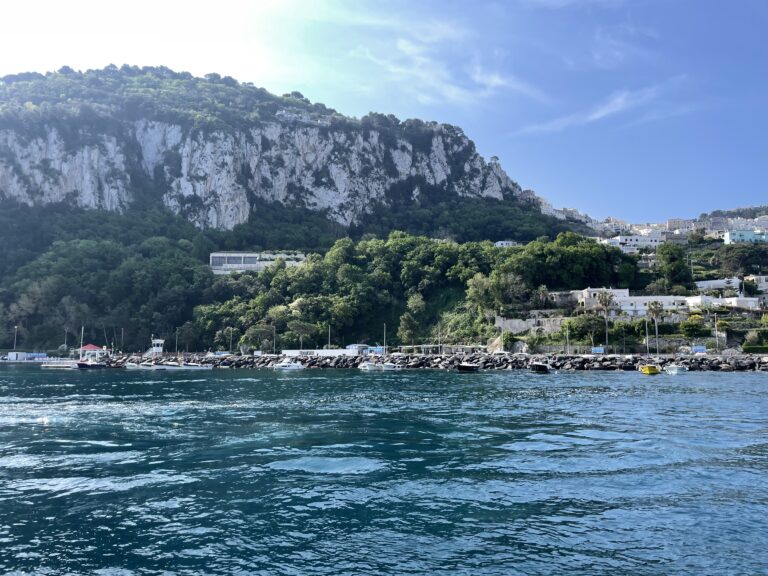
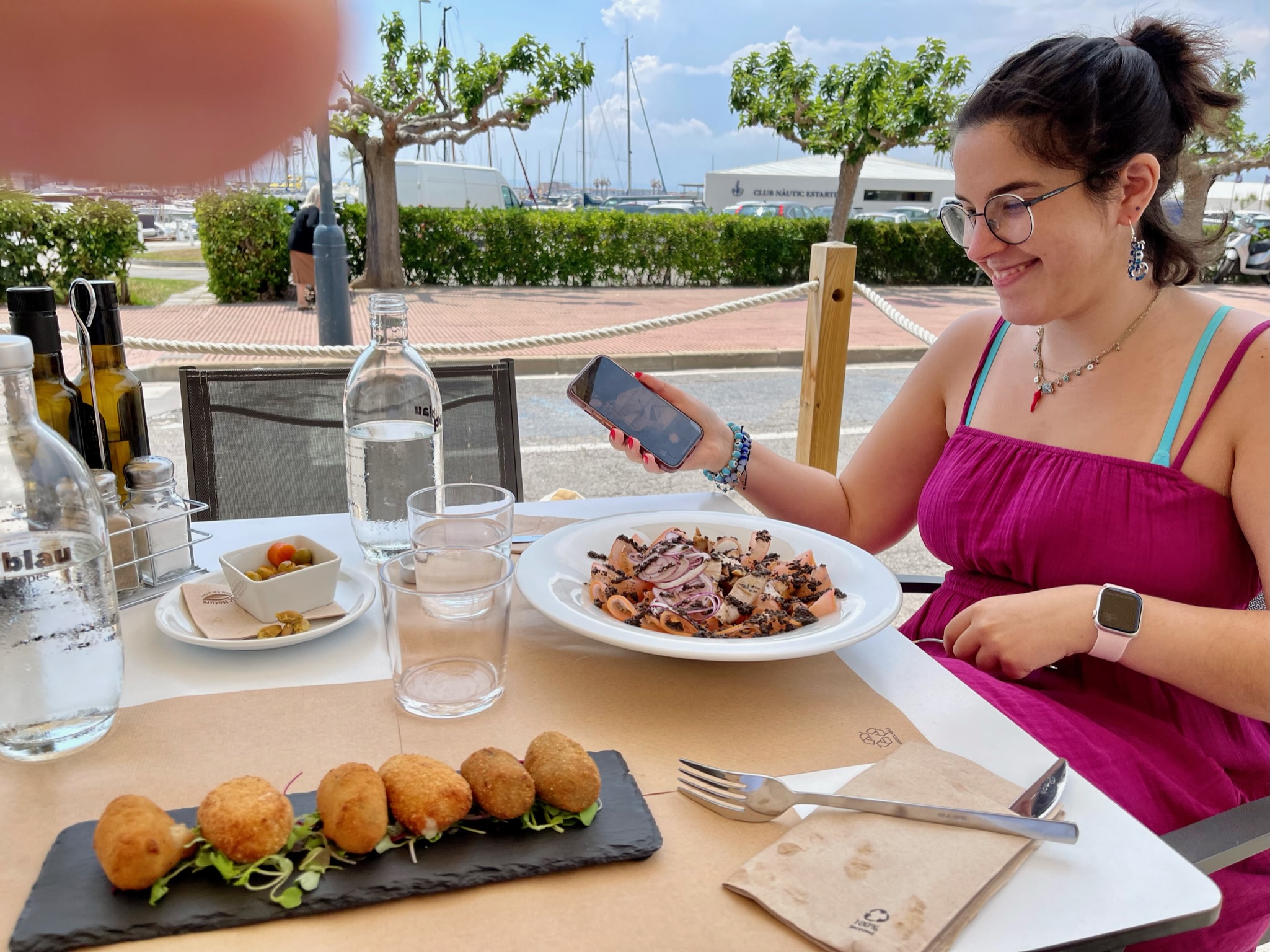
An hour north of Tossa, Calella de Palafrugell is the version of the Costa Brava that ends up on every “most beautiful towns in Spain” list, and for once the lists are not wrong. White buildings stacked up a hillside, small fishing boats pulled up on a rocky beach between coves, and clarity in the water that makes you want to cancel your return flight. We arrived around 1pm and ate lunch at a table six meters from the water — grilled fish, bread with tomato, a carafe of white wine, roughly €22 each including a shared dessert.
The town itself is tiny. The main strip runs along the seafront with a handful of restaurants and a small market square one block in. There’s nothing to “do” in the organized sense. You swim, you eat, you walk between coves, you repeat. We stayed three hours and it wasn’t enough.
Parking in Calella is limited and fills up by midday in May. We got a spot in the main lot at the edge of town (€3/hour) by arriving before 1pm. By the time we left at 4pm the lot was full and cars were queued on the access road. Go early or plan to park outside the village and walk in.
L’Estartit and the Medes Islands
We made L’Estartit a brief stop rather than a full afternoon — by the time we arrived it was nearly 4:30pm and the glass-bottom boat tours had stopped running. L’Estartit is a slightly larger beach town, less photogenic than Calella, but the draw is the Medes Islands just offshore: a protected marine reserve with exceptional snorkeling and diving. We didn’t get in the water here but I’d come back specifically to snorkel the reserve. The islands are visible from the beach and the water around them is noticeably clearer than the open coast.
If you’re building a day trip specifically around L’Estartit, the glass-bottom boat tours run roughly €15 per person from the harbor and take about an hour. There are also half-day kayak tours that paddle out to the islands. Both book up in July and August; in May we’d have had no trouble getting on a boat if we’d arrived by noon.
What to Eat
Anchovies. The Costa Brava, and the area around L’Escala specifically, is known for producing some of the best anchovies in Spain — salt-cured for months, served whole on bread or in oil. We had them twice: once in Calella as part of a mixed plate (€8) and again in L’Estartit at a harbor bar with a glass of cava (€6 for the anchovies, €4 for the cava). Nothing about that second plate was complicated and it was one of the best things I ate on the whole trip.
Avoid the laminated-menu tourist restaurants on the seafront in Tossa during peak hours. Look one block back from the water in any of these towns and the quality jumps significantly while the price drops. The lunch at Calella where we paid €22 each was one block off the main seafront walk.
What Didn’t Work
We underestimated the driving time between towns. The GPS estimates along the coastal road are optimistic — they don’t account for the bus blocking the road above Tossa for twelve minutes or the fact that every village requires a three-point approach through streets that weren’t designed for modern cars. Between Tossa, Calella, and L’Estartit we drove about four hours total. That left less time in each place than I’d planned for. If I did it again, I’d pick two stops instead of three, or allow a full two days on the coast.
Also: the toll on the AP-7 caught us off-guard. We didn’t have a Spanish credit card registered with the electronic toll system, which meant stopping at the booth and paying cash — fine, but the queues at the Barcelona-approaching booths at 7pm were fifteen minutes long. Build that into your return timing.
Tour Options If You’re Not Driving
Organized tours from Barcelona are widely available and make sense if you’d rather not navigate the coast roads yourself. Viator’s Costa Brava day tours from Barcelona cover the main towns (Tossa de Mar, Cadaqués, or a mixed itinerary) with round-trip transport and a guide included. Get Your Guide also lists Costa Brava full-day tours with several itinerary variations.
The trade-off is flexibility: organized tours follow a set route and you won’t have the option to stay an extra hour in Calella because the water looks too good to leave. For people who want someone else to manage logistics and parking, they’re a solid option. The tour companies also tend to include lunch or a restaurant reservation, which removes one variable from the day.
Frequently Asked Questions
How far is the Costa Brava from Barcelona?
The closest Costa Brava towns (Tossa de Mar, Blanes) are about 80 kilometers northeast of Barcelona, roughly 1 to 1.5 hours by car depending on traffic. Further north along the coast (Cadaqués, L’Escala) adds another 30-60 minutes of driving. By train from Barcelona Sants to Girona (40 minutes) followed by bus to the coastal towns is the public transport option.
Do you need a car to visit the Costa Brava from Barcelona?
Not strictly, but a car gives you the flexibility to stop between towns and explore the coastal roads. Bus service from Girona to the main towns exists but runs on limited schedules outside summer. Organized day tours from Barcelona are the other practical option and handle all transport logistics.
What is the prettiest town on the Costa Brava?
Calella de Palafrugell and Cadaqués get the most votes, and both deserve the reputation. Calella is easier to reach on a day trip from Barcelona. Cadaqués is further north (two hours from the city) and has a different character — whitewashed houses, Dalí connections, a more bohemian crowd. Tossa de Mar has the best medieval architecture. Choosing depends on whether you’re prioritizing beaches, scenery, or history.
When is the best time to visit the Costa Brava?
May and September are the answer on every count: warm enough to swim, parking is manageable, restaurants are open, and you’re not sharing a cove with four tour buses. July and August bring the full Mediterranean summer crowd, which means packed beaches, expensive accommodation, and the coastal roads at their most chaotic. If your trip is locked into summer, go early on weekdays and target the smaller coves away from Tossa and Lloret.
Plan your own trip: guides I actually use
More from this region:
- Costa Brava Day Trips from Barcelona: The Towns Worth Visiting
- Where to Stay for European F1 Races — Monza, Barcelona, Spa, and Austria
Cards, lounges & insurance:
- Best Airport Lounges I Have Actually Used — From Changi to Istanbul
- Is Priority Pass Worth It in 2026 — My Honest Review After 15 Airports
- Best Travel Credit Cards for 2026: The Cards I Actually Use and Why
- Best Travel Insurance for 2026: What I Actually Recommend After 15 International Trips
Finding cheap flights:
- When to Book Flights by Region — The Booking Windows That Actually Save Money
- How to Find Error Fares and Flight Deals — The Services I Actually Use
- Google Flights vs Skyscanner vs Momondo — Which Actually Finds the Cheapest Flights
Staying connected abroad:
- Best VPN for Travel 2026 — NordVPN vs Surfshark and Why You Need One
- Best eSIM for Travel 2026 — Holafly vs Airalo vs Nomad
Travel gear I actually use:
- Best Portable Chargers for Travel in 2026: Which Size You Actually Need
- My Exact Travel Tech Setup After 15 International Trips
- Best Noise-Canceling Headphones for Travel in 2026: Tested on 40+ Flights
- Best Travel Backpacks for 2026: The 5 I Have Actually Used
Written by Jenna Fattah
I have visited 25+ countries across 6 continents, attended 7 Formula 1 races, and spent 4 years writing about what actually works and what I would do differently. Every recommendation on this site comes from trips I planned and paid for myself. Read more about me