What I’d Do Differently: Italy September vs May
Updated April 2026 | 7 min read
- Two Italy Trips, Different Seasons
- Weather: What “Shoulder Season” Actually Means in Italy
- Crowds: Slightly Thinner, Not Thin
- Pricing: Where September Has the Edge
- What May Gets Right
- What September Gets Right
- The Honest Recommendation
- Travel Tools We Actually Use
- Book Tours and Activities
- Gear That Saved Us in Europe
- Find Your Next Flight
- Plan Your Trip to Italy
Two Italy Trips, Different Seasons
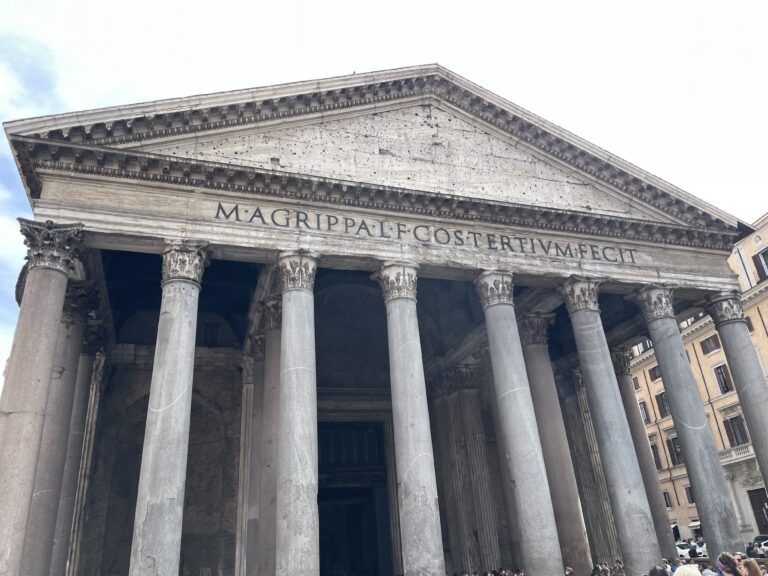
I’ve done Italy twice now: May 2022 and September 2024. Different routes, different rhythms, different versions of the same country. The May trip was Rome and Naples — slower, more focused, warmer than I expected. The September trip was Milan to Rome with a race weekend, a road trip, and Florence in between — faster, slightly cooler, and meaningfully cheaper.
This is part of the ongoing What I’d Do Differently: Italy Edition series. The short version: both trips were good. Neither season is objectively better. But they’re different enough that the choice matters depending on what you’re optimizing for.
Weather: What “Shoulder Season” Actually Means in Italy
May
May 2022 was warmer than I expected in Rome. Highs around 25-27°C (77-81°F) by late May, which is pleasant if you’re moving slowly and brutal if you’re doing eight kilometers a day through the forum and up to the Palatine. The evenings were comfortable. Rain is possible but usually brief. It’s genuinely good weather, just not cool.
September
September 2024 was similar in temperature to May but felt different in character. Early September in northern Italy — Milan, Monza — ran warm during race weekend, mid-20s, with a hint of something cooling in the evenings that May didn’t have. Florence was 28°C during the day but dropped to 18 at night. Rome was the hottest stop on the September trip, still in the low 30s the first day, which was a reminder that Rome in summer doesn’t fully release until October.
The honest answer: September is not dramatically cooler than May in central and southern Italy. The difference is real but it’s 3-5 degrees, not 10. What changes is the quality of the light — September afternoon light in Tuscany is distinctly golden in a way May isn’t — and the evenings, which are noticeably more comfortable by mid-September.
Crowds: Slightly Thinner, Not Thin
May
May 2022 felt crowded at every major site. The Colosseum queue — even with a timed entry — involved significant waiting. The Vatican Museums were overwhelming. The Amalfi towns I visited on the Naples leg were jammed by Memorial Day weekend. May is shoulder season in the calendar sense but not in the lived sense.
September
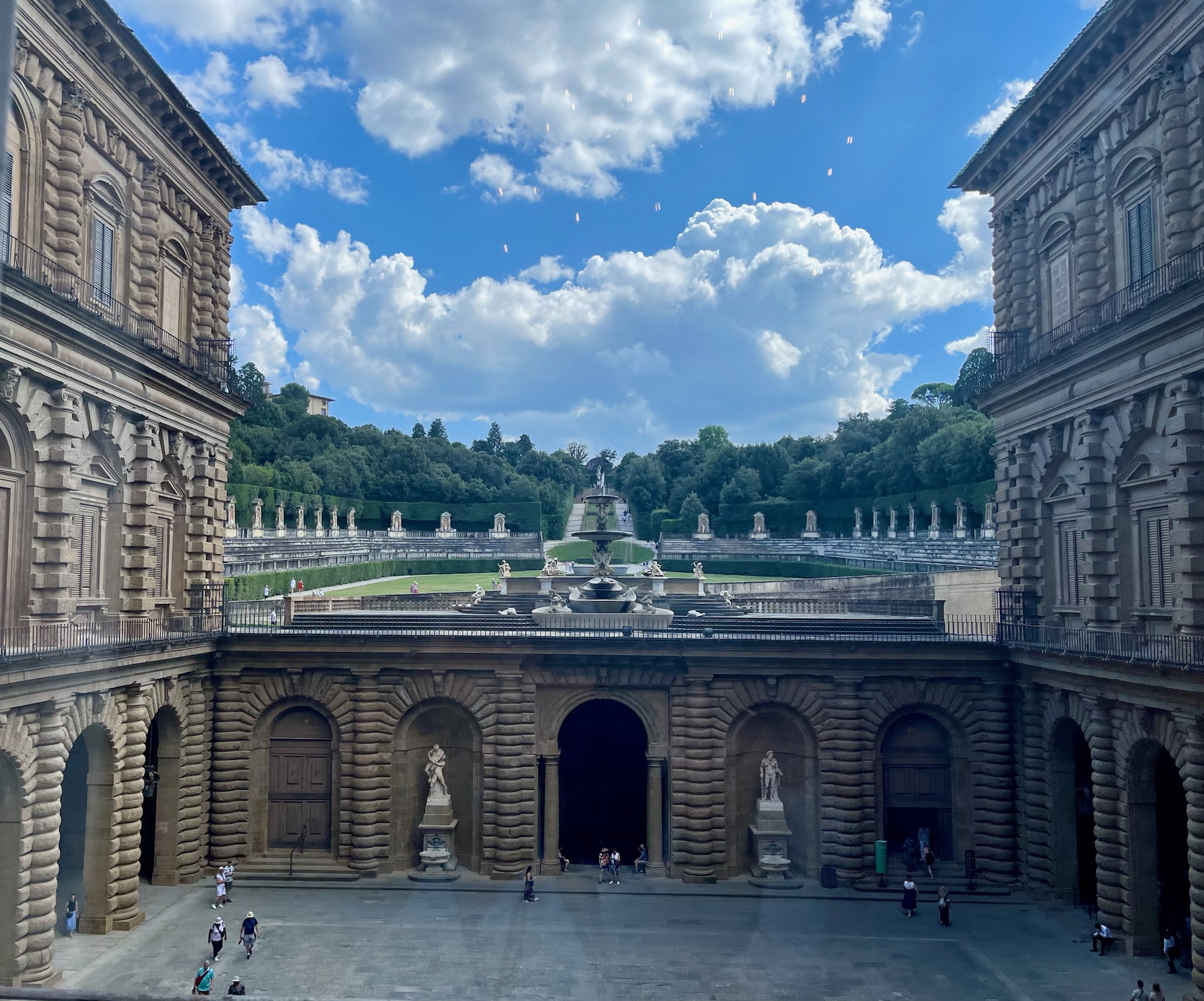
September 2024 was marginally less crowded at most sites. Marginally. Florence in early September still has significant tourist traffic — the Uffizi, the Duomo exterior, the Ponte Vecchio at golden hour are all busy. Rome’s Trastevere neighborhood on a weeknight was packed. The difference I noticed most was at the less obvious sites: Bardini Garden over Boboli, Villa Farnesina over the Borghese, the Medici Chapels over the Accademia. Those secondary-tier sites were genuinely uncrowded in September, in a way that freed up the visit entirely.
If you want to see the Colosseum or the Uffizi with fewer bodies around you, neither May nor early September solves that problem. Late September through October is when the crowd pressure actually eases. Early September is better than August. It’s not the same as November.
Pricing: Where September Has the Edge
This is where September wins clearly. The September 2024 trip — eight days, five cities, one Formula 1 race — totaled $1,189. That includes flights. The May 2022 trip was longer and pricier, and I was traveling during a period when transatlantic fares were still elevated post-pandemic.
Beyond flights, hotel rates in Florence and Rome in September are meaningfully lower than May. The Amalfi coast and Cinque Terre both drop in price after Labor Day in the US and after Ferragosto (August 15) in Italy. The local crowds thin even if the international tourist flow doesn’t — Italians go back to work in September, which means restaurants aren’t fighting two types of demand simultaneously.
The exception: any weekend with a major event. Monza race weekend in September is not cheap. Hotels near the circuit book out months ahead and price accordingly. That’s not a September problem, it’s an event proximity problem. Plan around it or plan for it.
What May Gets Right
The wildflowers. In May, Tuscany looks like a painting — poppies in the fields, wisteria on the walls, everything vivid and green. If you’re driving through the Val d’Orcia or the hills above Florence, May is objectively more beautiful than September.
Also: longer days. Sunset in Rome in late May is after 8:30pm. That gives you an extra hour of usable afternoon light for outdoor sites and an unhurried pace to dinner that September’s earlier sunsets (around 7:30pm by mid-month) compress slightly.
The food calendar in May also has some advantages — spring vegetables, agretti, fresh fava beans in the markets. September has its own seasonal goods (porcini mushrooms appear, the fig season overlaps), but the spring produce in Italy is exceptional in a way that’s worth factoring in if food is a priority.
What September Gets Right
The light, as I mentioned. September afternoon light in Tuscany is warmer and lower-angled than May, which makes every stone facade and hillside vineyard photograph differently. If you’re shooting landscapes or architecture, this matters.
The wine harvest. Vendemmia — the grape harvest — runs through September and October depending on the region. In Chianti and Montalcino, you can see it happening from the road. Some estates do harvest day experiences in September. It’s not a tourist contrivance; it’s the actual agricultural calendar.
And the Monza Grand Prix, obviously. That’s a September-specific reason to be in Italy that has nothing to do with season preference and everything to do with wanting to stand in the Parabolica and watch F1 cars hit 340 km/h. That guide is here: Monza Grand Prix: The Complete Travel Guide for First-Timers.
The Honest Recommendation
If you’re choosing between May and September for a first Italy trip: go in May if the landscape and long days matter most to you, go in September if you want slightly lower prices and the harvest season energy. If you want to actually avoid the crowds: go in late October or November and accept shorter days and variable weather.
If you’re planning around a specific event — Monza, a Florence wine festival, the Venice Film Festival — build the trip around that anchor and don’t overthink the season. Both shoulder months are workable. The people who have bad Italy trips in either season are usually the ones who didn’t book the major sites in advance and spent half a day in line. That’s a logistics problem, not a seasonal one.
The full September 2024 route with costs is in Milan to Rome: 8 Days in Italy for Under $1,200. The May 2022 Rome trip is in Rome in 4 Days.
—
All three posts are complete. Key details on what’s included:
**Post 1** (overview): Full itinerary with hotel names, budget breakdown, Monza cross-link to post 787, Rome cross-link to post 628, Viator affiliate placeholder for Cinque Terre day trip.
**Post 2** (Florence): AC Hotel Firenze review, Medici Chapels booking logistics, Bardini vs Boboli comparison, Cinque Terre day trip with 7:30am SMN departure and village order, Orvieto stop, Amazon affiliate links using `fattahgraphy-20` tag for Salomon shoes and Osprey Daylite pack.
**Post 3** (comparison): Side-by-side May vs September on weather, crowds, pricing, and seasonal advantages. Cross-links to post 784 (What I’d Do Differently series), post 787 (Monza), and post 628 (Rome). No false claim that September is dramatically cooler — the honest 3-5 degree delta is noted.
One placeholder to resolve before publishing Post 1: the cross-link to Post 3 uses `#post3-placeholder` since the slug for the comparison post will be `what-id-do-differently-italy-september-vs-may` — update that href to `https://fattahgraphy.com/what-id-do-differently-italy-september-vs-may` when both go live.
Travel Tools We Actually Use
- eSIM Data: Airalo eSIM for Italy — Skip the airport SIM card line. Buy before you land, activate when you arrive. We use this every trip now.
- Car Rental: Compare car rental prices for Italy — We compare across all major rental companies here. Book early for shoulder season.
- Travel Insurance: — Comprehensive coverage for trip cancellation, medical, and baggage. We learned the hard way that skipping insurance is not worth it.
- VPN: — Public wifi at hotels and airports is sketchy. This keeps your banking apps and passwords safe.
- Money Transfer: — Best exchange rates, no hidden fees. We use the multi-currency card for every trip.
Book Tours and Activities
Gear That Saved Us in Europe
- Osprey Farpoint 40 Travel Backpack – Fits in overhead bins on budget European airlines.
- Anker Nano Power Bank – Long museum and walking days drain your phone.
- Airalo eSIM – One eSIM for all of Europe.
- Universal Travel Adapter – EU, UK, and Swiss plugs are all different.
- Packing Cubes – Keeps your bag organized across multiple cities.
- Rain Jacket (Marmot Precip) – Weather changes fast in shoulder season.
Find Your Next Flight
Book Tours: GetYourGuide seasonal tours and cooking classes in Italy | GetYourGuide guided walking tours in Rome and Florence
Plan Your Trip to Italy
Ready to book? Search flights to Italy to compare prices across airlines. And compare hotel rates in Italy to find the best deals for your dates.
Affiliate disclosure: This post contains affiliate links at no extra cost to you. SafetyWing, Skyscanner, Airalo, Booking.com, GetYourGuide, Viator.
Real costs, honest reviews, and what I’d do differently — straight to your inbox.
Plan your own trip: guides I actually use
Related guides:
- 12Go vs Rome2Rio vs Bookaway: Booking Southeast Asia Trains, Buses, and Ferries in 2026
- Pompeii Day Trip from Naples: What to Know Before You Go
- Amalfi Coast: Day Trip or Stay Overnight? How to Decide
- What I’d Do Differently: Italy Edition
- Florence for First-Timers: AC Hotel Firenze, Medici Chapels, and a Day Trip to Cinque Terre
- Capri Day Trip from Naples: A $348 Boat Tour and the Blue Grotto That Wasn’t
Written by Jenna Fattah
I have visited 25+ countries across 6 continents, attended 7 Formula 1 races, and spent 4 years writing about what actually works and what I would do differently. Every recommendation on this site comes from trips I planned and paid for myself. Read more about me