What Provence + Paris Cost (Two People, 10 Days)
Here is what we actually spent (or what you should budget), based on our trip:
| Category | Cost | Notes |
|---|---|---|
| Flights (NYC-Paris RT) | $500-800 | Direct on Delta or Air France |
| TGV Paris-Avignon | $30-60/person | Book SNCF 3 months ahead |
| Car rental (5 days) | $200-300 | Essential for lavender fields |
| Hotels/B&Bs | $120-200/night | Charming stone villages avg $150 |
| Food | $60-100/day | Markets, rose wine, bistro dinners |
| Lavender field visits | Free | Senanque Abbey parking $5 |
| Calanques boat trip | $30-50 | From Cassis harbor |
| Paris (3 days) | $200-350/night | Hotels plus food and museums |
| Total | $3,500-5,500 | Per couple, 10 days. Car rental is the key expense. |
Prices are approximate and based on 2024-2025 travel. Book flights 2-3 months ahead for the best rates.
Avignon: The Palais des Papes and Jardin des Doms
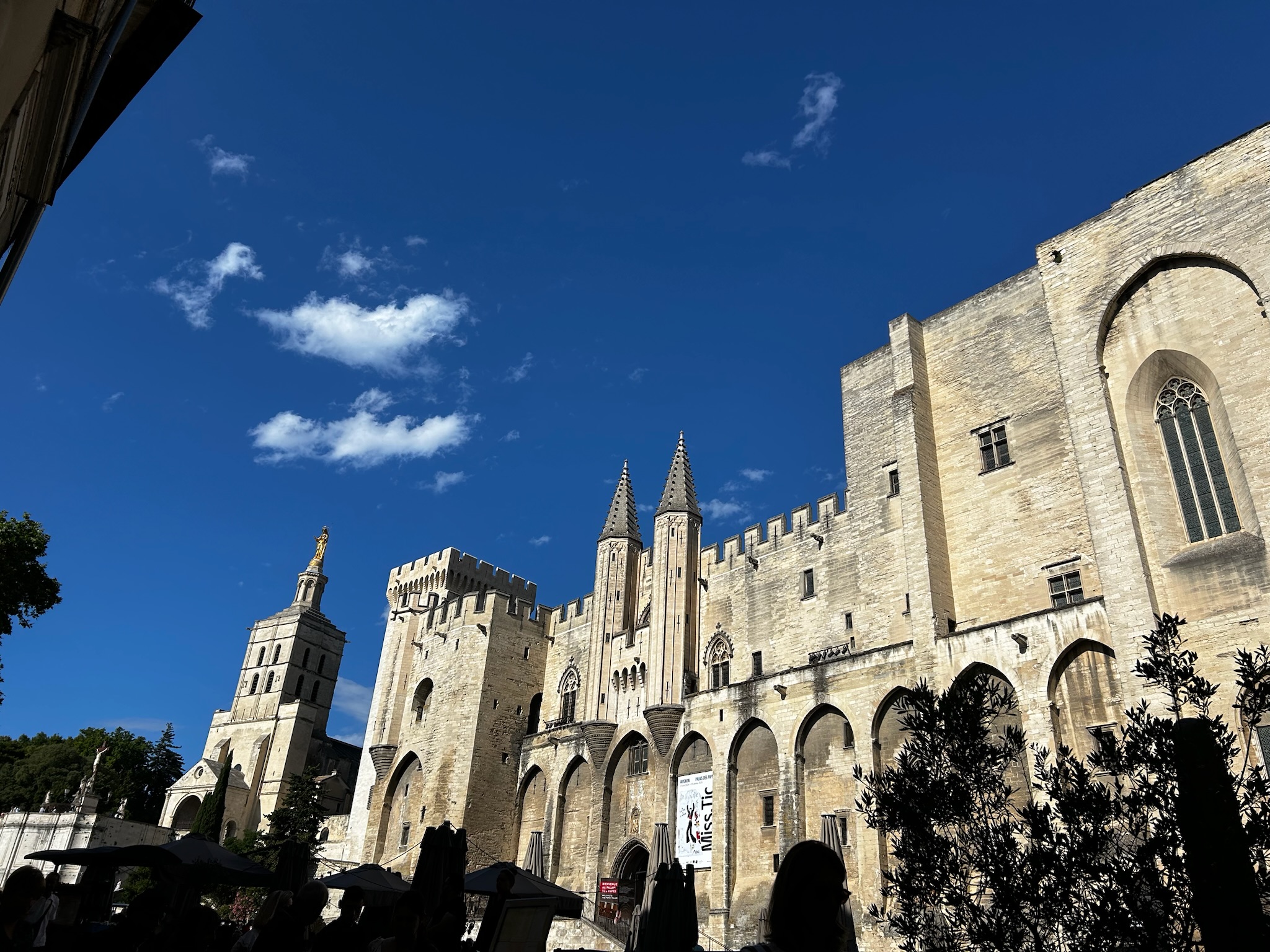
We spent our first evening on a walking tour of Avignon. The Palais des Papes gets most of the attention, and it is impressive — one of the largest Gothic buildings in Europe. But the real find was the Jardin des Doms, a hilltop garden above the palace with panoramic views of the Rhone River and Mont Ventoux in the distance. It is free, uncrowded, and perfect for watching the sunset.
Avignon’s old town is walkable and has good restaurants along the side streets away from the main square. We found better food (and lower prices) by wandering a few blocks off Place de l’Horloge.
The Lavender Fields: Senanque Abbey and the Valensole Plateau
The lavender was the whole reason for the timing of this trip, and it delivered. Our first stop was the Senanque Abbey, a 12th-century Cistercian monastery surrounded by lavender fields. It is the most photographed lavender spot in Provence for good reason, but it does get crowded by mid-morning. We arrived around 8 AM and had the fields nearly to ourselves.
The larger fields on the Valensole Plateau are equally stunning and feel more expansive. You can pull over almost anywhere along the D6 and D8 roads and walk into the fields. The smell is overwhelming in the best way, and the bees are everywhere but harmless. Late June is peak bloom — by mid-July the harvest starts and the fields are cut.
Fontaine-de-Vaucluse and the Hilltop Villages
Fontaine-de-Vaucluse is built around a natural spring where crystal-clear water bubbles up from underground caves. The hike up to the source takes you through lush forest with views of limestone cliffs, and photos really do not capture how vivid the water color is. Go early before the tour buses arrive.
Gordes gets called one of the most beautiful villages in France, and the view approaching it from the valley is postcard-perfect. But we actually preferred nearby Roussillon, with its ochre-colored buildings and quieter streets. Both are worth a stop, and they are only about 20 minutes apart by car.
Les Baux-de-Provence sits on a dramatic rocky outcrop with castle ruins and sweeping views. We skipped the crowded castle interior and explored the Val d’Enfer (Valley of Hell) instead — strange eroded rock formations that supposedly inspired Dante. The Carrieres des Lumieres nearby is an immersive art projection show inside an old quarry. It rotates exhibitions, and even if you are not usually into digital art, the scale of the space makes it worth seeing.
The Calanques and Cassis
South of Aix-en-Provence, the coastline breaks into the Calanques — narrow, fjord-like inlets with turquoise water and white limestone cliffs. We hiked into Calanque d’En-Vau, which took about 90 minutes each way on a rocky trail. Bring proper shoes, plenty of water, and be prepared for the return hike to feel twice as long in the afternoon heat.
Cassis, the small port town at the western edge of the Calanques, is a great base for this. The harbor is lined with seafood restaurants, and you can also take a boat tour of the Calanques if hiking is not your thing (about 25-30 euros per person for a 90-minute tour).
Aix-en-Provence: Markets and Cezanne
Aix is the cultural capital of Provence and has a more urban, cosmopolitan feel than the villages. The Saturday morning market on Cours Mirabeau is excellent — local produce, cheese, olives, and lavender products. We walked the Cezanne trail through town, which connects spots where the painter lived and worked, ending at his studio on the hill above the old town.
The food scene in Aix is strong. We had some of our best meals of the trip here, particularly the Provencal classics like ratatouille, bouillabaisse, and anything involving local olive oil and fresh herbs.
Paris: Beyond the Tourist Trail
After a week in Provence, we dropped the car and trained back to Paris for the final stretch. We deliberately skipped the major landmarks (having done them on previous trips) and focused on neighborhoods and smaller museums.
The Petit Palais is free and houses an impressive art collection in a gorgeous Beaux-Arts building — somehow it gets a fraction of the visitors that the Grand Palais across the street attracts. Le Marais remains one of the best neighborhoods for wandering, eating, and shopping. We found a Middle Eastern ice cream shop called Asha that might have been the best dessert of the entire trip.
We dedicated a full day to vintage shopping in the 19th and 20th arrondissements — Rue de la Villette and Rue de Menilmontant have great shops with far fewer tourists than the Marais vintage stores. The Jardin du Palais Royal is another hidden favorite: a peaceful courtyard garden right in the center of the city that most visitors walk right past.
What It Cost
- JFK to Paris CDG round trip on American Airlines, booked with miles (around 50,000 miles per person in economy)
- About 40-80 euros each way depending on how far ahead you book
- 50-60 euros per day, roughly 400 euros total for 7 days
- 100-150 euros per night for mid-range options
- 150-200 euros per night (Marriott points covered one of our nights)
- 50-70 euros per day for two people eating well, including wine
- Most villages and gardens are free; Carrieres des Lumieres is about 16 euros
Find Flights to Marseille
Tips for Planning Your Own Provence Road Trip
- Lavender peaks mid-June to early July. Check bloom reports online before booking
- Rent a car from the Avignon TGV station — it is the best base for exploring the region
- Start your days early. The villages and natural sites are dramatically better before 10 AM
- Book the TGV trains in advance for the best fares. SNCF releases tickets about 4 months out
- Pack sunscreen and a hat. Provence in June is hot, and shade is scarce in the lavender fields
- The Calanques hike requires real hiking shoes, not sandals. The trail is rocky and steep
- For Paris, consider staying in Le Marais or the 11th arrondissement for a more local feel
Book on GetYourGuide:
Related Reading
- Paris in December: Christmas Markets and Museums
- Greece Road Trip in October: Athens to Delphi
- European Christmas Markets: Vienna, Amsterdam, Paris
Tours Worth Booking
If you’re planning a similar trip, these are tours I’d recommend looking into:
- Lavender Tour to Gordes, Senanque & Roussillon
- Half-Day Luberon, Roussillon & Gordes Tour
- Provence Wine-Tasting Tour
Gear and Guides We Recommend
Planning a similar trip? Here are some items we found useful:
These are affiliate links. If you purchase through them, we may earn a small commission at no extra cost to you, which helps support this site.
Compare flights on Skyscanner — and grab an Airalo eSIM before you land so you have data the moment you arrive.
Activities: NZ on Klook
Frequently Asked Questions
When is lavender season in Provence?
Peak bloom is mid-June to mid-July. Senanque Abbey and the Valensole Plateau are the two most photogenic locations. Visit early morning to avoid tour bus crowds.
Is a road trip or train better for Provence?
Road trip. The lavender fields, hilltop villages, and Calanques are all off the train routes. Rent a car in Avignon and drive the loop through Gordes, Roussillon, and back via Cassis.
Can you combine Provence with Paris?
Yes. The TGV from Avignon to Paris takes about 2 hours 40 minutes. We did a week in Provence then finished with four days in Paris.
Travel Insurance: We use SafetyWing for travel insurance on every international trip. It covers medical emergencies, trip interruptions, and lost luggage starting at $45/month with no fixed end date — perfect for multi-country itineraries.
Related: The Best Walking Tours and Day Trips in Europe
Rental Cars: Compare rental car prices across all major agencies with RentCars — we use them to find the cheapest rates for road trips.
Book hotels: Search Booking.com hotels
Get Travel Tips That Actually Help
Real costs, honest reviews, and what I’d do differently — delivered to your inbox.
No spam. Unsubscribe anytime.
Written by Jenna Fattah
I have visited 25+ countries across 6 continents, attended 7 Formula 1 races, and spent 4 years writing about what actually works and what I would do differently. Every recommendation on this site comes from trips I planned and paid for myself. Read more about me