Cheapest F1 Races for Americans: Ranked by Total Trip Cost
Updated April 2026 | 12 min read
- Not All F1 Races Cost the Same. Here’s What We Actually Spent.
- The Ranking: Cheapest to Most Expensive (Total 4-Day Trip from the US)
- 1. Interlagos, Brazil — Cheap on the Ground, Moderate Flights
- 2. Barcelona, Spain — Affordable Europe with Beach Recovery
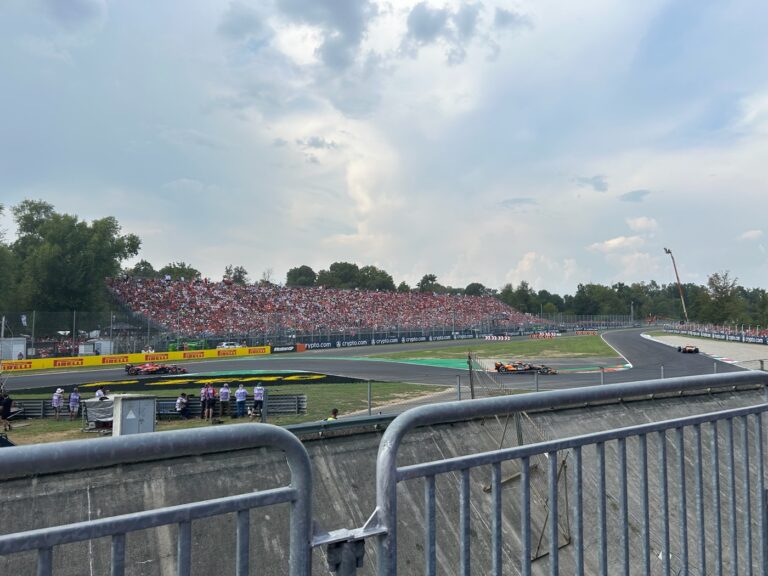
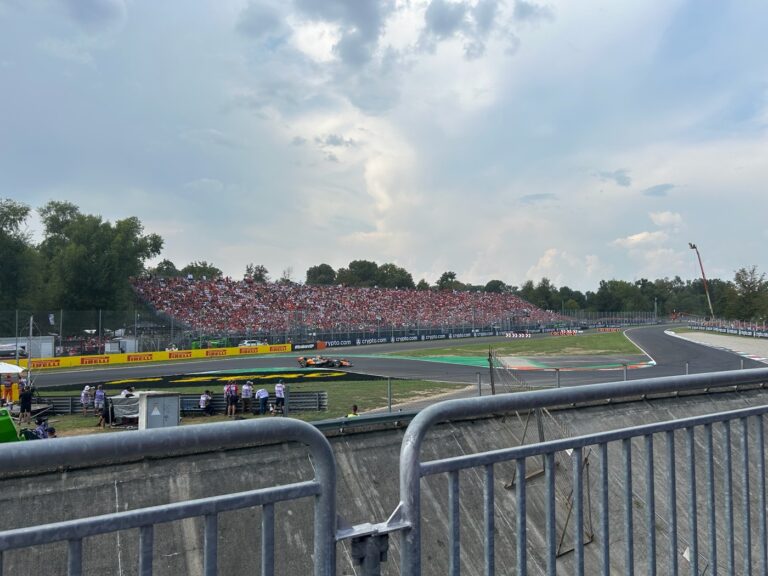
- 3. Monza, Italy — Cheap Tickets, Expensive Everything Else
- 4. Spa-Francorchamps, Belgium — Rain Tax Included
- 5. Zandvoort, Netherlands — The Priciest of What I’ve Done
- 6. Mexico City, Mexico — The Best Budget F1 Race for Americans
- 7. Miami, USA — Premium Price, Zero Travel Hassle
- 8. Spielberg, Austria — Alpine Scenery, Moderate Cost
- Honorable Mentions: Cheap Races I Haven’t Attended Yet
- Races to Avoid on a Budget
- How to Save Money on Any F1 Trip
- Gear I Bring to Every Race
- The Bottom Line
- Find Your Next Flight
Not All F1 Races Cost the Same. Here’s What We Actually Spent.
I’ve been to eight Formula 1 Grand Prix weekends across three continents. The cost difference between them is staggering. A weekend at Interlagos cost me less than what some people drop on Miami GP tickets alone.
If you’re an American F1 fan trying to figure out which race to hit without destroying your savings account, this is the breakdown I wish I’d had before my first trip. These are real cost ranges based on what I spent and what I’ve tracked across multiple seasons, covering flights from the US, hotels, race tickets, food, and local transport for a 4-day trip.
The Ranking: Cheapest to Most Expensive (Total 4-Day Trip from the US)
| Rank | Race | Est. Total Per Person | Attended? |
|---|---|---|---|
| 1 | Baku, Azerbaijan | $1,400 – $2,000 | No |
| 2 | Budapest, Hungary | $1,500 – $2,100 | No |
| 3 | Interlagos, Brazil | $1,600 – $2,300 | Yes |
| 4 | Mexico City, Mexico | $1,400 – $1,900 | Yes |
| 5 | Barcelona, Spain | $1,800 – $2,500 | Yes |
| 6 | Monza, Italy | $1,800 – $2,600 | Yes |
| 7 | Spa, Belgium | $1,900 – $2,700 | Yes |
| 8 | Zandvoort, Netherlands | $2,000 – $2,800 | Yes |
| 9 | Miami, USA | $2,200 – $3,500 | Yes |
| 10 | Spielberg, Austria | $1,800 – $2,500 | Yes |
These estimates assume you’re flying economy from the East Coast, staying in a mid-range hotel or well-located Airbnb, buying 3-day general admission or low-tier grandstand tickets, and eating like a normal person (not Michelin, not gas station sandwiches).
Now let me break down every race I’ve actually attended.
1. Interlagos, Brazil — Cheap on the Ground, Moderate Flights
Estimated total: $1,600 – $2,300 per person
- Flights: $600 – $900 round trip (direct options from Miami, NYC, Houston)
- Hotel: $60 – $100/night in a decent neighborhood
- Tickets: $85 – $270 for GA or Grandstand A
- Food + Transport: $35 – $55/day
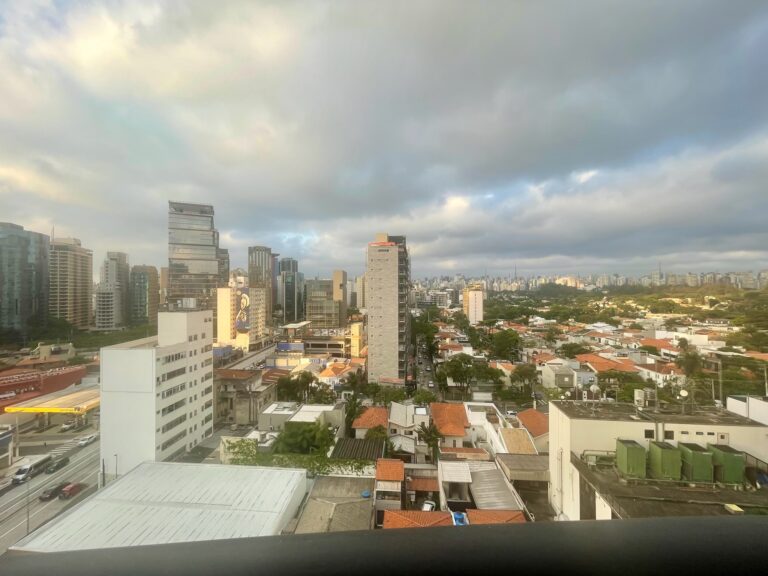
The Brazilian real has been weak against the dollar for years, which makes Sao Paulo a genuinely good deal for Americans. Street food near Interlagos is incredible and absurdly cheap. Uber works well throughout the city and costs next to nothing.
The atmosphere at Interlagos is unmatched. Brazilian fans bring an energy that makes European races feel like library events. The GA areas on the grassy hills give you decent sightlines and the crowd does most of the entertaining.
The downside: Sao Paulo has real safety concerns. Don’t flash expensive gear around the circuit area, stay in well-reviewed neighborhoods like Jardins or Vila Madalena, and use ride-share apps instead of hailing random cabs. This isn’t a reason to skip the race. It’s just a reason to be street-smart.
Save money tip: General admission tickets sell out fast to locals, so buy the moment they go on sale. The Grandstand Q bleachers at around $190 are a solid middle ground if GA is gone. Skip the Paddock Club upsell — the vibe at Interlagos is in the grandstands, not the hospitality suites.
2. Barcelona, Spain — Affordable Europe with Beach Recovery
Estimated total: $1,800 – $2,500 per person
- Flights: $500 – $800 round trip (frequent direct flights from major US hubs)
- Hotel: $80 – $140/night
- Tickets: $160 – $350 for GA or grandstand
- Food + Transport: $50 – $70/day
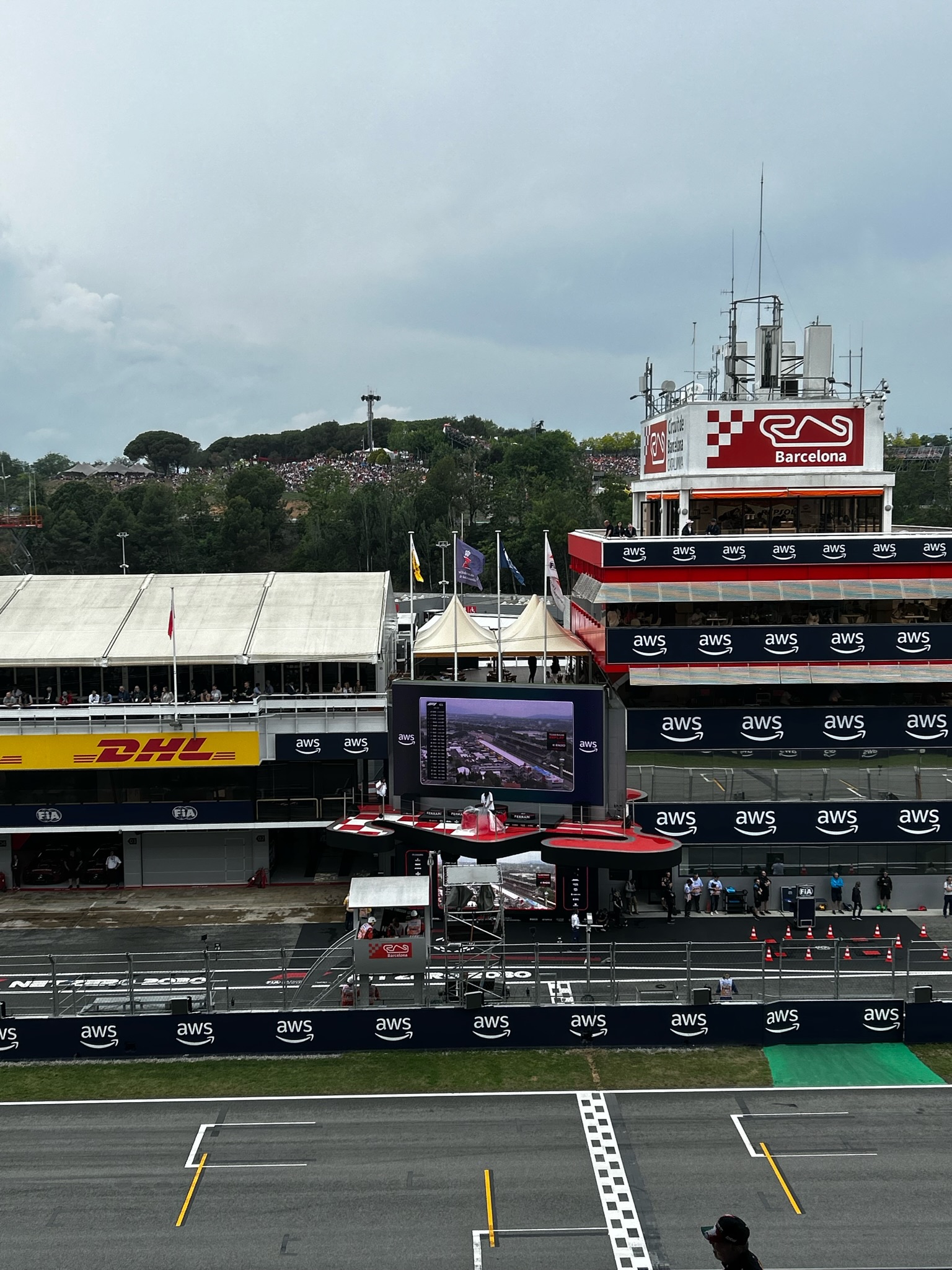
Barcelona is one of the easier F1 trips to plan from the US. Direct flights exist from half a dozen American cities, the public transit is excellent, and the city itself gives you plenty to do beyond the race. The Circuit de Barcelona-Catalunya sits about 30 minutes outside the city by train, so you don’t need a car.
Eating in Barcelona is reasonable if you stay away from Las Ramblas tourist traps. The side streets in the Gothic Quarter and Gracia have good food at local prices. A full meal with wine runs $20-30.
The circuit itself is solid but not spectacular for spectators. It’s a purpose-built track in a suburban area, so it doesn’t have the visual drama of a street circuit. But the racing is usually good, and the June timing means weather is almost always perfect.
Save money tip: Stay in Gracia or Eixample instead of near the beach. You’ll pay 30-40% less on accommodation and you’re closer to the train lines that go to the circuit. Book accommodation the moment the race calendar is confirmed — Barcelona hotel prices jump significantly once F1 weekend is locked in.
3. Monza, Italy — Cheap Tickets, Expensive Everything Else
Estimated total: $1,800 – $2,600 per person
- Flights: $550 – $850 round trip to Milan
- Hotel: $100 – $180/night (Milan prices, race weekend markup)
- Tickets: $110 – $300 for GA or grandstand
- Food + Transport: $60 – $80/day
Monza has some of the cheapest tickets on the entire F1 calendar. General admission for the full weekend runs about 100 euros. The problem is that everything surrounding the race costs Milan money. Hotels in the city spike during race weekend, and even staying outside the center doesn’t save you much because every hotel within commuting distance knows the race is happening.
That said, Monza is an experience you can’t replicate anywhere else. Walking through the royal park to reach the circuit, watching cars blast through Parabolica, and then joining the track invasion after the race with tens of thousands of tifosi — it’s the most emotional race weekend in F1.
Food is great but not cheap by F1 standards. Milan is an expensive city. Budget for real Italian meals rather than circuit food, which is overpriced even by European standards.
Save money tip: Stay in Monza town itself rather than Milan. There are small hotels and B&Bs within walking distance of the circuit that don’t carry the Milan premium. You lose the nightlife, but you save an hour of commuting each day and usually $40-60/night on the room.
4. Spa-Francorchamps, Belgium — Rain Tax Included
Estimated total: $1,900 – $2,700 per person
- Flights: $550 – $850 round trip to Brussels
- Hotel: $90 – $160/night
- Tickets: $200 – $400 for GA or grandstand
- Food + Transport: $55 – $75/day
Spa is the race every F1 fan should see at least once. Eau Rouge in person is legitimately intimidating. The elevation changes don’t come through on TV at all. Standing at the top of Raidillon and watching cars crest the hill at full speed is something you physically feel.
The cost issue with Spa is logistics. The circuit is in the Ardennes forest, about two hours from Brussels by car. There’s no convenient public transport. You either rent a car, take expensive shuttle buses, or stay in the tiny villages near the track where accommodation is limited and prices are inflated during race weekend.
Weather is the other budget variable. Spa in late July can be anything from blazing sun to sideways rain within the same hour. You need to pack for both extremes, and if it rains, you’re standing in mud for hours.
Save money tip: Split a car rental with other fans. Brussels to Spa is an easy drive, parking near the circuit is manageable if you arrive early, and the rental cost split 3-4 ways is cheaper than shuttle buses. Stay in Stavelot or Malmedy instead of Spa town — slightly further from the circuit, but significantly cheaper accommodation.
5. Zandvoort, Netherlands — The Priciest of What I’ve Done
Estimated total: $2,000 – $2,800 per person
- Flights: $500 – $800 round trip to Amsterdam
- Hotel: $120 – $200/night (Amsterdam prices)
- Tickets: $250 – $450 for GA or grandstand
- Food + Transport: $60 – $80/day
Zandvoort is the most expensive race I’ve attended, and it’s entirely because of the Dutch pricing structure. Tickets are not cheap. Amsterdam hotels during race weekend are punishing. And the Netherlands in general is not a budget destination.
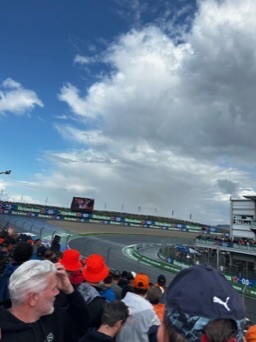
The upside is that it’s the easiest F1 race to reach from the US. Amsterdam Schiphol has direct flights from a dozen American cities, and the train from Amsterdam Centraal to Zandvoort takes 30 minutes. No car rental, no shuttle buses, no navigation stress. You just tap your card and ride.
The beach-town setting is unique on the calendar. After the race, you walk five minutes to the North Sea coast and grab a beer. The atmosphere is intense — this is essentially a three-day Dutch national party — but it’s loud, crowded, and orange in every direction.
Save money tip: Stay in Haarlem instead of Amsterdam. It’s a 15-minute train ride to Zandvoort (closer than Amsterdam) and hotel prices are 30-50% lower. Haarlem is also a genuinely nice town with good restaurants and bars, so you’re not sacrificing much.
6. Mexico City, Mexico — The Best Budget F1 Race for Americans
Estimated total: $1,400 – $1,900 per person
- Flights: $250 – $450 round trip (short direct flights from many US cities)
- Hotel: $60 – $100/night in Roma Norte or Condesa
- Tickets: $190 – $350 for GA or grandstand
- Food + Transport: $25 – $40/day
Mexico City is the single best-value F1 trip for Americans. Period. Flights are short and cheap from southern US cities. The peso makes everything affordable on the ground. The Autodromo Hermanos Rodriguez is inside the city, reachable by metro. And the stadium section atmosphere — where fans pack a baseball stadium overlooking the final corners — is one of the most electric experiences in all of motorsport.
Save money tip: Stay in Roma Norte or Condesa — walkable neighborhoods with incredible food, safe streets, and easy metro access to the circuit.
7. Miami, USA — Premium Price, Zero Travel Hassle
Estimated total: $2,200 – $3,500 per person
- Flights: $200 – $500 round trip (domestic)
- Hotel: $150 – $300/night
- Tickets: $400 – $800 for GA or grandstand
- Food + Transport: $70 – $100/day
Miami is the most expensive F1 race I have attended. The ticket prices alone would fund an entire Interlagos weekend. But no passport, no visa, no jet lag. For a first F1 experience without international logistics, Miami works — it just does not compete on value.
Save money tip: Stay in Wynwood or Brickell, Uber to the race. Save $100+/night over campus hotels.
8. Spielberg, Austria — Alpine Scenery, Moderate Cost
Estimated total: $1,800 – $2,500 per person
- Flights: $550 – $850 round trip to Vienna or Graz
- Hotel: $80 – $150/night
- Tickets: $180 – $380 for GA or grandstand
- Food + Transport: $50 – $70/day
The Red Bull Ring sits in the Austrian Alps, and the setting is genuinely stunning. The circuit is short and compact, which means you can see multiple corners from most grandstands. The downside is getting there — Spielberg is a small town, and you need a car rental from Vienna or Graz. But the combination of great racing, reasonable prices, and Alpine scenery makes it a strong mid-tier option.
Save money tip: Fly into Graz instead of Vienna — it is closer to the circuit and cheaper. Split a car rental with other fans.
Honorable Mentions: Cheap Races I Haven’t Attended Yet
Hungarian Grand Prix (Budapest) — $1,500 – $2,100
Budapest consistently ranks among the cheapest F1 weekends globally. The city itself is wildly affordable — meals for under $10, thermal baths for $20, and hotels that would cost triple in Paris. General admission tickets at the Hungaroring are reasonable, and the circuit is reachable by public bus from the city center. The main drawback is that the Hungaroring produces some of the most processional racing on the calendar. Great city, mediocre on-track action.
Baku Grand Prix (Azerbaijan) — $1,400 – $2,000
Baku is widely considered the best-value F1 race on the calendar. The street circuit runs through a UNESCO old city. Hotels and food are cheap, and the racing is consistently dramatic. The only catch is the flight — no direct routes from the US. High on my list.
Races to Avoid on a Budget
Monaco Grand Prix — $4,000 – $8,000+
Everything in Monaco is priced for people who don’t look at prices. Hotels within walking distance of the circuit start at $500/night during race weekend and go up from there. A basic grandstand seat is $800+. A drink at a bar overlooking the track is $25. You can do Monaco on a relative budget by staying in Nice and taking the train, but even then, you’re looking at $4,000+ per person when flights from the US are included. It’s a bucket list race, not a budget race.
Singapore Grand Prix — $3,500 – $6,000+
The night race is spectacular, but Singapore is one of the most expensive cities on earth. Hotels spike to $300-500/night during race weekend. Flights from the US are $1,000-1,500. Tickets start around $300 for the cheapest walkabout option. Even food, which is normally reasonable at hawker centers, gets marked up near the circuit.
Abu Dhabi Grand Prix — $3,000 – $5,500+
The season finale at Yas Marina looks incredible on TV but costs accordingly. Abu Dhabi hotels are expensive, the ticket prices are among the highest on the calendar, and flights from the US are long and costly. The race itself has also historically been one of the least exciting on the calendar, which makes the price-to-entertainment ratio rough.
How to Save Money on Any F1 Trip
Book flights 3-4 months early
The F1 calendar is usually confirmed by October for the following year. The moment dates are locked, start tracking flights. I use Google Flights price alerts for every race I’m considering. Waiting until a month before the race can easily add $300-500 to your airfare.
Go general admission
At most European circuits, GA gives you access to grassy hills and open areas with decent views. You won’t see every corner, but you can move around throughout the weekend and find your favorite spots during practice. GA tickets are typically 40-60% cheaper than grandstand seats. The exceptions are circuits where GA areas have poor sightlines — in those cases, a cheap grandstand is worth the upgrade.
Stay outside the city center
Race-weekend hotel prices in city centers are inflated. A 20-minute train ride from the center usually cuts your nightly rate by a third. This works especially well for Monza (stay in Monza town, not Milan), Zandvoort (stay in Haarlem, not Amsterdam), and Barcelona (stay in Gracia, not Barceloneta).
Use credit card points for flights
Most of the races I’ve attended were partially funded by travel credit card points. If you’re planning an F1 trip a year out, that’s enough time to hit a sign-up bonus on a card like the Chase Sapphire Preferred or Amex Gold and cover most of your airfare. Transfer points to airline partners like United (for Sao Paulo), KLM (for Amsterdam/Zandvoort), or Iberia (for Barcelona) for the best redemption value.
Eat away from the circuit
Circuit food is universally overpriced and mediocre. Bring snacks and water into the venue (most F1 circuits allow sealed water bottles and food). Eat your real meals before or after the race at local restaurants. This alone can save $30-50/day compared to buying everything inside the gates.
Gear I Bring to Every Race
Eight races in and my packing list is locked. Here’s what actually matters:
Loop Experience Earplugs — F1 cars are quieter than they used to be, but standing near the end of a straight during qualifying will still ring your ears. These reduce volume without killing the sound quality, so you can still hear engine notes and team radio on screens. I’ve tried foam plugs and they muffle everything. These are the ones to get.
Nikon Aculon A211 8×42 Binoculars — Compact binoculars make a massive difference at any race, but especially at large circuits like Spa and Monza where the far side of the track is hundreds of meters away. These are sharp enough to read pit boards and light enough to hang around your neck all day without feeling like a weight.
Anker 737 Portable Charger (24,000mAh) — A full race day is 8-10 hours at the circuit. You’re checking live timing apps, taking photos, filming starts, and maybe streaming radio commentary. Your phone will die by mid-afternoon without a battery pack. This one has enough capacity for 3-4 full charges and supports fast charging.
Frogg Toggs Packable Rain Poncho — Spa taught me this lesson the hard way. Weather at European circuits changes without warning, and a cheap plastic poncho from a vendor outside the gates costs five times what this does and tears after one use. This folds down small enough to fit in a jacket pocket and actually keeps you dry. I’ve used it at Spa, Zandvoort, and one surprisingly rainy day at Monza.
The Bottom Line
The cheapest F1 trip for an American traveler right now is Mexico City — and I can confirm that firsthand. If you want a European race on a budget, Budapest and Barcelona are your best bets. Monza and Interlagos offer incredible atmospheres at moderate cost.
Skip Monaco, Singapore, and Abu Dhabi unless money is not a factor. And skip the US races (Miami, Vegas, Austin) if you’re purely optimizing for value — they’re among the most expensive on the calendar, which is ironic given that they don’t require international flights.
The F1 calendar has 24 races. You don’t need to pick the most glamorous one. You need to pick the one where your money goes the furthest and the racing is worth watching. Start with Mexico City or Barcelona, and work your way up from there.
Find Your Next Flight
Book Tours: GetYourGuide Grand Prix city tours and race-day experiences | GetYourGuide guided tours at F1 circuits across Europe
Affiliate disclosure: This post contains affiliate links. I earn a small commission if you book through them, at no extra cost to you. Links: SafetyWing travel insurance (10% off), Skyscanner for flights, Airalo eSIM for data, GetYourGuide for tours, Booking.com for hotels, Viator for tours.
Real costs, honest reviews, and what I’d do differently — straight to your inbox.
Plan your own trip: guides I actually use
Related guides:
- Month by Month Guide to Shoulder Season Europe — When to Go Where
- The Best Destinations We Have Traveled to as a Couple, Ranked
- What to Pack for an F1 Race Weekend (From Someone Who Has Been to 7)
Written by Jenna Fattah
I have visited 25+ countries across 6 continents, attended 7 Formula 1 races, and spent 4 years writing about what actually works and what I would do differently. Every recommendation on this site comes from trips I planned and paid for myself. Read more about me