Prague vs Vienna vs Budapest: Which Central European Capital Deserves More of Your Time
Updated April 2026 | 4 min read
In This Post
Prague vs Vienna vs Budapest at a glance
| Prague | Vienna | Budapest | |
|---|---|---|---|
| Meal cost (mid-range) | 10-15 EUR with drinks | 15-25 EUR | 10-18 EUR |
| Mid-range hotel | 60-100 EUR/night | 120-180 EUR/night | 80-130 EUR/night |
| Standout experience | Charles Bridge at 6am; compact walkable old town | Stephansdom tower at sunset; Naschmarkt food stalls | Szechenyi thermal baths; ruin bars in the Jewish Quarter |
| Main drawback | Old Town overrun with tour groups in peak season; taxi scams | Can feel formal and stiff compared to the other two | Tourist-trap restaurants near the Danube; stick to Jewish Quarter for better value |
| Top paid sight | Prague Castle (250-350 CZK / $11-15) | Schonbrunn Palace (22-29 EUR) | Szechenyi Baths (25 EUR) |
| Best for | Budget travelers and architecture lovers | First-timers who want culture, food, and history | Nightlife, thermal baths, and something different |
Three Capitals, Three Very Different Trips
Prague, Vienna, and Budapest sit within a few hours of each other by train, and most Central Europe itineraries try to cram in all three. But if you only have time for one or two, the right choice depends on what you actually want from a trip — not just what looks best on Instagram.
I spent three full days in Vienna last summer and passed through Budapest during our Balkans road trip in 2022. Prague is still on my list, but between friends who have been and the research I have done planning it, I have a clear picture of how these three compare.
Prague: Best for Budget and Architecture
Prague is the cheapest of the three by a wide margin. A half-liter of Czech beer at a local pub runs about 50 CZK — roughly $2. A solid restaurant meal with drinks is 10-15 EUR. Mid-range hotels range from 60-100 EUR per night, and hostels in central locations go for 15-25 EUR.
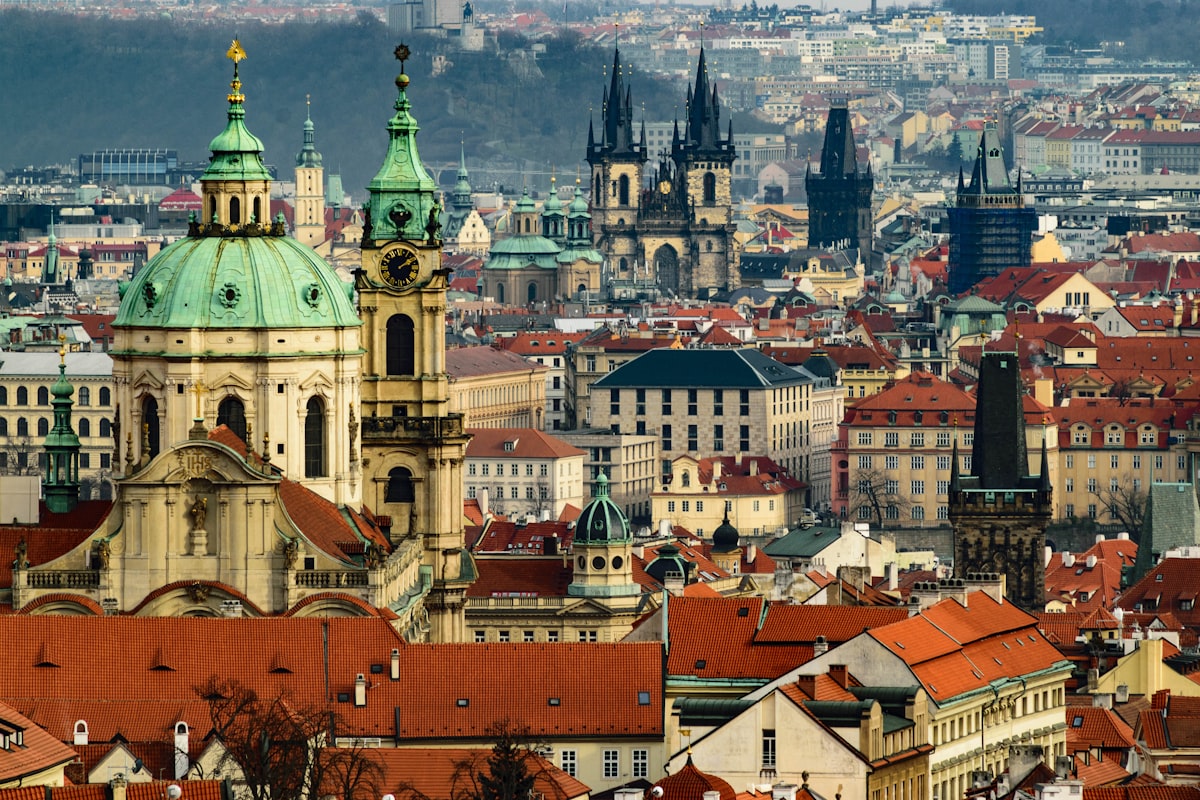
The architecture is the draw. The Charles Bridge at 6am, before the tour groups arrive, is supposedly one of the most beautiful walks in Europe — every friend who has done it says the same thing. Prague Castle, the astronomical clock in Old Town Square, and the Jewish Quarter are all walkable from each other. The entire old town is compact in a way that Vienna and Budapest are not.
The downsides are real though. Old Town Square in peak season is a wall of tour groups and souvenir shops. Taxi scams are still common — use Bolt or Liftago instead of hailing cabs. And Prague’s food scene, while cheap, is heavier on pork and dumplings than on variety.
Top sights and approximate entry fees: Prague Castle (250-350 CZK / $11-15), Jewish Quarter museums (500 CZK / $22), Old Town Hall tower (250 CZK / $11). Many churches and the Charles Bridge are free.
This post contains affiliate links. If you book through these links, I earn a small commission at no extra cost to you.
SafetyWing — Travel medical insurance from $42/month
Skyscanner — Compare flight prices across airlines
Airalo — eSIM data for 200+ countries
Booking.com — Compare hotel prices
Viator — Book tours and experiences
GetYourGuide — Skip-the-line tickets and guided tours
RentCars — Compare rental car prices
Vienna: Best for Culture and Food
Vienna costs more but delivers on a different level. This is where I spent 15-25 EUR per meal and felt like it was worth every cent. Naschmarkt alone — the open-air food market with dozens of stalls — could occupy an entire afternoon. The coffee house culture is not a tourist gimmick. Order a Melange (the Viennese version of a cappuccino) at a marble-topped table and watch the city move at its own pace.
Schonbrunn Palace was worth the entry fee and the commute. But the moment I would tell anyone to prioritize is climbing the 343 steps of Stephansdom just before sunset. The entire city laid out in golden light, the Danube visible in the distance — that was the image I kept coming back to after the trip.
We used Marriott Bonvoy points — 66,000 per night at the Courtyard near Prater — which offset the higher costs. Without points, expect 120-180 EUR per night for a mid-range hotel. There is also the Prater itself (Vienna’s massive public park), the Danube for cruises, and the Vienna State Opera for performances at various prices.
The downside: Vienna can feel formal. Some neighborhoods have a stiffness to them that Prague and Budapest do not. It is beautiful, but it does not have the same casual energy.
Top sights: Schonbrunn Palace (22-29 EUR), Stephansdom tower climb (6 EUR), Belvedere (16 EUR), Naschmarkt (free to browse). The Prater park is free.
Budapest: Best for Nightlife and Something Different
Budapest hits differently than the other two. The thermal baths — Szechenyi costs about 25 EUR entry — are a full experience, not just a quick dip. Going in the late afternoon when the light catches the yellow neo-baroque building is the move. The ruin bars in the Jewish Quarter are unlike anything in Prague or Vienna: abandoned buildings converted into multi-level bars with mismatched furniture and art on every surface.
Costs land between Prague and Vienna. Meals run 10-18 EUR, and mid-range hotels go for 80-130 EUR per night. The Parliament building viewed from the Danube at night is one of those scenes that justifies carrying a camera everywhere.
Budapest feels grittier and more unpredictable than the other two, in a good way. The food scene has expanded well beyond goulash — there are ramen joints, craft cocktail bars, and a growing market hall scene.
The downsides: some tourist-trap restaurants near the Danube serve mediocre food at inflated prices. Stick to the Jewish Quarter and the streets around the Great Market Hall for better value.
Top sights: Szechenyi Baths (25 EUR), Parliament tour (10-13 EUR), Buda Castle funicular (4 EUR), Great Market Hall (free). The ruin bar district is free to explore.
The Verdict
If I could only pick one: Vienna for first-timers who want culture, food, and history. Prague if budget is the top priority. Budapest if you want nightlife, thermal baths, and a city that feels different from the typical European capital.
But honestly, all three are connected by trains that take 2.5 to 4 hours. Ten days covers all three comfortably — three in Prague, three in Vienna, two in Budapest, with travel days between. The real answer is to stop choosing and do the full triangle.
Keep Reading
- The Best 2-Week Central Europe by Train Itinerary
- Is a Eurail Pass Worth It for Central Europe?
- What I’d Do Differently on a Central Europe Train Trip
- Shoulder Season Europe Month-by-Month Guide
- What I’d Do Differently in Prague, Budapest, and Vienna
- Italy Regional Food Guide
Plan Your Trip
- Flights: Skyscanner for finding the cheapest entry and exit cities
- Hotels: Hotellook compares all major booking sites in one search
- eSIM: Airalo Europe eSIM covers Czech Republic, Austria, and Hungary on one plan
- Tours: GetYourGuide for skip-the-line Schonbrunn, Prague Castle, and Szechenyi Baths
- Travel adapter: EPICKA Universal Adapter
Some of these are affiliate links — if you book through them, I earn a small commission at no extra cost to you.
Get Travel Tips That Actually Help
Real costs, honest reviews, and what I would do differently — no fluff.
Frequently Asked Questions
Is Prague cheaper than Vienna and Budapest?
Yes, Prague is the cheapest of the three by a wide margin. A solid restaurant meal with drinks runs 10-15 EUR, mid-range hotels go for 60-100 EUR per night, and a half-liter of local beer at a pub costs roughly $2. Vienna is the most expensive, with mid-range hotels at 120-180 EUR per night and meals at 15-25 EUR.
Which city is best for culture and food — Prague, Vienna, or Budapest?
Vienna is the pick for culture and food. The coffee house culture is genuine rather than a tourist gimmick, and Naschmarkt — the open-air food market with dozens of stalls — can fill an entire afternoon. Budapest has also expanded its food scene well beyond goulash, with craft cocktail bars and a growing market hall scene, though it comes at a lower price point.
How many days do you need for each city?
Three days in Prague and three days in Vienna each give you enough time to cover the main sights without rushing. Two days in Budapest works for the highlights. If you are doing all three, ten days covers the full triangle comfortably — three in Prague, three in Vienna, two in Budapest, with travel days between, since trains between cities take 2.5 to 4 hours.
What is Budapest best known for compared to Prague and Vienna?
Budapest stands out for its thermal baths and ruin bar scene. The Szechenyi Baths (about 25 EUR entry) are a full experience rather than a quick stop, and the ruin bars in the Jewish Quarter — abandoned buildings converted into multi-level bars with mismatched furniture — are unlike anything in Prague or Vienna. The Parliament building viewed from the Danube at night is another scene specific to Budapest.
Plan your own trip: guides I actually use
More from this region:
Cards, lounges & insurance:
- Best Airport Lounges I Have Actually Used — From Changi to Istanbul
- Is Priority Pass Worth It in 2026 — My Honest Review After 15 Airports
- Best Travel Credit Cards for 2026: The Cards I Actually Use and Why
- Best Travel Insurance for 2026: What I Actually Recommend After 15 International Trips
Finding cheap flights:
- Going vs Dollar Flight Club vs Thrifty Traveler: Which Flight Deal Service Is Worth It in 2026?
- When to Book Flights by Region — The Booking Windows That Actually Save Money
- How to Find Error Fares and Flight Deals — The Services I Actually Use
- Google Flights vs Skyscanner vs Momondo — Which Actually Finds the Cheapest Flights
Staying connected abroad:
- Best VPN for Travel 2026 — NordVPN vs Surfshark and Why You Need One
- Best eSIM for Travel 2026 — Holafly vs Airalo vs Nomad
Travel gear I actually use:
- Best Portable Chargers for Travel in 2026: Which Size You Actually Need
- My Exact Travel Tech Setup After 15 International Trips
- Best Noise-Canceling Headphones for Travel in 2026: Tested on 40+ Flights
- Best Travel Backpacks for 2026: The 5 I Have Actually Used
Written by Jenna Fattah
I have visited 25+ countries across 6 continents, attended 7 Formula 1 races, and spent 4 years writing about what actually works and what I would do differently. Every recommendation on this site comes from trips I planned and paid for myself. Read more about me