What I’d Do Differently: Lessons from 11 Destinations
What I’d Do Differently: Lessons from 11 Destinations (Based on What Actually Goes Wrong)
Every trip I take teaches me something I wish I had known before I left. After 20+ countries and 11 destinations where I genuinely made mistakes, here is the honest version.
Updated April 2026 | 17 min read
TL;DR — Quick picks
- Biggest universal mistake: Overpacking — every single trip
- Most regretted skip: Not booking the Colosseum Underground tour in Rome
- Best lesson learned: Always book a hotel near the airport for early flights
- Worst money wasted: Guided group tours in cities with good public transit
In This Post
- What I’d Do Differently: Lessons from 11 Destinations (Based on What Actually Goes Wrong)
- Paris
- Bali
- Thailand (Beaches)
- Greek Islands (Santorini and Mykonos)
- Morocco (Marrakech)
- Iceland
- London
- Dubai
- Mexico City
- Japan (Tokyo and Kyoto)
- Italy (Rome and the Amalfi Coast)
- What Most of These Places Have in Common
- Travel Tools We Actually Use
- Book Tours and Activities
- Gear We Recommend After Learning the Hard Way
- Find Your Next Flight
This is not a list of soft warnings or polite suggestions. This is the stuff that cost us time, money, or goodwill with locals. Most of it was completely preventable. I’ve also pulled in the most repeated advice from travel forums, Reddit threads, and actual traveler post-mortems — because the same mistakes come up again and again, across thousands of different people, and that pattern is worth paying attention to.
Before you read any further: if you are still in the planning phase, our full trip planning guide covers the logistics side, and our credit card points breakdown explains how we cut flight costs significantly. Also, a good set of packing cubes and a universal travel adapter are two purchases I would never skip again. Learn from me on that.
Paris
Read our full Paris post here.
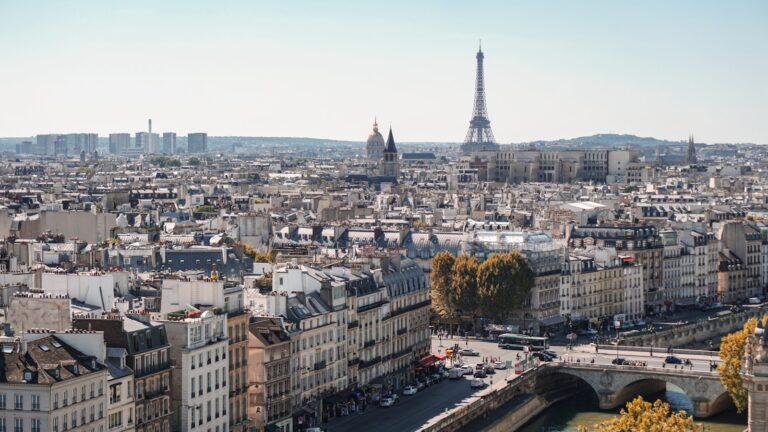
Paris operates on a very simple rule that took us one mediocre and overpriced meal to understand: if the restaurant has photos on the menu, it is not for you. Restaurants within two blocks of the Louvre, Notre Dame, or the Eiffel Tower exist to extract money from people who will never come back. The food is worse, the service is indifferent, and you will leave annoyed. Walk three blocks in any direction and the quality-to-price ratio transforms completely.
The Champs-Elysees is another one. It photographs beautifully and delivers almost nothing. Coffee is three times the price of what you will find two streets over in a local cafe. The same goes for the first row of tables at any riverside brasserie — you are paying for the view, not the food.
On the Eiffel Tower: book timed tickets weeks in advance or accept that you are standing in a two-hour line. The tower itself is actually worth seeing from the top, but the queue without a ticket is a genuine waste of a Paris afternoon. Skip the line and spend that hour walking instead.
The bracelet scam at Sacre-Coeur is real and persistent. Someone approaches, wraps a friendship bracelet around your wrist before you can react, and then demands payment. The correct move is to keep both hands in your pockets near that area and keep walking. The petition scam works the same way — do not engage, do not slow down.
One thing we did not expect: Paris in the early morning, before 8 a.m., is extraordinary. Empty streets, no tour groups, and the actual city reveals itself.
- Never eat at restaurants with picture menus near major landmarks
- Book Louvre and Eiffel Tower tickets in advance with specific time slots
- Avoid the Champs-Elysees for dining — it is a shopping street, not a food destination
- Keep hands in pockets near Sacre-Coeur to avoid bracelet scammers
- Wear comfortable shoes — 25,000 steps per day on cobblestones in heels is a medical event
Bali
Read our full Bali post here.
Bali has a cost illusion problem. You can eat a full meal for two dollars at a warung or spend twenty-five at a Canggu cafe serving the same food with better lighting and an Aussie playlist. The island is aggressively cheap in local contexts and quietly expensive in tourist-facing ones. Many first-timers land expecting Bali to be uniformly affordable and get surprised when their trendy-neighborhood lunch costs as much as back home.
The bigger trap is the itinerary. Bali looks manageable on a map. It is not. Traffic between regions — Ubud to Seminyak, Seminyak to Uluwatu — regularly takes three times longer than Google Maps suggests. Travelers who pack five destinations into four days spend most of those days in traffic. Pick a region and stay there for a few days before moving.
Temple etiquette matters more than most guides make clear. You will be turned away or asked to leave if you are not wearing a sarong and sash on temple grounds. Most temples rent them at the entrance. Covering up is not optional, and locals take it seriously.
The Instagram spots — Gates of Heaven, Kelingking Beach — are not the serene, empty scenes you have seen online. They are crowded, managed experiences with lines and wait times. The photographer behind those lone-figure shots arrived at five in the morning. If you want that photo, so must you. Otherwise, adjust your expectations.
Do not take sand, stones, coral, or plants as souvenirs. This comes up repeatedly in travel forums and the customs consequences are not worth it.
- Budget Bali carefully — the tourist economy is not the local economy
- Always carry a sarong or rent one at temple entrances
- Do not overschedule — traffic is brutal and distances are deceptive
- Iconic viewpoints are crowded; arrive before 7 a.m. for any chance at a quiet shot
- Pay the tourist levy (IDR 150,000) online before arrival via the official Love Bali site
Thailand (Beaches)
Read our full Thailand post here.
The single most consequential mistake you can make planning a Thailand beach trip is not checking which coast you are booking and when. Thailand’s Andaman Coast — Phuket, Krabi, Koh Lanta, Phi Phi — and its Gulf Coast — Koh Samui, Koh Phangan, Koh Tao — have opposite monsoon seasons. The Andaman side gets hammered from May through October. The Gulf side has its own rough stretch from October through January. Booking the wrong coast in the wrong month means red warning flags, canceled boat tours, and rain for a week. This is the most avoidable mistake in Thailand travel and a significant portion of disappointed visitors made it.
Patong Beach in Phuket deserves a specific warning. Many travelers book it expecting a relaxed beach town and find a neon-lit party district. If that is what you want, it delivers. If you want quiet, it will not. Check what area you are booking and read recent reviews specifically about noise levels.
Tuk-tuks: agree on a price before you get in, confirm the destination clearly, and expect the driver to propose at least one “quick stop” at a shop along the way where he earns commission. This is not a scam exactly — it is just how part of the economy works — but if you are in a hurry or do not want it, be direct and firm at the start.
The quieter beaches — Koh Yao Noi, Koh Lanta in the right season, parts of Koh Tao — are genuinely different experiences and not significantly harder to reach.
- Know which coast you are visiting and verify the monsoon calendar before booking
- Research Patong Beach specifically before committing to it — it is not for everyone
- Agree tuk-tuk prices before departure and expect shop detours
- Book beachfront accommodation early — the best-value rooms go first
- Consider less-visited islands for the experience that Phuket no longer offers
Greek Islands (Santorini and Mykonos)
Read our full Greek Islands post here.
A Greek local posting on Reddit in early 2025 put it bluntly: avoid Mykonos and Santorini if what you want is Greece. What you get there is an extremely expensive international resort experience set against a Greek backdrop. That is a meaningful difference. Santorini receives up to two million visitors a year against a resident population of fifteen thousand. The infrastructure does not support that, and it shows — in the traffic, the trash, the prices, and the energy.
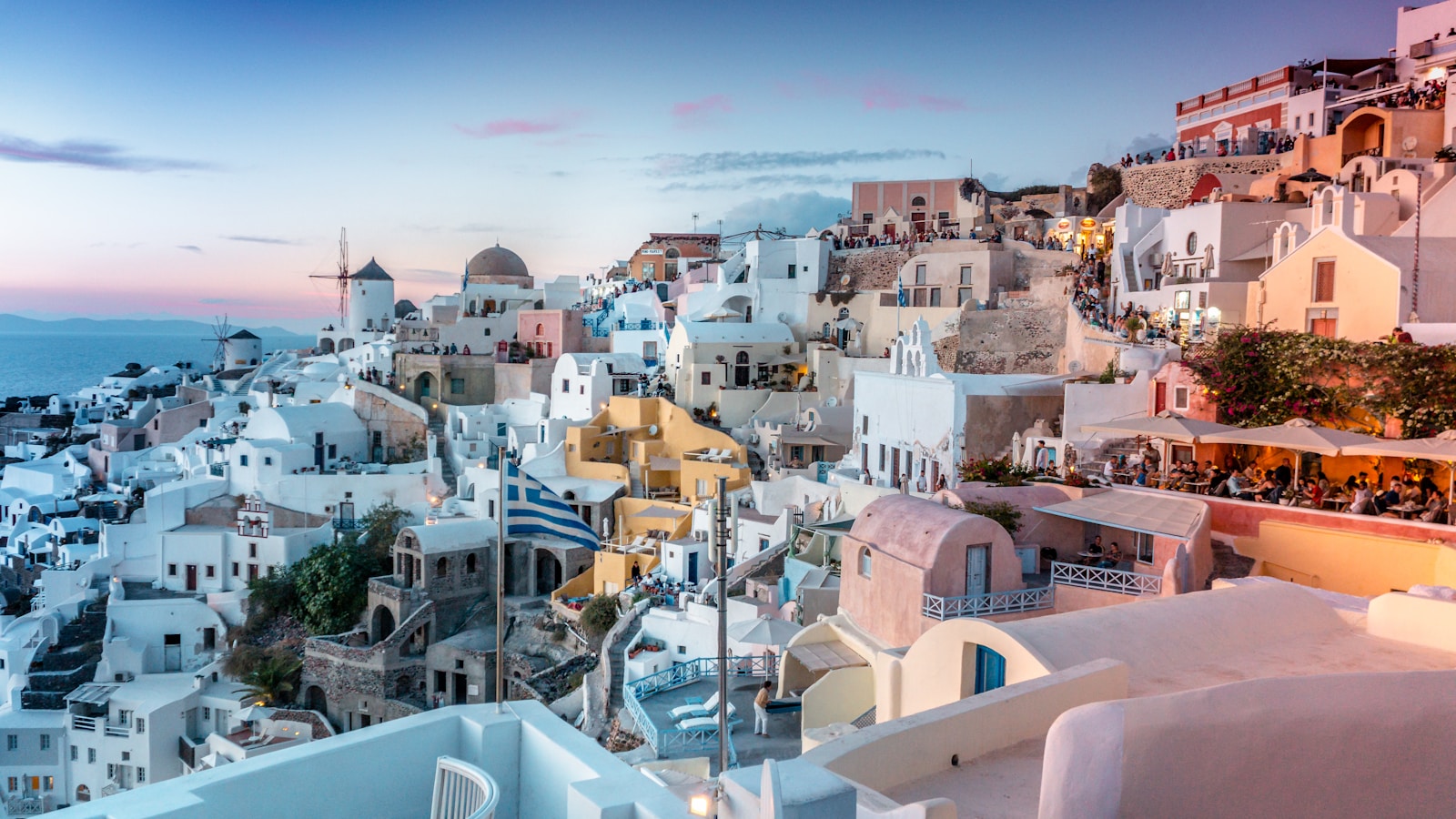
Santorini’s famous Oia sunset is real and beautiful. Getting there requires arriving at the viewpoint two or more hours early to claim a spot. The cable car has a two-hour queue at peak times. Many travelers describe the experience as spending most of the afternoon managing logistics for a ten-minute event. It can still be worth it, but you need to know what you are signing up for.
The prices in Mykonos in particular are difficult to justify. A bottle of water at some venues costs four euros. A simple dinner for two can approach two hundred euros without any effort. This is not occasional — it is systematic. If the budget matters, these islands will punish you for being underprepared.
The less-discussed positive: arriving by ferry early on a weekday, before the cruise ship crowds disembark, gives you a genuinely different version of Santorini. The villages are walkable and quiet, and the light in the morning is extraordinary.
- Arrive at Oia two-plus hours early for the sunset or accept being in a crowd
- Budget significantly more per day than you think — both islands are expensive by design
- Avoid peak season (July-August) if overtourism will affect your enjoyment
- Consider Milos or Naxos for a Cycladic experience without the prices and crowds
- Arrive by ferry, not cruise ship, for any chance at a quieter morning
Morocco (Marrakech)
Read our full Morocco post here.
Marrakech requires a specific mental mode that most visitors arrive without. The medina is a labyrinth and that is the whole point — it is designed to disorient you and make you dependent on a guide. The people who offer to help you find your riad, your restaurant, or your destination in the medina are overwhelmingly doing so for commission. That does not mean every interaction is predatory. It does mean you need to be clear-eyed about what is happening.
The tannery visit is the canonical Marrakech trap. Someone at the edge of the medina offers to show you the famous leather tanneries. You follow them, receive a “free” sprig of mint to hold against the smell, and emerge in the leather shop attached to the viewing terrace where pressure to buy begins immediately. The tanneries are genuinely worth seeing, but book it through your riad or a licensed tour operator so you control the exit.
Henna tattoo offers in Djemaa el-Fna are a known scam. The artist applies the henna before you agree to a price, then demands a significant amount after. The “friendly spill” variation is also common. The rule is simple: if you want henna, agree on a specific price in writing before a drop is applied.
Animal photos in the square — snakes, monkeys — follow the same pattern: the animal is placed on you, photos are taken, and then a sum is demanded. The correct move is to keep your distance and decline clearly.
What surprised us positively: the riads. Staying inside the medina in a good riad is one of the best accommodation experiences anywhere. Noisy and chaotic on the street, serene the moment you step through the front door.
- Book tours and tannery visits through your accommodation, not street offers
- Agree on any price — henna, photos, food — before anything is given or done
- Learn two words: “La, shukran” (No, thank you) and use them clearly and without hesitation
- Avoid black henna tattoos — the chemical compound used can cause serious skin reactions
- Stay in the medina in a riad — the experience justifies any navigation difficulty
Iceland
Read our full Iceland post here.
Iceland is expensive in a way that surprises even people who have been warned. A realistic per-person daily budget for a couple doing the trip properly — rental car, accommodation, food, petrol, and some paid activities — runs around $300 per person per day. A week-long trip for two people costs what a two-week trip to southern Europe costs. If you do not plan for this, you will spend the last three days of the trip eating gas station sandwiches and resenting everything.
The rental car is non-negotiable for most of the country. But not all rental cars are the same in Iceland. Some roads, including some F-roads inland, legally require a 4×4 with high clearance. Driving a regular car onto those roads voids your insurance and can result in significant fines and recovery costs. Check the road classification before you go.
Daylight is the other planning failure. In winter, you have roughly six usable hours of light per day. In summer, it never really gets dark. Both extremes require planning your itinerary around them, and most first-timers discover this only once they arrive.
The northern lights remain the most over-promised element of an Iceland trip. You cannot guarantee seeing them. They require clear skies, darkness, and solar activity — three things that often do not coincide during a given week. Plan for them but do not build the trip around them as a certainty.
The moss is real: Iceland’s volcanic moss is extremely fragile and takes decades to recover from a single footstep. Stay on marked paths. This is both ethical and, increasingly, legally enforced.
- Budget $250-$350 per person per day for a realistic Iceland trip
- Verify rental car requirements for any F-road on your route before booking
- Plan your daily itinerary around actual daylight hours for the time of year
- Treat northern lights as a bonus, not a guarantee
- Never step on the moss — stay on designated paths at all times
- Shop at Bonus or Kronan supermarkets for one dinner per day to cut food costs meaningfully
London
Read our full London post here.
London has a category of attraction that I will call the expensive underwhelm. The London Eye costs around £34 per adult. That is over £130 for a family of four for a slow rotation on a ferris wheel with a fine view. The Tower of London is £29 per adult. Madame Tussauds charges over $37 per adult at current rates. None of these are scams exactly — they are just not worth the price relative to everything else London offers for free. The British Museum, the National Gallery, the Tate Modern, the Natural History Museum, Victoria and Albert — all free, all world-class.
The Tube is convenient but not always the best option. The London bus costs £1.75 per ride regardless of distance and runs on the same Oyster or contactless system. For many journeys, particularly longer ones on the surface, the bus is cheaper, more scenic, and gives you a much better sense of the city.
Buckingham Palace is worth walking past. It is not worth planning a day around. The Changing of the Guard ceremony — free to watch — is a logistical commitment requiring early arrival for any kind of view, and the ceremony itself is a marching band and some choreography. Many visitors rate it as the most disappointing scheduled activity of their London trip.
What consistently surprises visitors: the neighborhoods. Brixton, Shoreditch, Bermondsey, Borough Market, Hackney — these areas are free to explore, alive with food and street life, and almost entirely absent from standard itineraries.
- Skip Madame Tussauds, the London Eye, and the London Dungeon — the price-to-experience ratio is poor
- Use the bus alongside the Tube — it is cheaper and gives you the city rather than tunnels
- Plan around free world-class museums rather than paid tourist attractions
- Explore actual London neighborhoods rather than landmark-hopping
- Pre-book any paid attractions you do choose — walk-up prices are always higher
Dubai
Read our full Dubai post here.
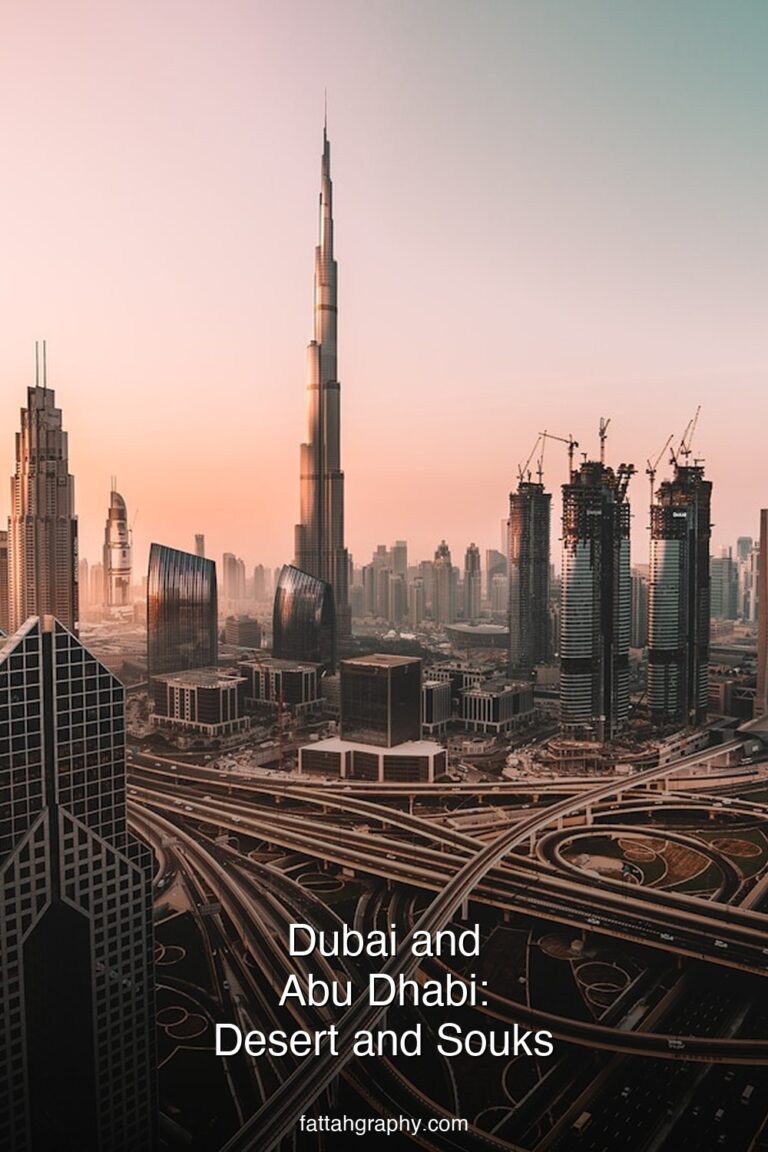
Dubai rewards planning and punishes improvisation. The Museum of the Future, one of the city’s best experiences, sells out two to three weeks in advance. The Burj Khalifa observation deck tickets, particularly for the higher levels, go fast and are significantly cheaper pre-booked online than at the door. If you arrive in Dubai without pre-booked attraction tickets, you will either pay premium walk-up prices or miss things entirely.
The climate reality is also something many visitors underestimate. Between June and September, outdoor temperatures regularly exceed 45 degrees Celsius. The city is almost entirely air-conditioned, which means the experience of Dubai in summer is: cold taxi, cold mall, cold restaurant, brief hot moment outside, repeat. Some people find this fine. Others feel the city is best experienced in the shoulder months — October through April — when the outdoor experience is actually accessible.
Legal context matters more in Dubai than in most destinations. Public intoxication, displays of affection between unmarried couples, photographing strangers without consent, and any content posted online that could be deemed critical of the UAE or its government are all areas where tourists have faced real legal consequences. This is not theoretical. Know the context you are in.
The SIM card situation trips up nearly everyone: you cannot buy a SIM at a regular shop. Get one at the airport immediately upon arrival or face significant waiting time later.
- Pre-book all major attractions weeks in advance — walk-up availability is limited
- Visit between October and April to access outdoor Dubai; June through September is extremely hot
- Understand the legal environment — public behavior standards differ significantly from Western norms
- Buy your SIM card at the airport on arrival
- Budget for the fact that Dubai is an expensive city — budget travel here is difficult
Mexico City
Read our full Mexico City post here.
Mexico City is one of the most underrated destinations on this list and also one of the most misunderstood in terms of how to move through it. The most consistent piece of advice from experienced travelers and Reddit discussions alike: use Uber, not street taxis. Street taxis in Mexico City have a documented history of overcharging tourists and, in some cases, more serious incidents. Uber operates at a known price, leaves a digital trail, and removes the negotiation problem entirely. It is the same app you use at home.
The phone-snatching issue is real and very specific. The pattern is consistent: a person on a motorbike, or on foot, grabs a phone being held out for navigation. The solution is simple and completely effective — step into a doorway or against a wall to check your route, then put the phone away and walk with intention. Do not walk and navigate simultaneously.
The food misconception is worth naming directly. Mexican food in Mexico City is not what most North Americans grew up eating. It is lighter, more herb-forward, more regional, and more varied. Quesadillas in CDMX do not automatically come with cheese. Tacos are small and eaten standing up. The dining schedule runs late — serious lunch is at 2 or 3 in the afternoon, and dinner starts around 9 or 10 at night. Fighting the schedule makes the trip worse; accepting it improves it dramatically.
What genuinely surprised us: the depth. Mexico City is a metropolitan world capital with serious art, architecture, food, and nightlife, and most tourists only see the surface of one or two neighborhoods.
- Use Uber exclusively — do not hail street taxis
- Never walk while holding your phone out — step aside to navigate
- Learn the actual dining schedule (lunch at 2-3 p.m., dinner at 9-10 p.m.) and work with it
- Learn basic Spanish phrases — English coverage is inconsistent outside tourist areas
- Do not judge Mexico City’s food by what you know from Mexican restaurants abroad
- Carry a light jacket — evenings cool significantly despite warm days
Japan (Tokyo and Kyoto)
Read our full Japan post here.
Japan requires more advance booking than any destination I have ever traveled to, and the planning community on Reddit has documented this obsessively. An analysis of over 1,600 Reddit comments on Japan travel regrets found the same mistakes appearing at the top repeatedly: arriving without reservations for popular restaurants, missing Ghibli Museum tickets because you did not book two to three months in advance, and showing up at Fushimi Inari at 10 a.m. in peak season and spending the experience in a line rather than a forest.
Fushimi Inari and Arashiyama’s Bamboo Grove are worth visiting but need to be approached differently than most travel blogs suggest. Both require arriving between 6 and 7 in the morning to experience them in any approximation of the atmosphere they are famous for. By 9 a.m., the crowds have arrived and what was a contemplative walk becomes a tourist queue. Kyoto received over 16 million overnight visitors last year, and the concentration at a small number of Instagram-famous sites creates genuinely unpleasant conditions during peak hours.
The itinerary-packing problem is severe in Japan specifically because the country is so efficient that travelers assume they can cover more than they can. Spending more days in fewer places consistently produces better trips than racing through Tokyo, Kyoto, Osaka, Hiroshima, and Nara in ten days.
Luggage is a specific Japan consideration. Large suitcases on crowded trains are genuinely difficult and increasingly regulated. The Tokaido Shinkansen now requires a reserved baggage seat for oversized luggage. Pack light or use luggage forwarding services — they are inexpensive, reliable, and everywhere.
- Book Ghibli Museum/Park, popular restaurants, and ryokans two to three months in advance
- Arrive at Fushimi Inari and Arashiyama before 7 a.m. — no exceptions during peak season
- Visit fewer cities more slowly rather than racing through everything
- Pack light or use luggage forwarding — large bags on Japanese transit are a real problem
- Download Google Translate with Japanese downloaded for offline use before you land
- Book tours through Viator for popular Japan experiences to guarantee availability
Italy (Rome and the Amalfi Coast)
Read our full Italy post here.
The Amalfi Coast is one of the most photographed places in the world and one of the most consistently misrepresented. The version you have seen online — the lone terraced villa, the empty blue water, the quiet path through lemon groves — exists in that form for roughly forty-five minutes in the early morning before the day trips and the tour buses arrive. In August, the Amalfi Coast is spectacularly beautiful and extremely crowded. The roads are engineered for donkeys, and large coaches navigate hairpin turns above sheer cliffs while motorbikes thread through the gaps. Many visitors describe being car-sick for the first full day.
The structural mistake with the Amalfi Coast is treating it as a day trip. It is at minimum a five-to-six night destination if you want to move between towns, swim, eat properly, and decompress. Day-trippers from Rome or Naples spend eight hours in transit for a few hours on the ground. Stay on the coast or do not go.
Rome has its own time-management problem. The Vatican crowds are significant — pre-booking a time-slot ticket is not optional if you want to see the Sistine Chapel without spending half a day in line. The same applies to the Colosseum. Booking a guided tour through Viator for these sites often includes skip-the-line access and context that makes the experience considerably better.
The coperto charge at Italian restaurants is legal and standard. It is typically one to two euros per person and appears on every bill. This is not a scam; it is a cover charge. Know it exists before you dispute it.
- Do not treat the Amalfi Coast as a day trip — stay at least five nights to make it worth the journey
- Pre-book Vatican and Colosseum time-slot tickets — queuing without them wastes hours
- Avoid Rome and the Amalfi Coast in August — crowds and heat are both at maximum
- The coperto restaurant charge is legal and normal — budget for it
- Consider hiring a driver for Amalfi road navigation rather than driving yourself
- Shoulder season (April-May, September-October) is the correct time to visit both
Read the full Italy deep dive: What I’d Do Differently: Italy Edition — 10 detailed lessons from Rome, the Amalfi Coast, Venice, and more.
What Most of These Places Have in Common
Looking across all eleven destinations, the same failures appear on a loop. First: arriving without pre-booked tickets or reservations to the things you most want to see. This costs hours and in some cases means missing the experience entirely. Second: not researching the timing — the wrong season on a Thai island, the wrong month on the Amalfi Coast, winter Iceland with summer Iceland expectations. Third: staying in the tourist circuit rather than moving one layer outward, where the food is better, the prices are lower, and the experience is more real.
The most consistent positive surprise across all these destinations: the early morning. Every city and every landscape we visited had a version of itself that existed for roughly two hours before the tour groups and the day-trippers arrived. That version was almost always the one worth seeing. It just required getting up earlier than felt reasonable the night before.
The research is worth doing. The bookings are worth making months in advance. And the trip planning frameworks that help you think through all of it before you commit are worth reading before you commit your money and your time to a destination.
We have been to all of these places and we would go back to most of them. We would just go back differently.
Travel Tools We Actually Use
- eSIM Data: Airalo eSIM for worldwide — Skip the airport SIM card line. Buy before you land, activate when you arrive. We use this every trip now.
- Car Rental: Compare car rental prices for worldwide — We compare across all major rental companies here. Book early for shoulder season.
- Travel Insurance: — Comprehensive coverage for trip cancellation, medical, and baggage. We learned the hard way that skipping insurance is not worth it.
- VPN: — Public wifi at hotels and airports is sketchy. This keeps your banking apps and passwords safe.
- Money Transfer: — Best exchange rates, no hidden fees. We use the multi-currency card for every trip.
Book Tours and Activities
Gear We Recommend After Learning the Hard Way
- Osprey Farpoint 40 Travel Backpack – Carry-on sized, opens like a suitcase.
- Anker Nano Power Bank – Essential for long days of navigating.
- Airalo eSIM – International data without swapping SIM cards.
- Packing Cubes (6-Pack) – Changed how we pack permanently.
- Universal Travel Adapter – One adapter for every country.
Find Your Next Flight
Frequently Asked Questions
What is the most common travel mistake?
Overpacking. Every traveler does it on their first few trips. Pack half of what you think you need, then remove one more thing. You can buy anything you forgot.
Should I book tours or explore independently?
It depends on the destination. Skip tours in cities with good transit (Tokyo, London, Paris). Book tours for logistics-heavy days (Capri boat, Bali rice terraces, Africa safaris).
How do you avoid tourist traps?
Eat where locals eat (look for restaurants with menus only in the local language), skip any restaurant within 50 meters of a major monument, and research neighborhoods before arrival.
Plan Your Next Trip Smarter
Flights: Compare on Skyscanner
Hotels: Booking.com
Tours: GetYourGuide | Viator
eSIM: Airalo
Travel insurance: SafetyWing — from $45/month
Related Reading
Get Travel Tips That Actually Help
Real costs, honest reviews, and what I’d do differently.
Written by Jenna Fattah
I have visited 25+ countries across 6 continents, attended 7 Formula 1 races, and spent 4 years writing about what actually works and what I would do differently. Every recommendation on this site comes from trips I planned and paid for myself. Read more about me